Recovery & Healing.
5 peptides, ranked.
Recovery & Healing is the Blueprint layer for injury, persistent pain, wound biology, connective tissue, inflammation, and return-to-function decisions. It starts with diagnosis, injury type, rehab, load management, progressive loading, sleep, protein/nutrition, inflammation context, and red-flag screening before any peptide conversation. Each candidate was evaluated against your BioProfile, training load, and declared contraindications. The strongest matches sit at the top; secondary options remain visible for comparison.
Ranked list
| Rank | Peptide | Match | Evidence | Regimen | |
|---|---|---|---|---|---|
| 01 | 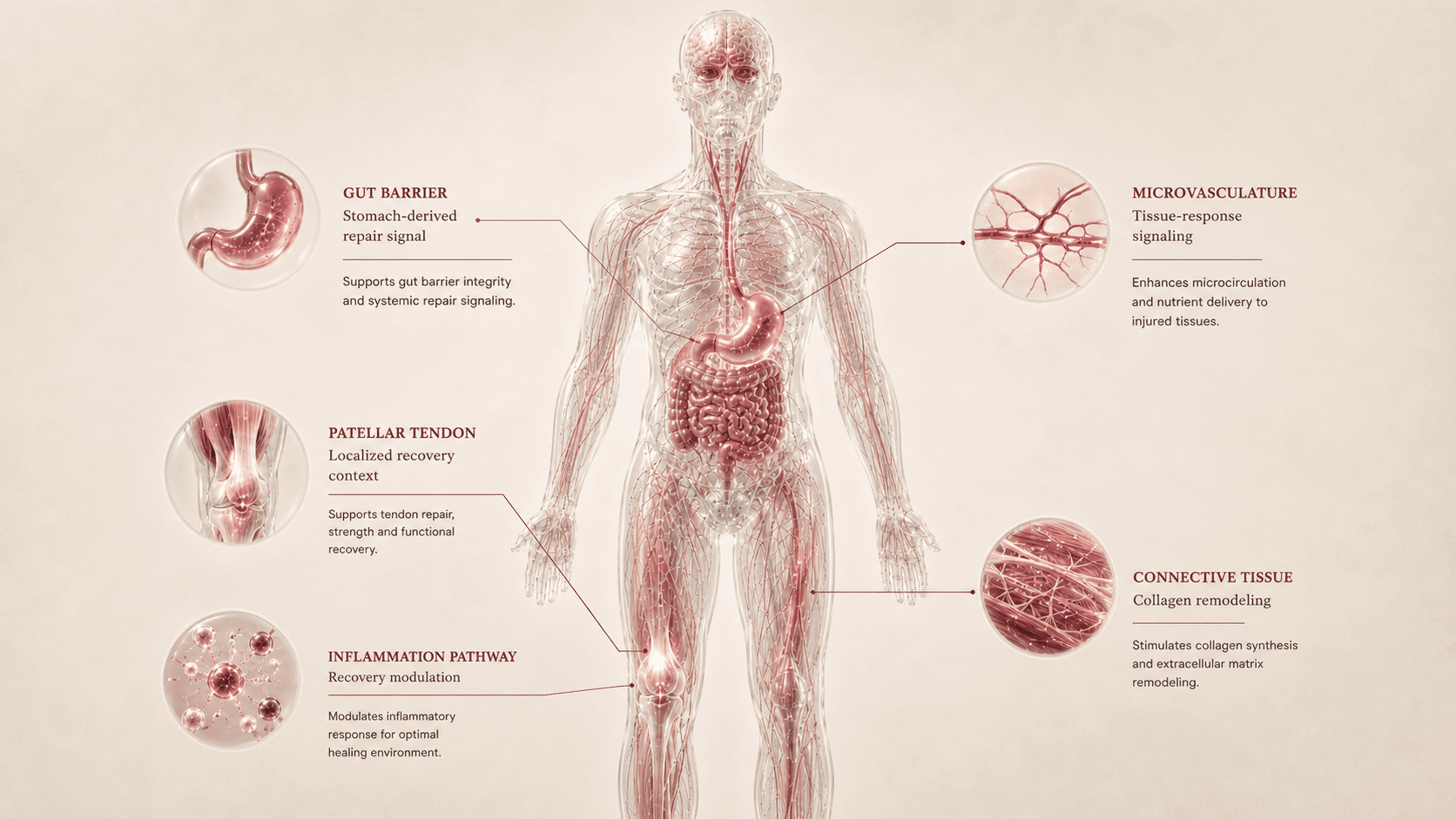 BPC-157 body protection compound-157 | 84 | ~B-research only | subcutaneous - diagnosis and rehab context | View |
| 02 | 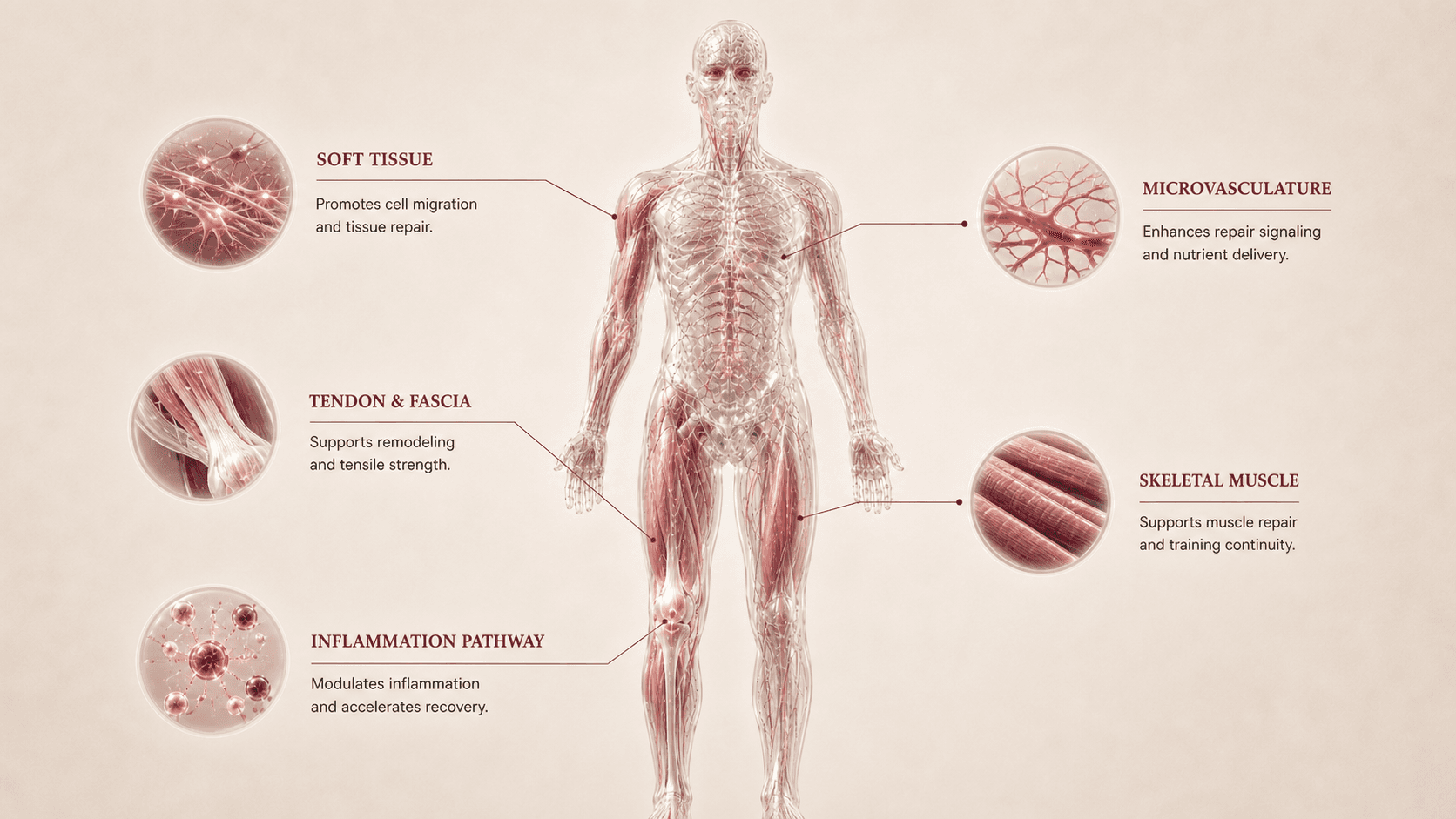 TB-500 thymosin beta-4 fragment - lkktetq | 79 | xCresearch only | subcutaneous - identity and rehab context | View |
| 03 | 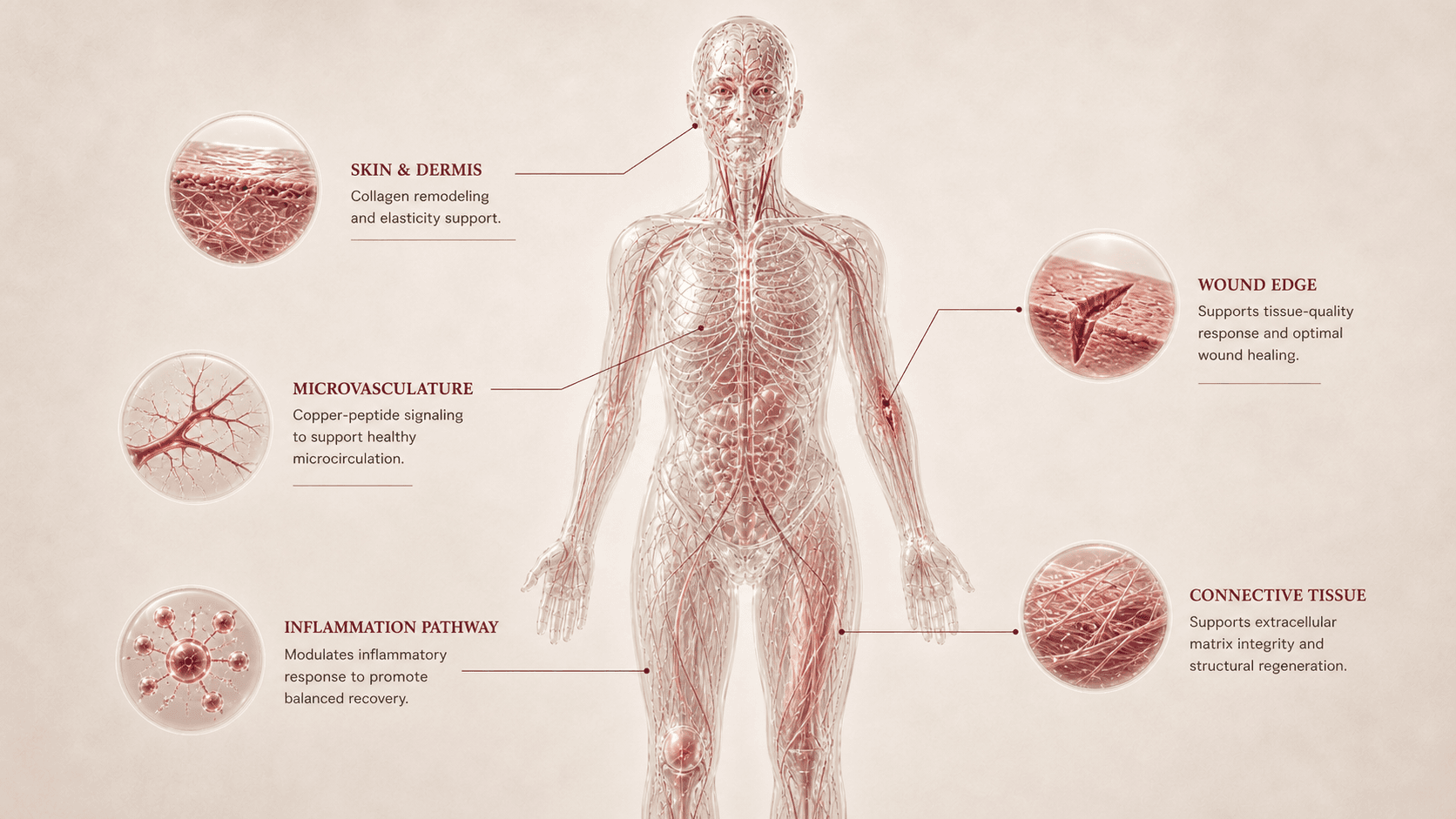 GHK-Cu copper peptide ghk-cu - glycyl-l-histidyl-l-lysine copper | 73 | ~B-compoundable cat 1 | topical - route-specific context | View |
| 04 | 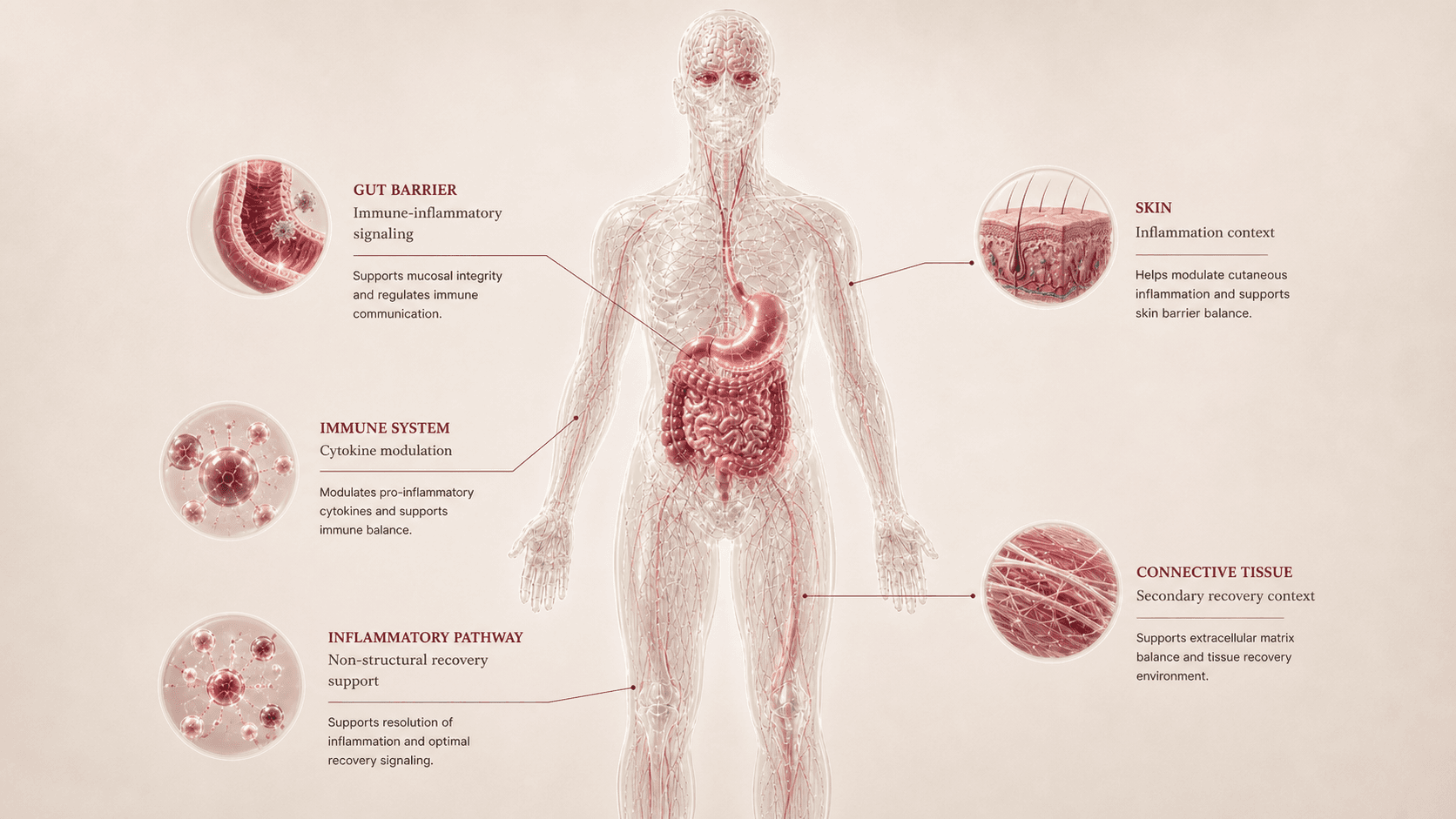 KPV lys-pro-val - alpha-msh(11-13) | 68 | xCresearch only | oral - inflammatory-driver context | View |
| 05 | 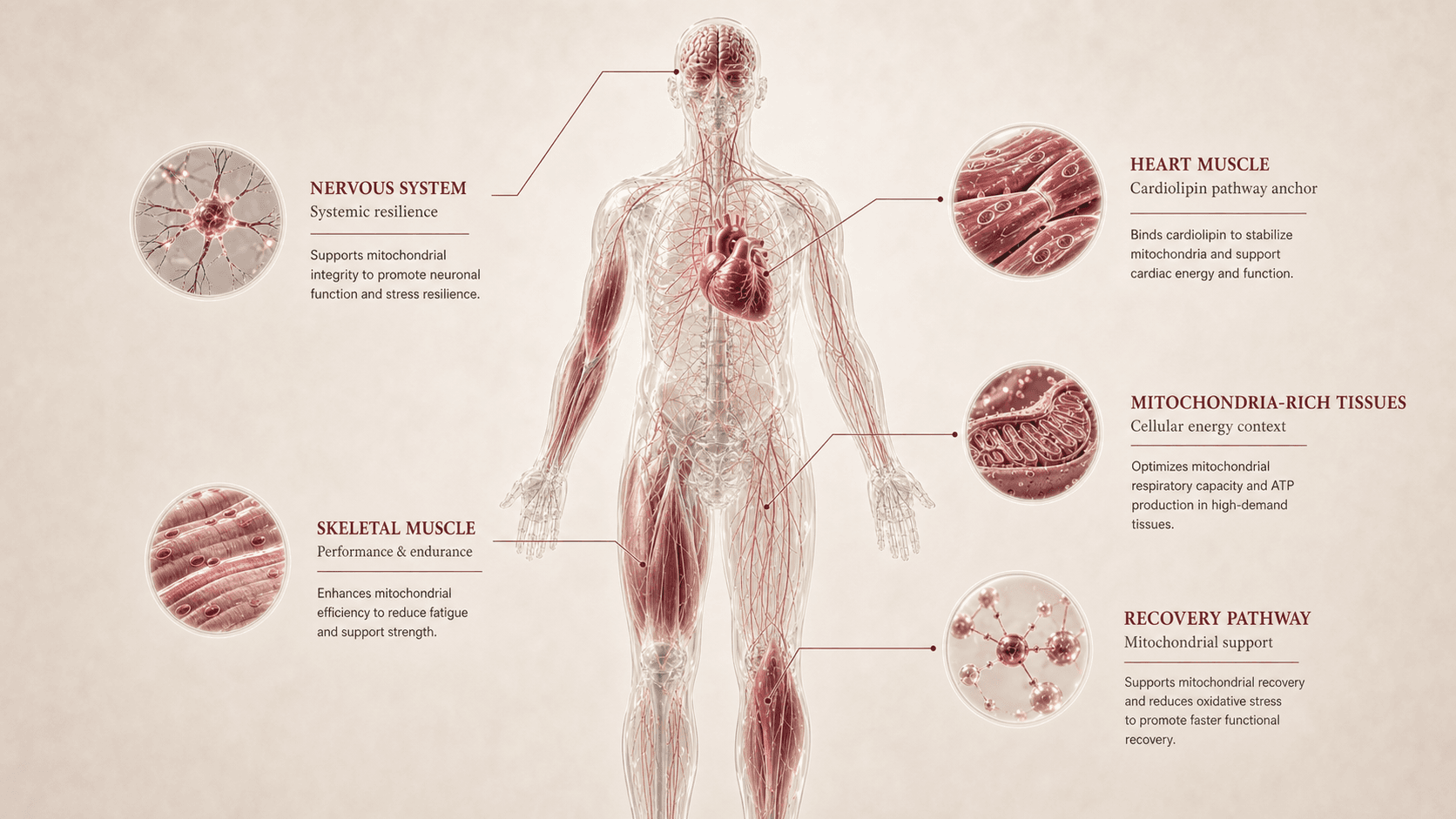 SS-31 / Elamipretide elamipretide - forzinity - mtp-131 - bendavia | 61 | ~Bfda approved | subcutaneous - adjacent label context | View |
Recovery & Healing comparison matrix
| Peptide | Regulatory anchor | Mechanism | Recovery role | Evidence maturity | Readiness | Watchout | Takeaway |
|---|---|---|---|---|---|---|---|
BPC-157 bpc-157 | Research-sensitive; FDA safety-risk / withdrawn nomination context flags immunogenicity, limited safety information, peptide impurities, and API characterization concerns. | Tissue-repair / angiogenesis / inflammation-modulation hypothesis. | Localized injury, tendon/ligament discussion, and gut-recovery overlap. | Mechanistic: moderate/high preclinical. Human outcomes: low for specific injuries. Regulatory/label: no approved recovery label. | Low/moderate depending on regulated clinical review; not an approved healing drug. | Overclaiming injury healing, quality/source uncertainty, unclear human translation, and no protocol claims. | Central to the recovery conversation, but requires conservative evidence framing. |
TB-500 tb-500 | Research-sensitive thymosin beta-4 fragment context; FDA safety-risk / withdrawn nomination context names LKKTETQ/TB-500 with immunogenicity and human-exposure concerns. | Cell migration / tissue remodeling / systemic recovery framing. | Chronic or less-localized soft-tissue recovery discussion. | Mechanistic: moderate thymosin beta-4 biology. Human outcomes: low for TB-500 fragment recovery. Regulatory/label: no approved recovery label; anti-doping-sensitive. | Low/moderate; identity, sport rules, and regulatory quality matter. | Anti-doping context, fragment confusion, limited clinical proof, and blend attribution risk. | Useful to explain systemic recovery logic, not a proven universal repair therapy. |
GHK-Cu ghk-cu | Copper peptide skin/wound biology with route-specific FDA compounding context; injectable route has separate safety-risk framing. | Copper-binding peptide; collagen / ECM / fibroblast / skin repair. | Skin, wound, scar, superficial tissue quality, collagen, and post-procedure literacy. | Mechanistic: moderate skin/wound/collagen biology. Human outcomes: limited and stronger for topical/skin than deep injury. Regulatory/label: route/formulation dependent. | Medium for topical/skin context; lower for systemic injury claims. | Route/formulation confusion and extrapolation from skin biology to tendon/cartilage. | Strongest as tissue-quality and skin/collagen context, not as a standalone deep-injury fix. |
KPV kpv | Anti-inflammatory melanocortin-derived tripeptide context; FDA safety-risk page notes lack of identified human exposure data in nominated context. | Anti-inflammatory / melanocortin-related / gut-immune context. | Systemic inflammation, gut/skin immune overlap, and diffuse inflammatory recovery context. | Mechanistic: anti-inflammatory/gut-immune, mostly preclinical. Human outcomes: low for recovery. Regulatory/label: no approved structural-repair label. | Low/moderate; depends on indication, formulation, immune context, and professional review. | Overusing it for mechanical injuries; immune/autoimmune and gut red flags need care. | Useful when inflammation is the driver, not when the problem is purely mechanical damage. |
SS-31 / Elamipretide ss-31 | Forzinity/elamipretide FDA label for Barth syndrome muscle-strength improvement; no broad recovery label. | Mitochondrial / cardiolipin / energy metabolism. | Adjacent systemic recovery, fatigue, and mitochondrial context; not direct tissue repair. | Mechanistic: mitochondrial/cardiolipin. Human outcomes: label-specific for Barth syndrome muscle strength. Recovery outcomes: low/adjacent. Regulatory/label: narrow FDA approval only. | Low for Recovery & Healing outside the approved indication; not a general injury peptide. | Misreading rare-disease approval as broad recovery, performance, or injury-healing approval. | Better as an adjacent comparator than a core healing candidate. |
Combination & Overlap Map
| Combination | Components | Type | Why it appears | Peptivius read | Main caution | Status |
|---|---|---|---|---|---|---|
BPC-157 + TB-500 | BPC-157 + TB-500 | Common recovery stack / mechanism pairing | Often discussed as localized tissue-repair logic plus broader remodeling/systemic recovery. | Educational compatibility concept, not a recommendation. Evidence for the combination is not the same as evidence for each component. | Loss of causality, quality/source risk, and difficulty knowing which component helps or causes side effects. | Commonly discussed / not recommended as stack |
BPC-157 + GHK-Cu | BPC-157 + GHK-Cu | Tissue repair + collagen/skin repair pairing | Appears in post-procedure, wound, scar, collagen, and connective-tissue discussions. | Plausible as a category conversation, but route/formulation and injury depth matter. | Skin/wound biology should not be overextended to deep tendon or cartilage claims. | Contextual / professional review |
GHK-Cu + KPV | GHK-Cu + KPV | Skin/repair + inflammation overlap | Used in discussions around inflamed skin, barrier repair, gut-skin overlap, or systemic inflammation. | More relevant to inflammatory/skin contexts than mechanical tendon injuries. | Route/formulation confusion and limited direct evidence for the combination. | Adjacent / inflammation context |
KLOW-like blend | KPV + BPC-157 + GHK-Cu + TB-500 | Multi-peptide blend | Marketed as an all-in-one healing, inflammation, and recovery blend. | Should be analyzed by components, not treated as one evidence-backed product. | Too many mechanisms at once; impossible to attribute benefit or side effect; blend evidence may be weaker than marketing suggests. | Blend literacy / caution |
TB-500 fragment vs TB-500 | TB-500 / thymosin beta-4 fragments | Naming and identity confusion | Vendors and directories may use related names inconsistently. | Needs identity clarity before interpreting evidence or regulatory status. | Not all fragments, labels, or products are equivalent. | Clarify identity first |
SS-31 + repair peptides | SS-31 + BPC-157/TB-500/GHK-Cu | Mitochondrial support + repair peptide stack | Users may combine energy recovery with tissue repair. | SS-31 is adjacent; mitochondrial context does not automatically enhance tissue repair. | Rare-disease/mitochondrial evidence should not be generalized to sports injury or wound healing. | Adjacent / advanced caution |
Peptides + physical therapy / rehab | Not a peptide blend | Non-pharmacologic foundation | Recovery outcomes depend heavily on loading, rehab, movement, tissue adaptation, sleep, and nutrition. | This is the safest synergy to communicate: support foundation, not peptide stack. | Peptides should not replace diagnosis, rehab, imaging, or progressive loading. | Support foundation |
Frequent questions about Recovery & Healing combinations
Is the report recommending a healing stack?
No. The report ranks individual peptides and explains combinations as education. A stack or blend can change safety, attribution, quality, and monitoring. The table is not a protocol.
Why not make BPC-157 + TB-500 its own peptide card?
Because it is a combination concept, not a single peptide. The evidence and safety profile of a blend are not automatically the same as the evidence for each component. Peptivius analyzes the components individually and explains the combination separately.
Is KLOW a complete healing solution?
No. KLOW-like blends combine multiple mechanisms in one product, which can reduce clarity. If benefit or side effects occur, it is harder to know which component was responsible. Peptivius treats this as blend literacy, not as a recommended product.
Which peptide is best for tendon or ligament recovery?
The report does not declare a universal best peptide. BPC-157 and TB-500 are commonly discussed in tendon/ligament contexts, but diagnosis, injury age, rehab status, imaging, inflammation, and professional review matter.
Does GHK-Cu heal deep injuries?
GHK-Cu is more naturally framed around collagen, skin, wound biology, tissue quality, and superficial repair contexts. Deep tendon, cartilage, or post-surgical recovery should not be inferred from cosmetic or skin biology alone.
Where does KPV fit?
KPV is more about inflammation and immune/gut-skin context than structural repair. It may become relevant when systemic inflammation is part of the recovery picture, but it is not a primary mechanical injury peptide.
Why include SS-31 if it is not a classic healing peptide?
SS-31 / elamipretide is included as an adjacent mitochondrial recovery comparator. It may help the reader understand systemic fatigue and mitochondrial context, but it should not be read as a general injury-repair peptide.
Can peptides replace physical therapy or rehab?
No. Recovery depends on diagnosis, load management, tissue adaptation, sleep, nutrition, and rehabilitation. Peptides, when discussed, should be interpreted as possible adjunct context, not a replacement for rehab.
Why is evidence weaker here than in Weight Loss?
Weight Loss has several large approved-drug programs. Recovery & Healing includes many compounds with strong mechanistic interest but less mature human evidence for specific injuries. The report makes that difference visible.
Does Match Score apply to blends?
In Slice 1, Match Score applies to individual peptides. Blends and stacks appear only as an educational map of compatibility, overlap, and caution. They do not receive a personalized stack score.