Performance & Muscle.
13 peptides, ranked.
Performance & Muscle is the Blueprint layer for athletic output, recomposition, lean-mass preservation, recovery capacity, training continuity, and focus under load. It keeps the experience unified because the user rarely separates performance from muscle, recovery, sleep, injury, and body composition in practice. Each candidate was evaluated against your BioProfile, training load, and declared contraindications. The strongest matches sit at the top; secondary options remain visible for comparison.
Performance foundation - before peptides
Performance does not start with peptides. It starts with the training, recovery, nutrition, sleep, and clinical context that decide whether any compound can be interpreted cleanly.
- Structured training with progressive overload and planned deloads.
- Adequate protein intake, calorie context, hydration, and body-composition targets.
- Sleep quality, stress load, and recovery windows between hard sessions.
- Load management, technique, mobility, and injury history before adding novelty.
- Relevant labs and clinician review when endocrine, glucose, cardiovascular, or medication context exists.
- Competitive status and anti-doping rules before any GH-axis, secretagogue, growth-factor, or nootropic discussion.
Performance red flags - when this is not a peptide question
Some performance problems need diagnosis, coaching, medical review, or recovery correction before any peptide conversation. The report should make those boundaries visible without turning them into alarmism.
- Acute pain, suspected rupture, traumatic injury, or persistent injury without diagnosis.
- Sudden performance collapse, unexplained shortness of breath, chest pain, fainting, or uncontrolled blood pressure.
- Cardiac history, severe overtraining suspicion, severe insomnia, eating-disorder risk, or suspected sleep apnea.
- Unsupervised anabolic, SARM, TRT, stimulant, or glucose-active drug use.
- Diabetes, hypoglycemia risk, active malignancy, cancer history, or endocrine disease needing clinician oversight.
- Adolescents, people still growing, and tested athletes subject to anti-doping rules.
Ranked list
| Rank | Peptide | Match | Evidence | Regimen | |
|---|---|---|---|---|---|
| 01 | 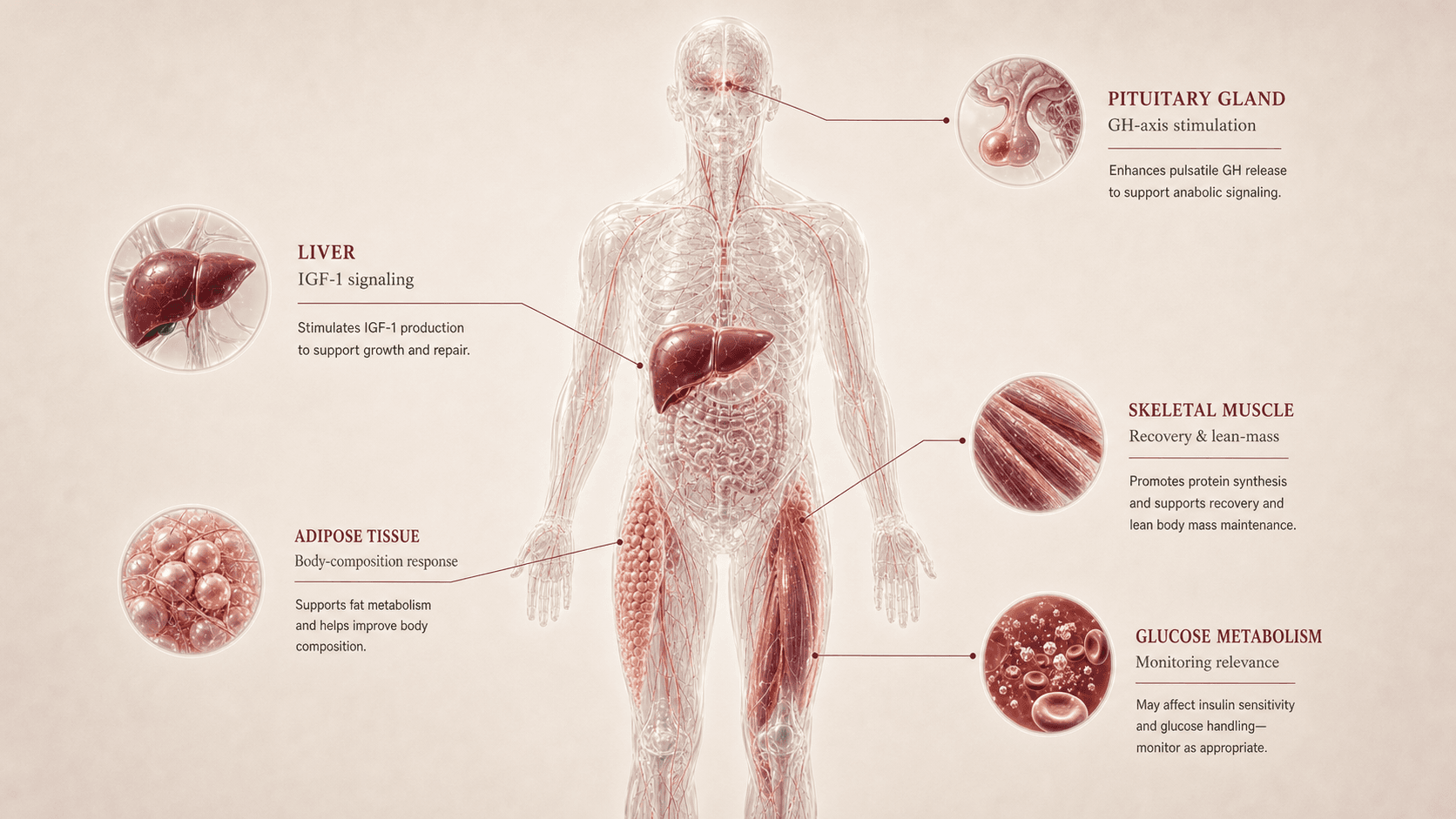 CJC-1295 modified grf - cjc-1295 dac | 86 | xCresearch only | subcutaneous - no protocol timeline | View |
| 02 | 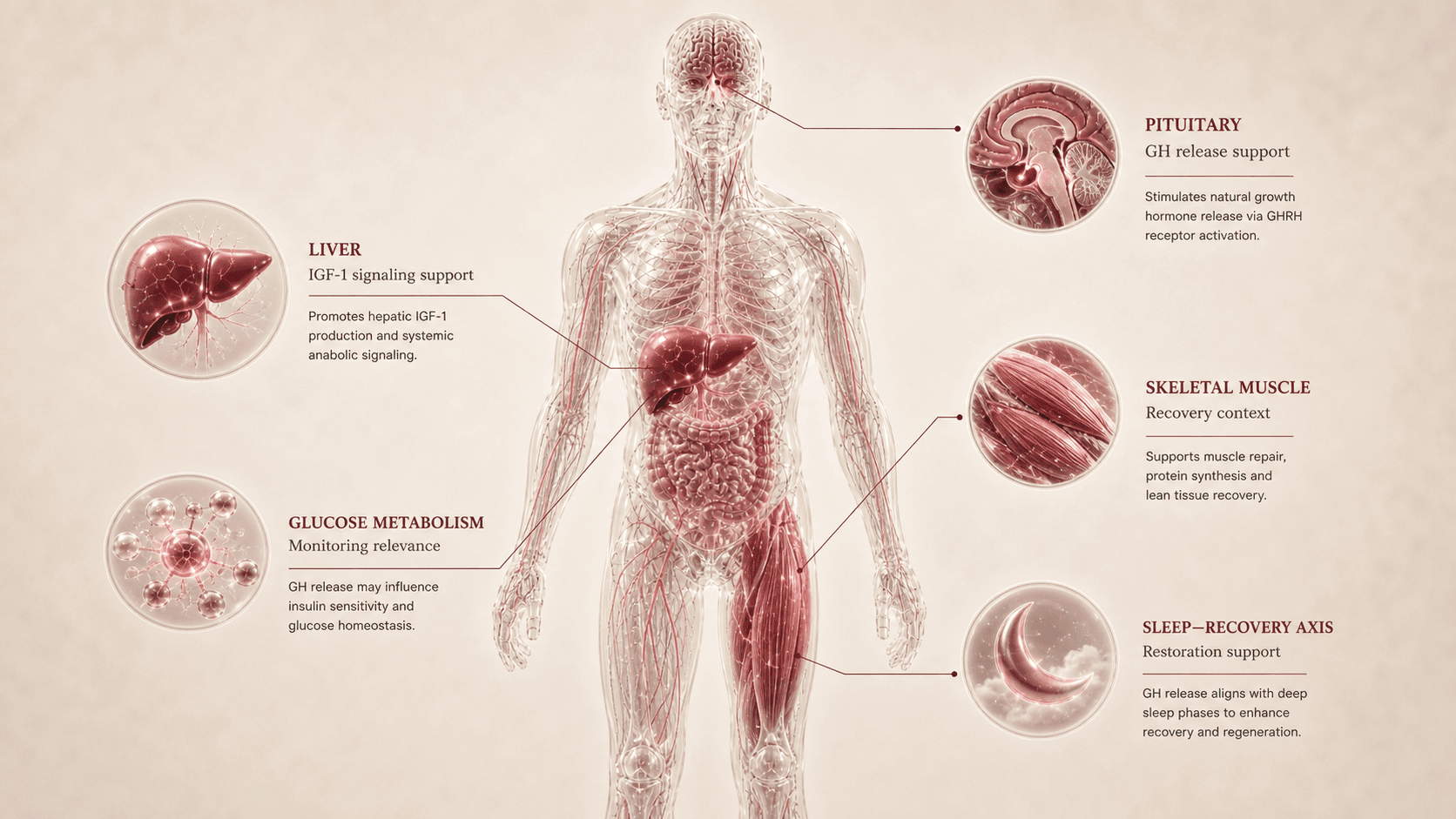 Ipamorelin ipamorelin acetate | 84 | xCresearch only | subcutaneous - no protocol timeline | View |
| 03 | 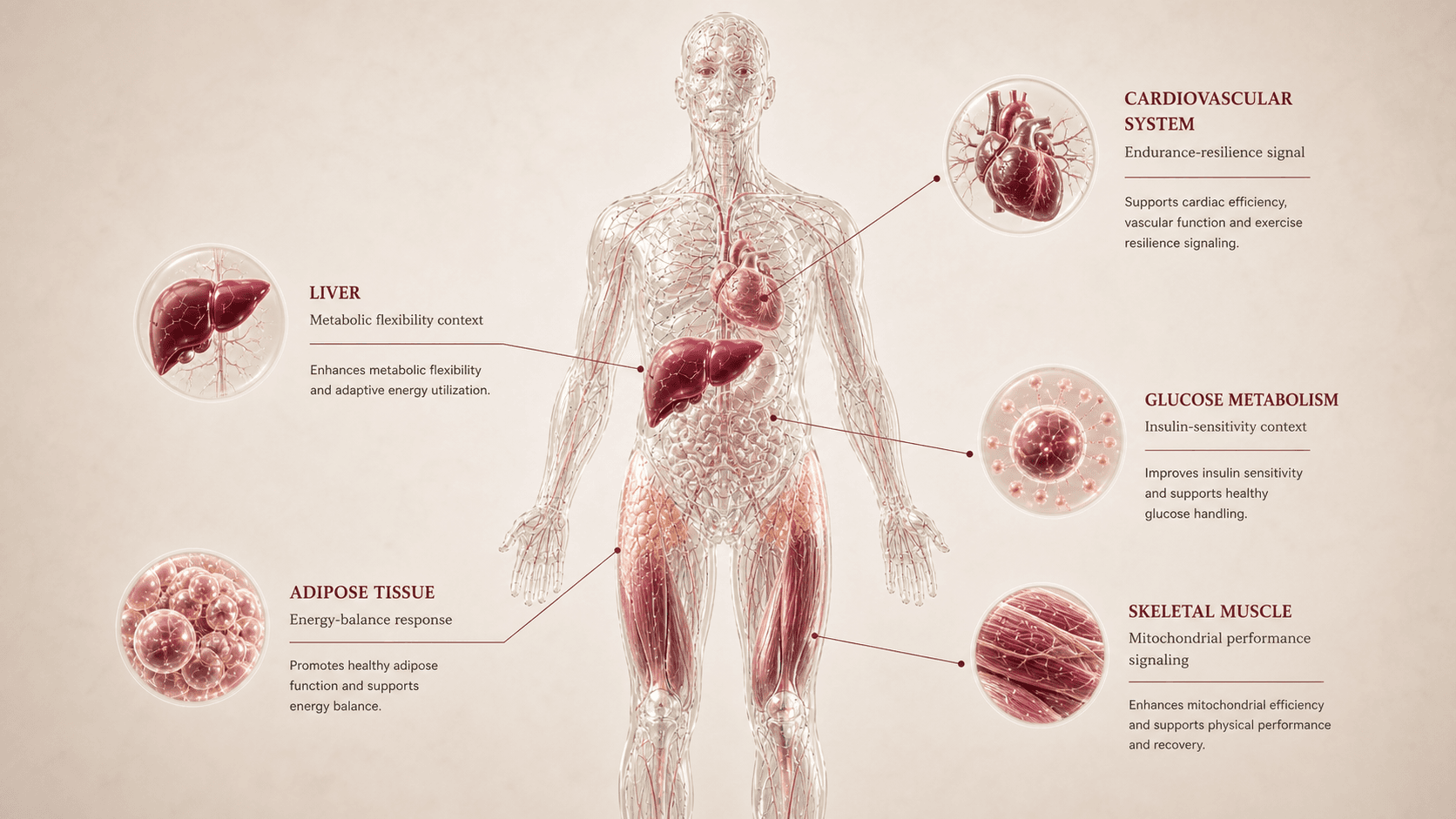 MOTS-c mitochondrial open reading frame of the 12s rrna-c | 81 | xCresearch only | subcutaneous - no protocol timeline | View |
| 04 | 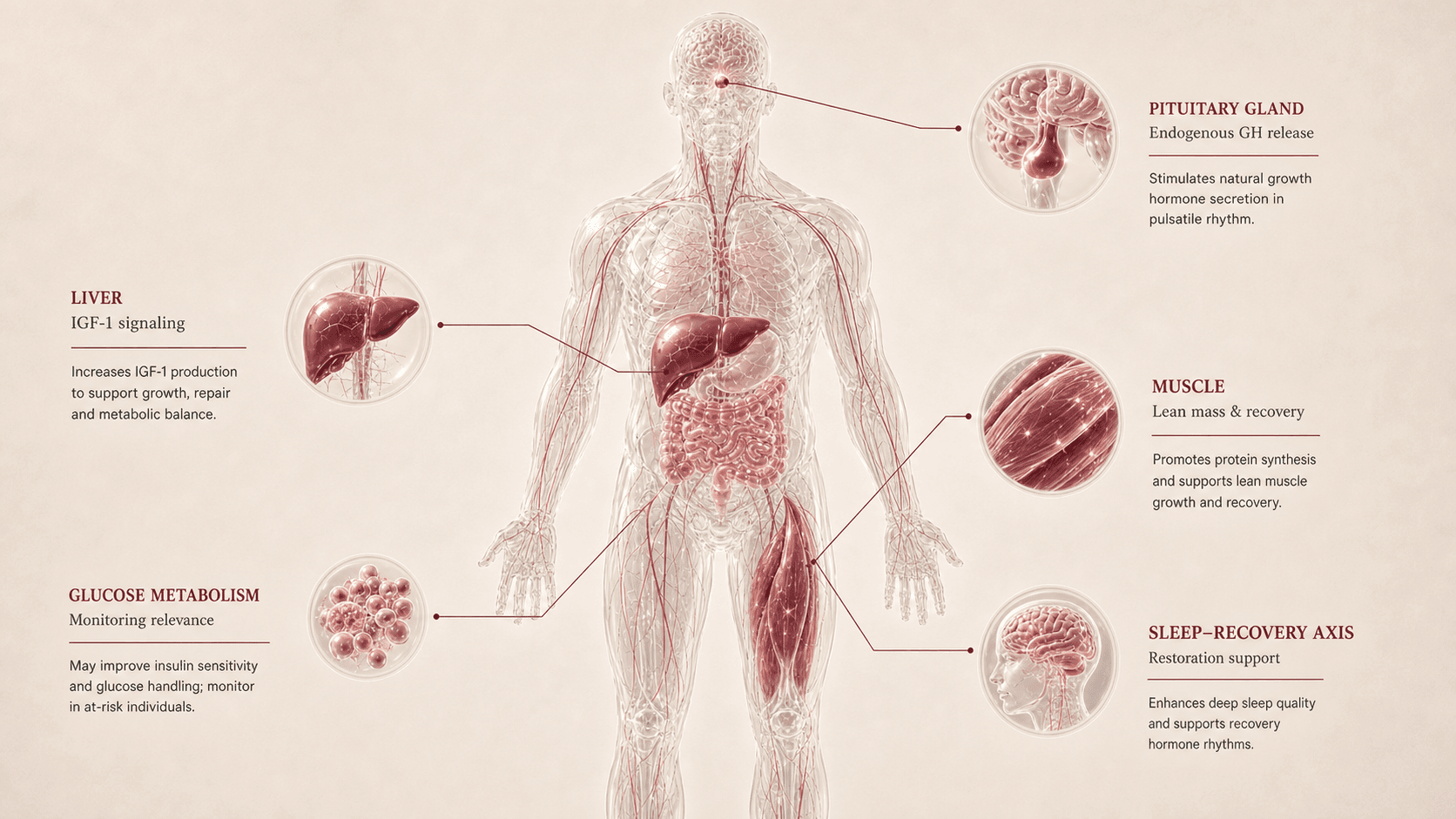 Sermorelin ghrh 1-29 - grf 1-29 | 78 | xCresearch only | subcutaneous - no protocol timeline | View |
| 05 | 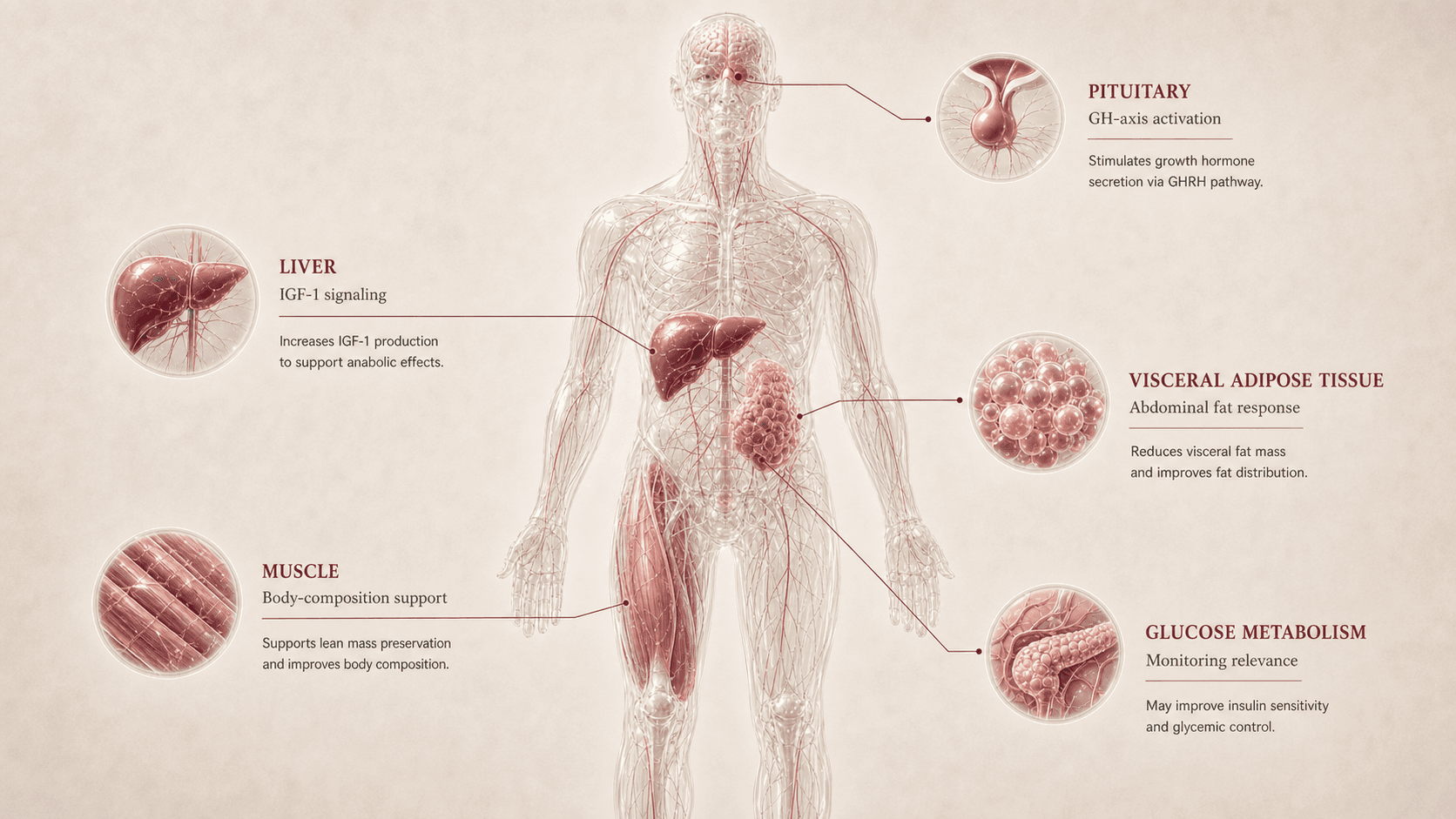 Tesamorelin egrifta wr - egrifta sv | 74 | ~Bfda approved | subcutaneous - no protocol timeline | View |
| 06 | 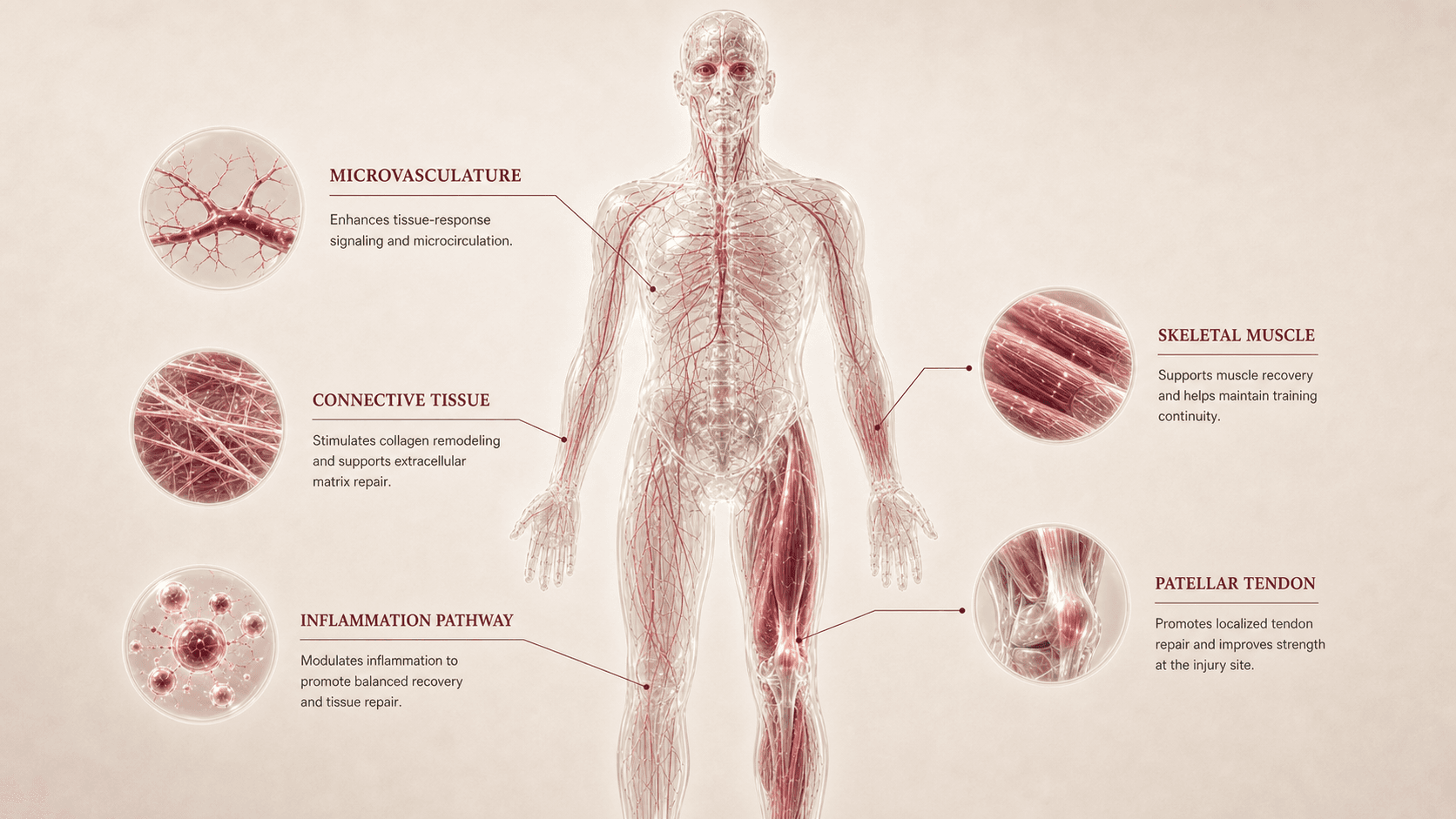 BPC-157 body protection compound 157 | 73 | ~B-research only | subcutaneous - no protocol timeline | View |
| 07 | 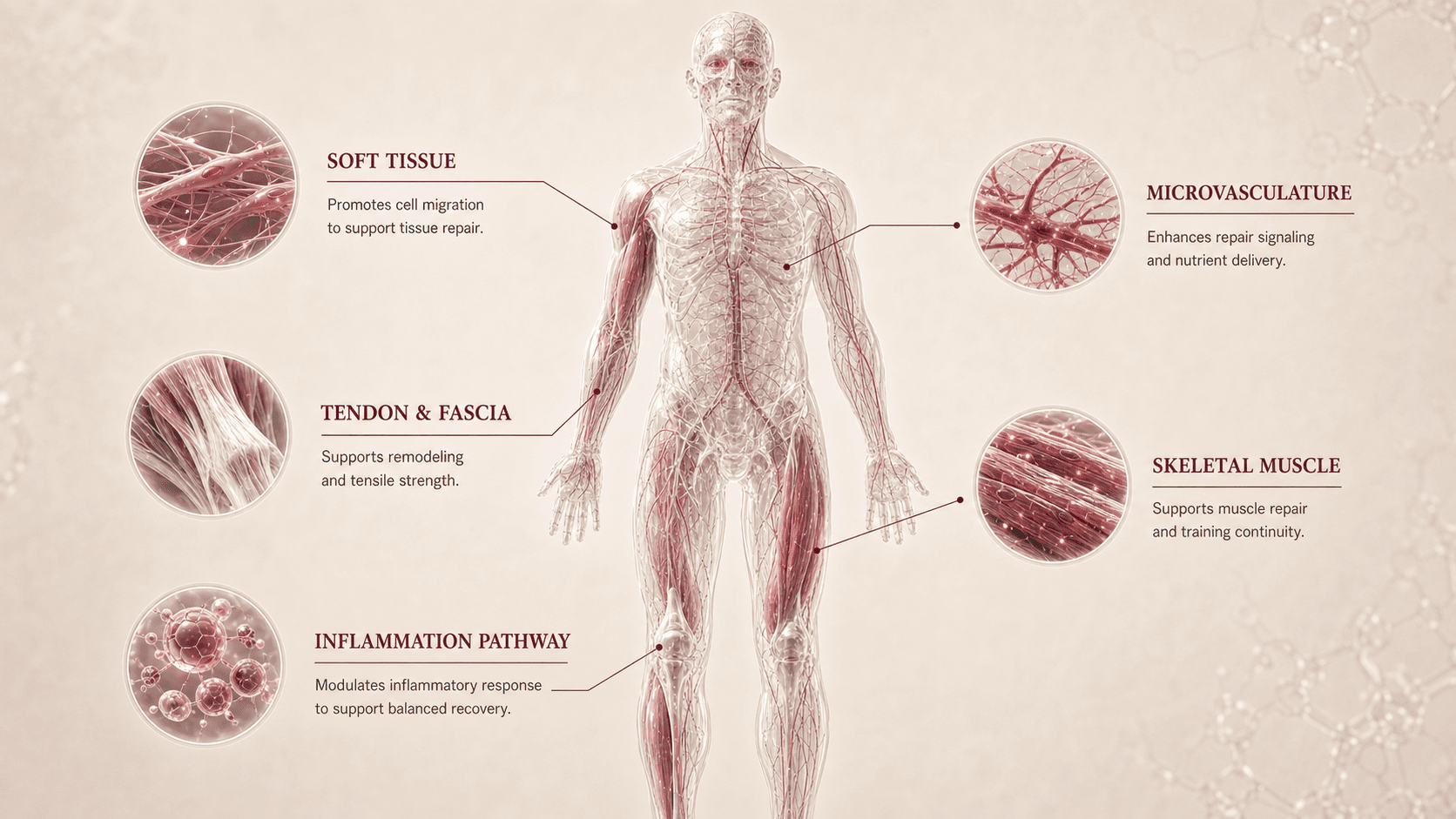 TB-500 thymosin beta-4 fragment - lkktetq | 71 | xCresearch only | subcutaneous - no protocol timeline | View |
| 08 | 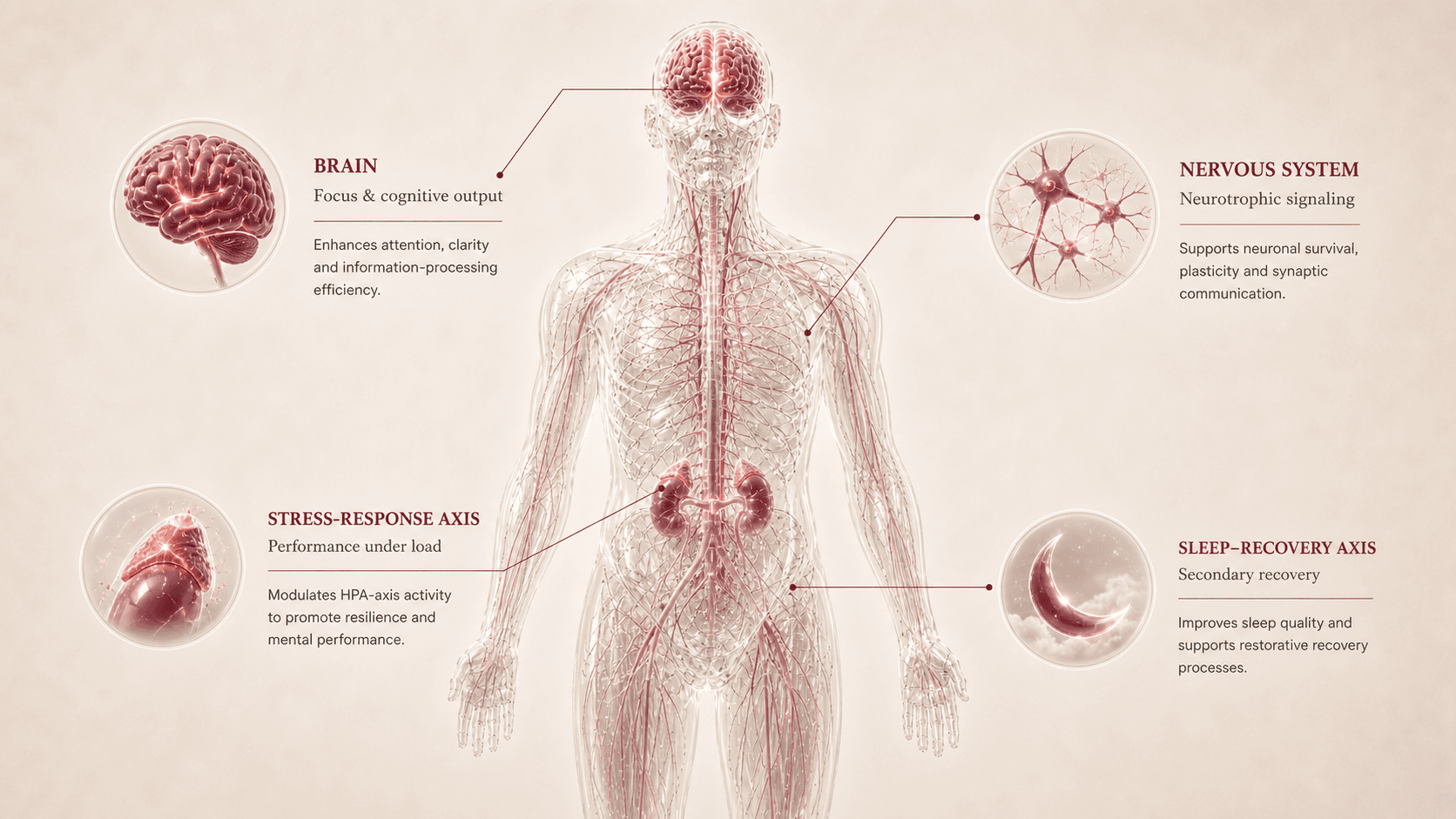 Semax heptapeptide semax | 68 | xCresearch only | intranasal - no protocol timeline | View |
| 09 | 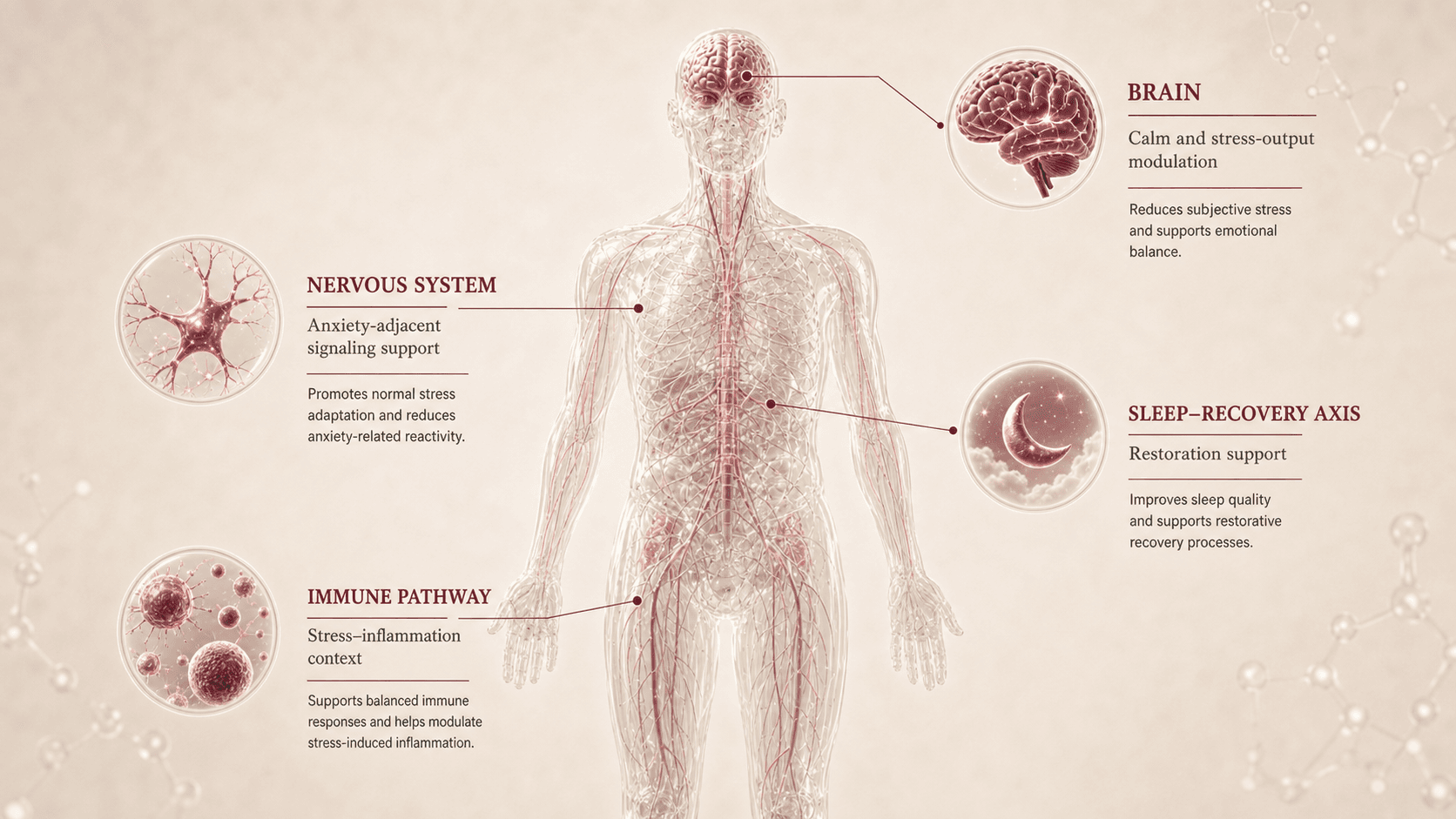 Selank tp-7 - selank acetate | 66 | xCresearch only | intranasal - no protocol timeline | View |
| 10 | 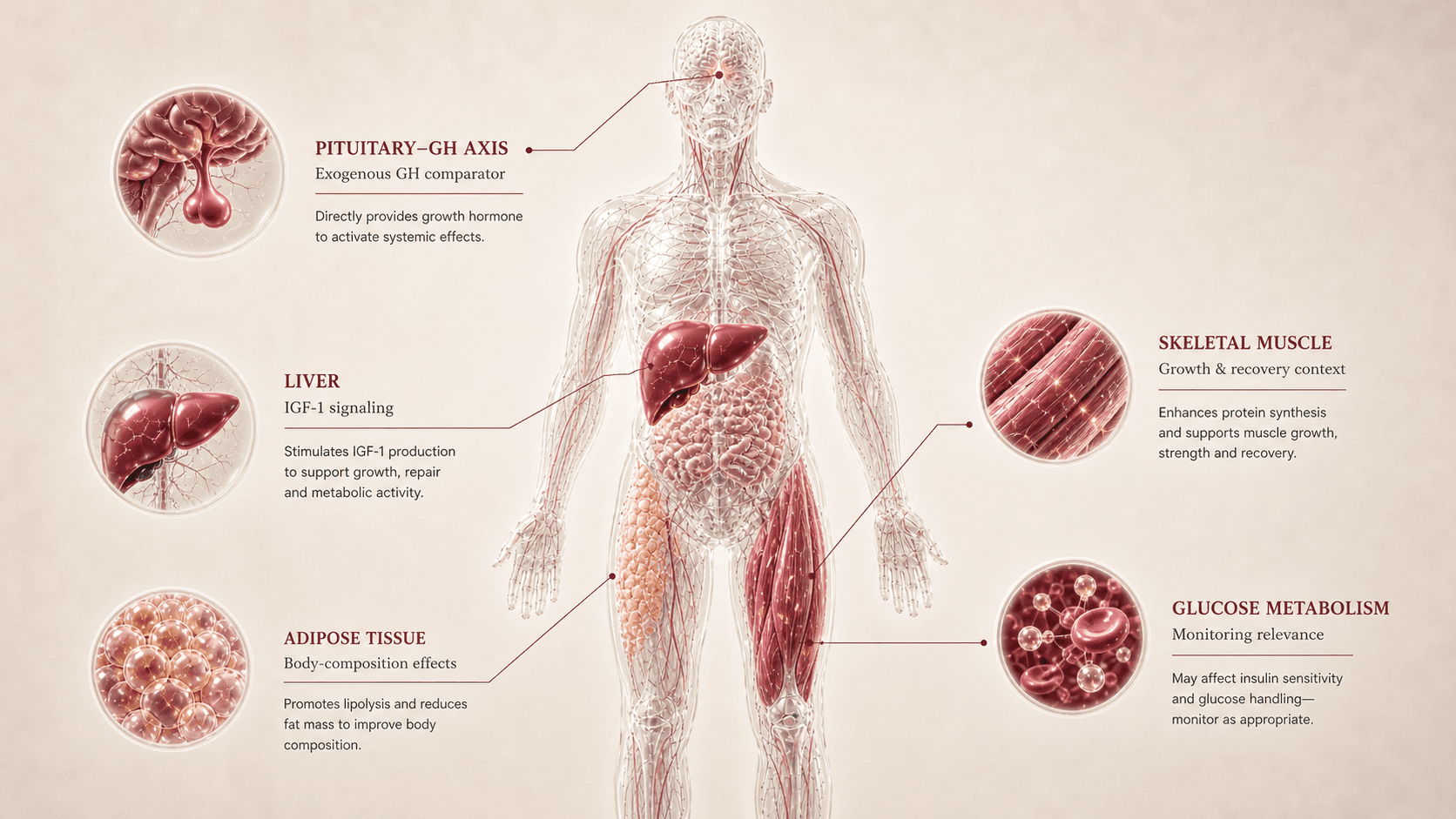 hGH / Somatropin human growth hormone - genotropin - norditropin - omnitrope | 58 | ~Bfda approved | subcutaneous - no protocol timeline | View |
| 11 | 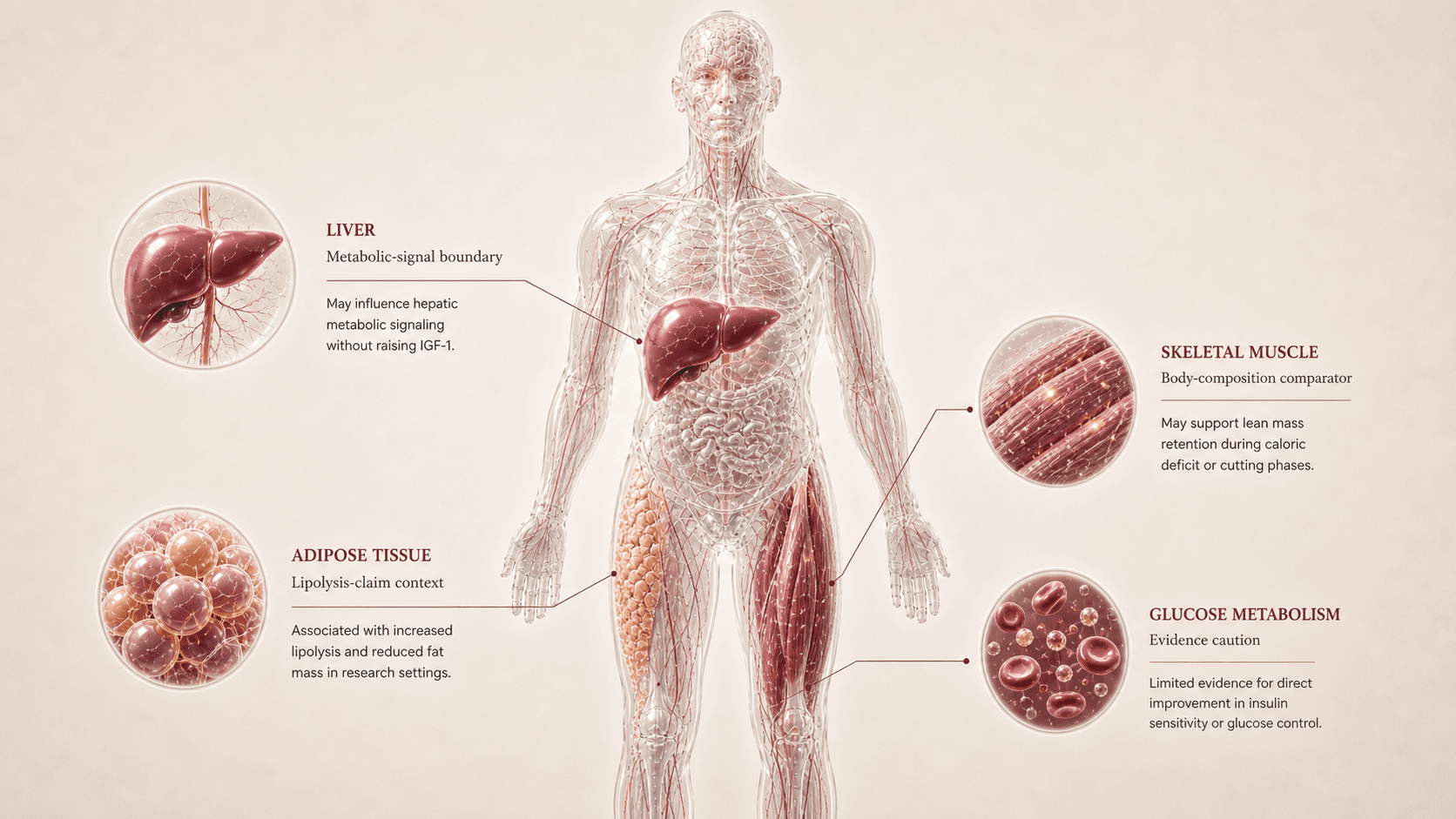 HGH Fragment 176-191 aod-like gh fragment - frag 176-191 | 55 | xDresearch only | subcutaneous - no protocol timeline | View |
| 12 | 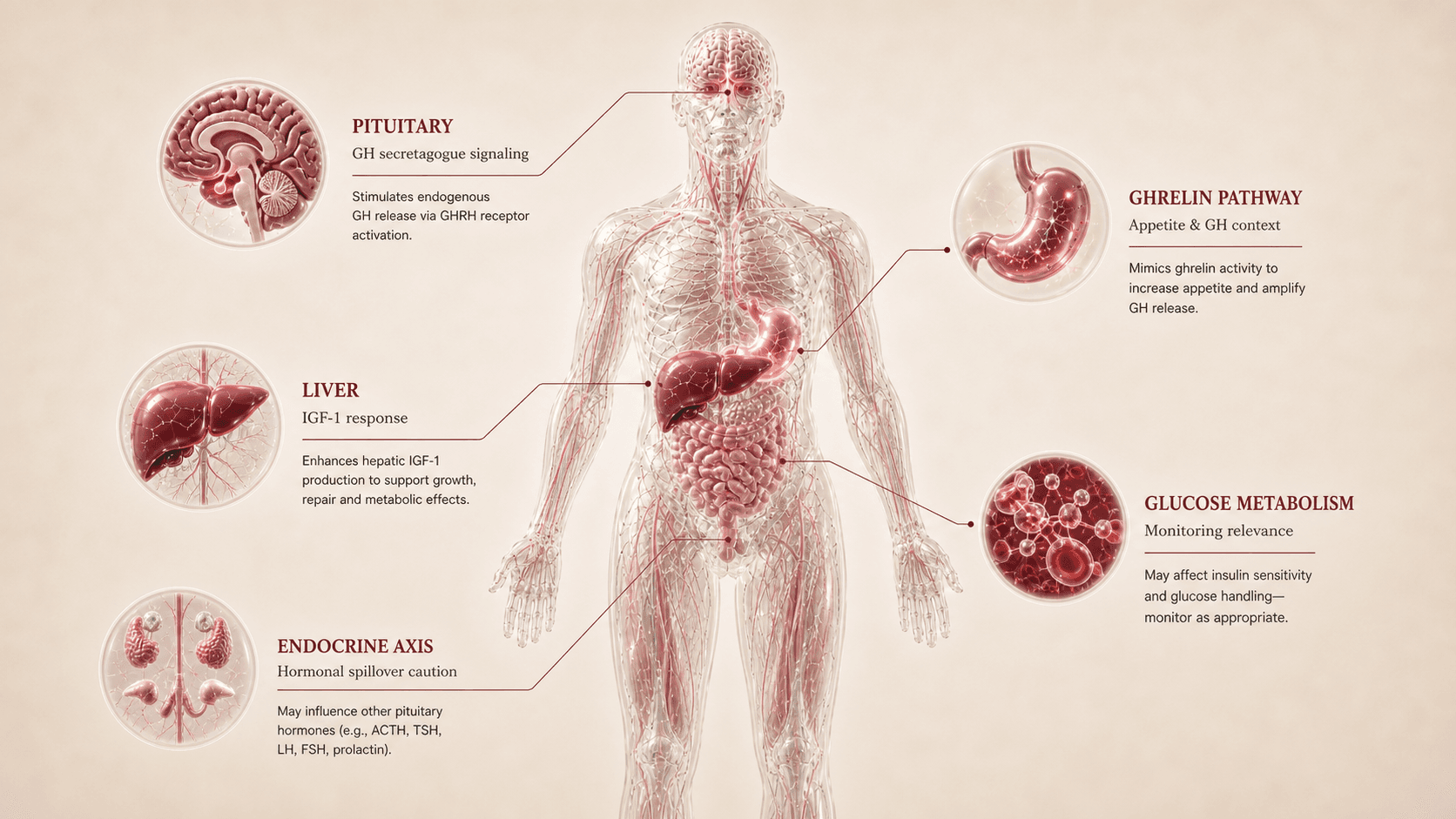 GHRP-2 pralmorelin | 52 | xCresearch only | subcutaneous - no protocol timeline | View |
| 13 | 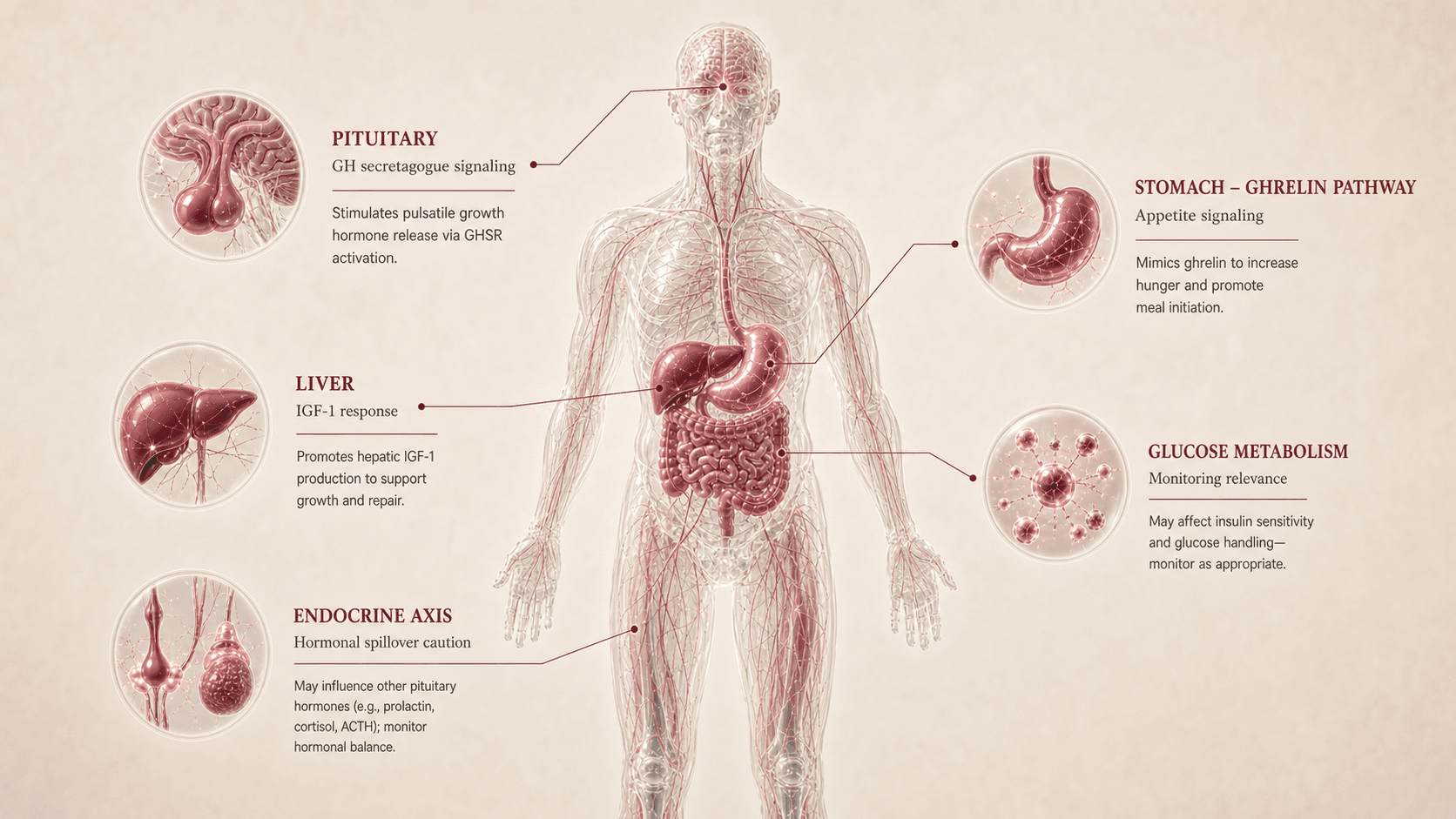 GHRP-6 growth hormone releasing peptide-6 | 49 | xCresearch only | subcutaneous - no protocol timeline | View |
Performance & Muscle comparison matrix
| Peptide | Regulatory anchor | Mechanism | Primary role | Evidence maturity | Readiness | Watchout | Takeaway |
|---|---|---|---|---|---|---|---|
CJC-1295 cjc-1295 | FDA safety-risk compounding page for CJC-1295 plus GH-axis and anti-doping context. | GHRH analog / GH-IGF-1 axis. | GH-axis education for training recovery, lean-mass preservation, and sleep-linked adaptation. | Mechanistic GH/IGF-1 signal with limited human performance outcomes and FDA safety-risk compounding concerns. | Low/moderate; requires endocrine, glucose, IGF-1, sleep-apnea, cancer-history, and sport-rule review. | GH-axis overlap, edema/glucose risk, limited clinical standardization, and anti-doping sensitivity. | Useful as the lead Performance & Muscle anchor for explaining GH signaling, not as a universal performance plan. |
Ipamorelin ipamorelin | FDA safety-risk compounding page for ipamorelin acetate and growth hormone secretagogue context. | GHSR agonist / GH secretagogue. | Secretagogue comparator for recovery, body composition, and CJC-1295 pairing literacy. | Selective GH-secretagogue biology with limited direct performance outcomes and FDA safety-risk compounding concerns. | Low/moderate; route, product identity, glucose, edema, IGF-1, and sport-rule context decide readiness. | Often appears inside CJC stacks, which can obscure attribution and turn education into protocol thinking. | Relevant because it is the common CJC partner, but it still needs cautious evidence and safety framing. |
MOTS-c mots-c | FDA safety-risk compounding page for MOTs-C plus mitochondrial/metabolic literature. | Mitochondrial / AMPK / metabolic stress signaling. | Metabolic resilience, training-energy literacy, and fatigue-context comparator. | Mechanistically interesting mitochondrial biology; human performance translation remains early. | Low/moderate; research-sensitive with no consumer performance label. | Easy to overread as an energy peptide when training load, sleep, calories, and metabolic disease may be the real drivers. | Strong educational fit for performance fatigue, but not a substitute for sleep, calories, and training structure. |
Sermorelin sermorelin | GH-axis clinical context plus existing Peptivius sermorelin dossier boundary. | GHRH / GH-IGF-1 axis support. | Softer GH-axis comparator for recovery, sleep, and body-composition literacy. | Known GH-axis biology but weak as a direct muscle or performance outcome tool. | Low/moderate; requires the same glucose, IGF-1, edema, and sleep-apnea literacy as other GH-axis compounds. | No universal performance schedule and no guarantee that GH-axis support solves training output. | Useful as a conservative GH-axis comparison point, not as a primary strength peptide. |
Tesamorelin tesamorelin | Egrifta WR/SV label context for HIV-associated lipodystrophy abdominal fat. | GHRH analog / GH-IGF-1 / visceral-fat context. | Body-composition and abdominal-fat comparator, not a general performance peptide. | Approved in narrow HIV-lipodystrophy context; limited for broad performance or muscle gain. | Medium only in label-aligned care; low as broad Performance & Muscle self-experimentation. | Indication mismatch, IGF-1/glucose monitoring, edema, malignancy/endocrine review. | Legitimate but narrow; useful for body-composition literacy, not as a CJC substitute. |
BPC-157 bpc-157 | Existing Recovery & Healing source pack plus FDA safety-risk compounding page. | Tissue-repair / local inflammation / angiogenesis hypothesis. | Training continuity and injury-context education when pain limits output. | Mechanistically popular and preclinical-heavy; direct human performance evidence is limited. | Low/moderate; belongs behind diagnosis, rehab, progressive loading, and source-quality review. | Overclaiming tendon healing and confusing recovery support with performance enhancement. | Important because Ana's knee limits training, but it remains a recovery-context compound. |
TB-500 tb-500 | Existing Recovery & Healing source pack plus FDA safety-risk compounding page. | Thymosin beta-4 fragment / cell migration / remodeling. | Soft-tissue recovery literacy for chronic training limitations. | Mechanistic thymosin biology with limited TB-500-specific human recovery outcomes. | Low/moderate; identity, sport rules, and attribution risk matter. | Fragment confusion, anti-doping sensitivity, and loss of causality when paired with BPC-157. | Useful to explain broader recovery logic, not a proven performance repair therapy. |
Semax semax | FDA safety-risk compounding page for Semax plus neuropeptide literature. | Neuropeptide / BDNF / cognitive-output context. | Neuroperformance, focus, and high-output training-day literacy. | Mechanistic and regional-use interest; limited globally replicated human performance data. | Low/moderate; more relevant to cognition than muscle output. | Single-lab or region-specific evidence and source-quality uncertainty. | Useful when performance bottlenecks look cognitive, not when the main issue is tissue or hypertrophy. |
Selank selank | FDA safety-risk compounding page for Selank acetate plus stress/neuropeptide context. | Anxiolytic/neuropeptide / stress-output context. | Calm, stress regulation, and sleep-adjacent performance support. | Interesting but limited; stronger as stress-output context than direct performance evidence. | Low/moderate; symptom tracking and source quality matter. | Can distract from sleep debt, anxiety care, or training-load management. | Secondary support if stress is the bottleneck; not a muscle or strength peptide. |
hGH / Somatropin somatropin | DailyMed somatropin labeling and anti-doping context. | Exogenous growth hormone / GH-IGF-1 axis. | Regulated GH comparator and boundary marker for performance claims. | Approved for specific deficiency/medical indications; not approved for healthy performance enhancement. | High only in label-aligned specialist care; low as performance self-use. | Misuse for physique/performance, glucose/edema/carpal-tunnel risk, cancer/endocrine review, and anti-doping. | Included because it anchors the GH conversation, not because Peptivius recommends it for performance. |
HGH Fragment 176-191 hgh-fragment-176-191 | FDA safety-risk context for AOD-9604/GH-fragment-adjacent materials and product-identity literacy. | GH fragment / lipolysis-claim context. | Body-composition comparator for fat-loss claims inside performance forums. | Weak for performance and muscle; mostly appears in fat-loss and blend-marketing contexts. | Low; no broad approved performance label and high source/claim confusion. | Often appears in blends with CJC/ipamorelin and can become a protocol-marketing shortcut. | Low priority: useful to explain why fragment marketing is not the same as hGH evidence. |
GHRP-2 ghrp-2 | FDA safety-risk compounding page for GHRP-2 and WADA growth-hormone-releasing peptide context. | GHRP / ghrelin receptor / GH secretagogue. | Older, stronger secretagogue comparator for GH-axis literacy. | Known GH-release biology, but limited consumer performance readiness and FDA safety-risk concerns. | Low; safety, glucose, cortisol/prolactin-style hormonal spillover, and sport-rule context matter. | Stronger secretagogue does not equal better performance and may raise monitoring burden. | Educational comparator for why newer secretagogues are often discussed as cleaner. |
GHRP-6 ghrp-6 | FDA safety-risk compounding page for GHRP-6 and WADA growth-hormone-releasing peptide context. | GHRP / ghrelin receptor / appetite and GH context. | Older secretagogue comparator where appetite and hormonal spillover can matter. | Mechanistic GH-release biology; weak as a practical Performance & Muscle candidate. | Low; high monitoring and low clarity for Ana's goals. | Appetite effects, glucose context, cortisol/prolactin-style concerns, and anti-doping sensitivity. | Useful as a boundary case: more GH-axis intensity can make the report less clear, not better. |
IGF-1 LR3 igf-1-lr3 | Advanced research-only growth-factor comparator; not a core Peptivius option. | IGF-1 analog / growth-factor signaling. | Advanced hypertrophy and growth-factor comparator. | High mechanistic intensity, low consumer readiness, and not a normal report option. | Low; professional review boundary only. | Glucose, growth-factor, cancer-history, source-quality, and anti-doping concerns. | Useful to explain why high-anabolic hype is not the same as suitability. |
Follistatin 344 follistatin-344 | Advanced research-only myostatin-pathway comparator; not a core Peptivius option. | Myostatin inhibition / muscle-growth pathway. | Extreme hypertrophy comparator and boundary marker. | Mechanistically provocative but not mature as a consumer performance option. | Low; not prioritized in Slice 1 ranking. | Myostatin-pathway risk, gene-expression complexity, source quality, and anti-doping context. | Included to mark the edge of the category, not to invite use. |
Combination & Overlap Map
| Combination | Components | Type | Why it appears | Peptivius read | Main caution | Status |
|---|---|---|---|---|---|---|
CJC-1295 + Ipamorelin | CJC-1295 + Ipamorelin | Common GH-axis pairing | Often discussed as GHRH signal plus GHSR amplitude. | Important category literacy, not its own peptide card and not a recommendation. | GH/IGF-1, glucose, edema, sleep apnea, cancer history, attribution, and sport rules. | Commonly discussed / not recommended as stack |
GH secretagogue overlap | CJC-1295 / Ipamorelin / Sermorelin / GHRP-2 / GHRP-6 | Mechanism overlap | Users assume more GH signaling means more muscle or recovery. | Overlap can reduce clarity and increase monitoring burden. | Endocrine, glucose, edema, appetite, sleep apnea, and anti-doping context. | Redundant / professional review |
hGH vs secretagogues | Somatropin vs GH secretagogues | Direct hormone vs stimulation | People compare regulated GH products with compounds that stimulate endogenous release. | Useful comparison, but label evidence for hGH is not a performance endorsement. | Approved indication boundaries, misuse, glucose/IGF-1, and tested-athlete rules. | Comparator / boundary marker |
MOTS-c performance context | MOTS-c + training foundation | Mitochondrial support concept | Users look for fatigue and metabolic-resilience levers. | Interesting mechanism, but sleep, calories, stress, and training load come first. | Energy claims can obscure overtraining, under-recovery, or metabolic issues. | Watchlist / category education |
Semax / Selank | Semax + Selank | Neuroperformance and stress-output overlap | Users combine focus and calm to chase better training or work output. | Cognition support is secondary unless focus/stress is the primary bottleneck. | Sleep debt, anxiety care, medication context, and limited global evidence. | Secondary / caution |
BPC-157 / TB-500 | BPC-157 + TB-500 | Recovery-limited performance pairing | Users with pain or training limitation look for faster tissue recovery. | Educational recovery concept, not a Performance & Muscle stack recommendation. | Injury diagnosis, rehab, source quality, and benefit/side-effect attribution. | Commonly discussed / not recommended as stack |
IGF-1 LR3 or Follistatin 344 | IGF-1 LR3 / Follistatin 344 | Advanced non-prioritized growth pathway | Users seeking hypertrophy extremes encounter these in forums and vendor lists. | Boundary markers only; not normal ranked options in this Slice 1 report. | Growth-factor/myostatin pathway risk, source uncertainty, glucose/cancer context, anti-doping. | Advanced / not prioritized |
Peptides + training/protein/sleep/rehab | Not a peptide blend | Non-pharmacologic foundation | Performance improves when training, nutrition, recovery, and injury management are coherent. | Safest synergy to communicate: support foundation, not peptide stack. | Does not replace clinical review when red flags exist. | Support foundation |
Frequent questions about Performance & Muscle combinations
Why did Peptivius merge Performance and Muscle & Strength?
Because users usually experience these goals together: strength, hypertrophy, recovery between sessions, body composition, focus, injury limitation, and competitive context overlap in real life.
Is this niche only for bodybuilders?
No. It also covers CrossFit, HIIT, endurance-output limits, recovery capacity, recomposition, focus, and training continuity.
Does a higher Match Score mean I should use the peptide?
No. Match Score prioritizes education and discussion relevance. It is not a medical recommendation or a protocol.
Why is hGH included but not recommended?
Somatropin anchors the GH conversation because it is a regulated hormone product in specific indications. That does not make it a broad performance recommendation.
Why is CJC-1295 + Ipamorelin not its own peptide card?
Because it is a combination concept, not a single peptide. Peptivius evaluates the components individually and explains the overlap separately.
Why are IGF-1 LR3 and Follistatin not core options?
They represent advanced growth-pathway territory with low practical readiness and higher safety, source, anti-doping, and attribution concerns.
Can peptides replace training, protein, sleep, or rehab?
No. Those foundations decide whether any performance intervention is interpretable.
What if my performance problem is actually injury or overtraining?
Then the first step is diagnosis, load management, rehab, sleep, and recovery correction. A peptide map should not hide that.
How does anti-doping affect this niche?
Many GH-axis, growth-factor, and performance compounds are anti-doping-sensitive. Tested athletes need rule review before any discussion goes further.
Does Peptivius create a full stack?
No. Slice 1 ranks individual peptides and provides overlap literacy. It does not generate stack scores or operational protocols.