Gut Health.
6 peptides, ranked.
Gut Health is the digestive layer of the Blueprint: barrier and mucosa, intestinal inflammation, gut-immune signaling, gut-brain instability, motility, dysbiosis narratives, permeability, reflux, and the difference between symptoms and diagnosis. Each candidate was evaluated against your BioProfile, training load, and declared contraindications. The strongest matches sit at the top; secondary options remain visible for comparison.
Gut Health foundation - before peptides
Gut Health does not start with peptides. It starts with separating IBS, IBD, SIBO, reflux, food intolerance, celiac disease, malabsorption, motility, inflammation, and red flags. The peptides below are analyzed as mechanism education and professional-conversation topics, not substitutes for diagnosis, testing, structured diet, or gastroenterology care.
- Clarify the leading hypothesis: IBS, IBD, SIBO, reflux, food intolerance, celiac disease, malabsorption, motility, inflammation, or symptoms without diagnosis.
- Map symptom pattern: bloating, pain, reflux, diarrhea, constipation, nocturnal symptoms, urgency, food timing, and stress-linked flares.
- Review food triggers, elimination-diet history, medication context, acid suppression, metformin tolerance, and supplement changes.
- Check prior workup: celiac testing, stool studies, inflammatory markers, endoscopy history, SIBO breath testing, and microbiome claims.
- Use labs and clinical context when relevant: CBC, ferritin, B12, vitamin D, fecal calprotectin, thyroid context, and inflammatory signs.
- Keep the gut-brain axis visible without turning anxiety-linked symptoms into a peptide shortcut.
Gut red flags - when this is not a peptide question
Some gastrointestinal patterns need investigation before peptide matching. This section is not meant to alarm the reader; it marks the situations where diagnosis and medical care take priority over mechanism curiosity.
- Blood in stool, black stools, unexplained anemia, fever, or unintentional weight loss.
- Nocturnal diarrhea, progressive or severe abdominal pain, persistent vomiting, dehydration, dysphagia, or suspected obstruction.
- New gastrointestinal symptoms after age 50 without evaluation.
- Family history of colorectal cancer or inflammatory bowel disease.
- Active IBD flare, chronic corticosteroid or immunosuppressant use, or suspected infection.
- Abdominal pain with rigidity, rapid worsening, fainting, or inability to maintain fluids.
Ranked list
| Rank | Peptide | Match | Evidence | Regimen | |
|---|---|---|---|---|---|
| 01 | 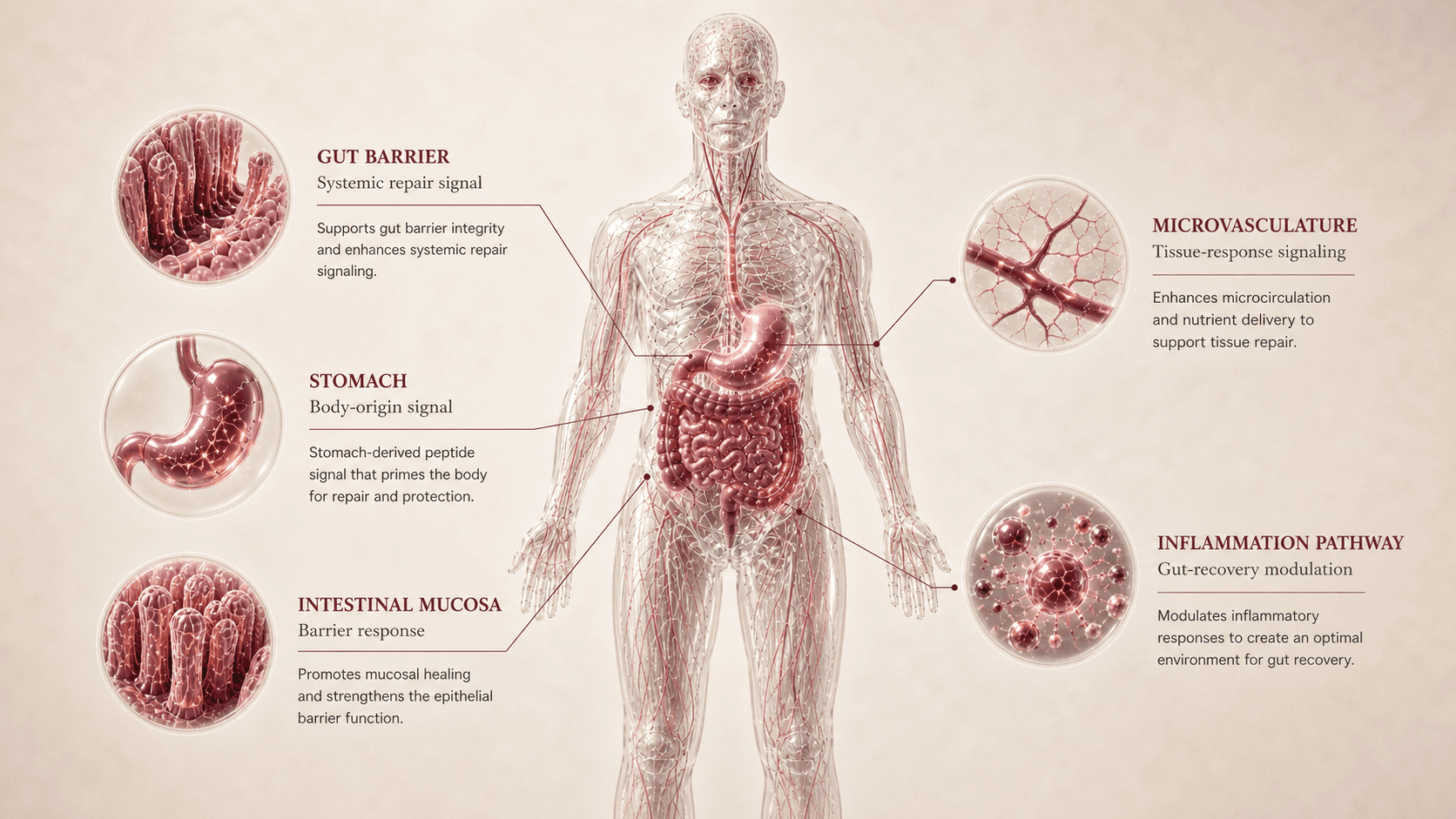 BPC-157 body protection compound 157 - bepecin | 86 | ~B-research only | subcutaneous - no protocol timeline | View |
| 02 | 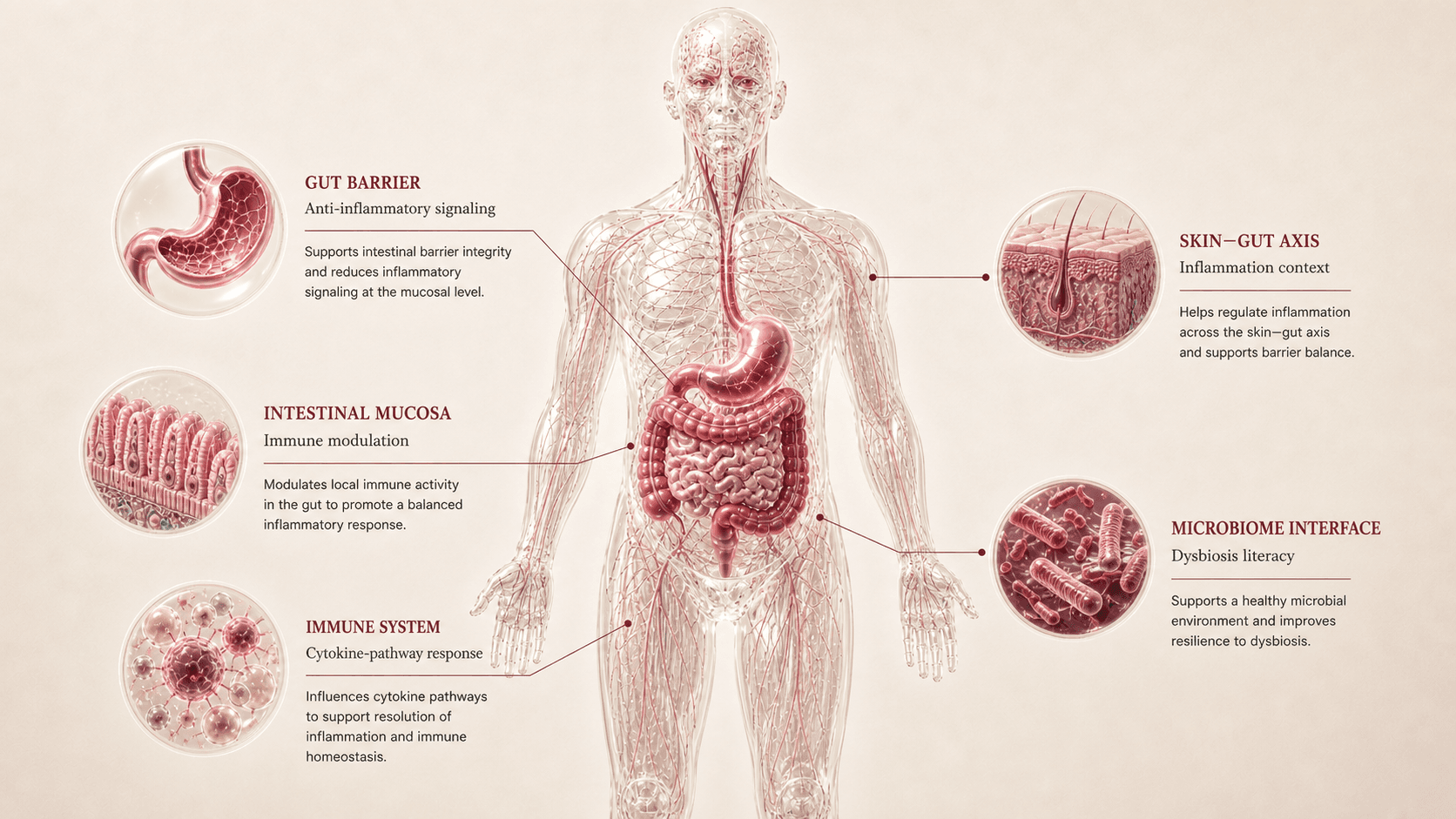 KPV lys-pro-val - alpha-msh fragment | 82 | xCresearch only | oral - no protocol timeline | View |
| 03 | 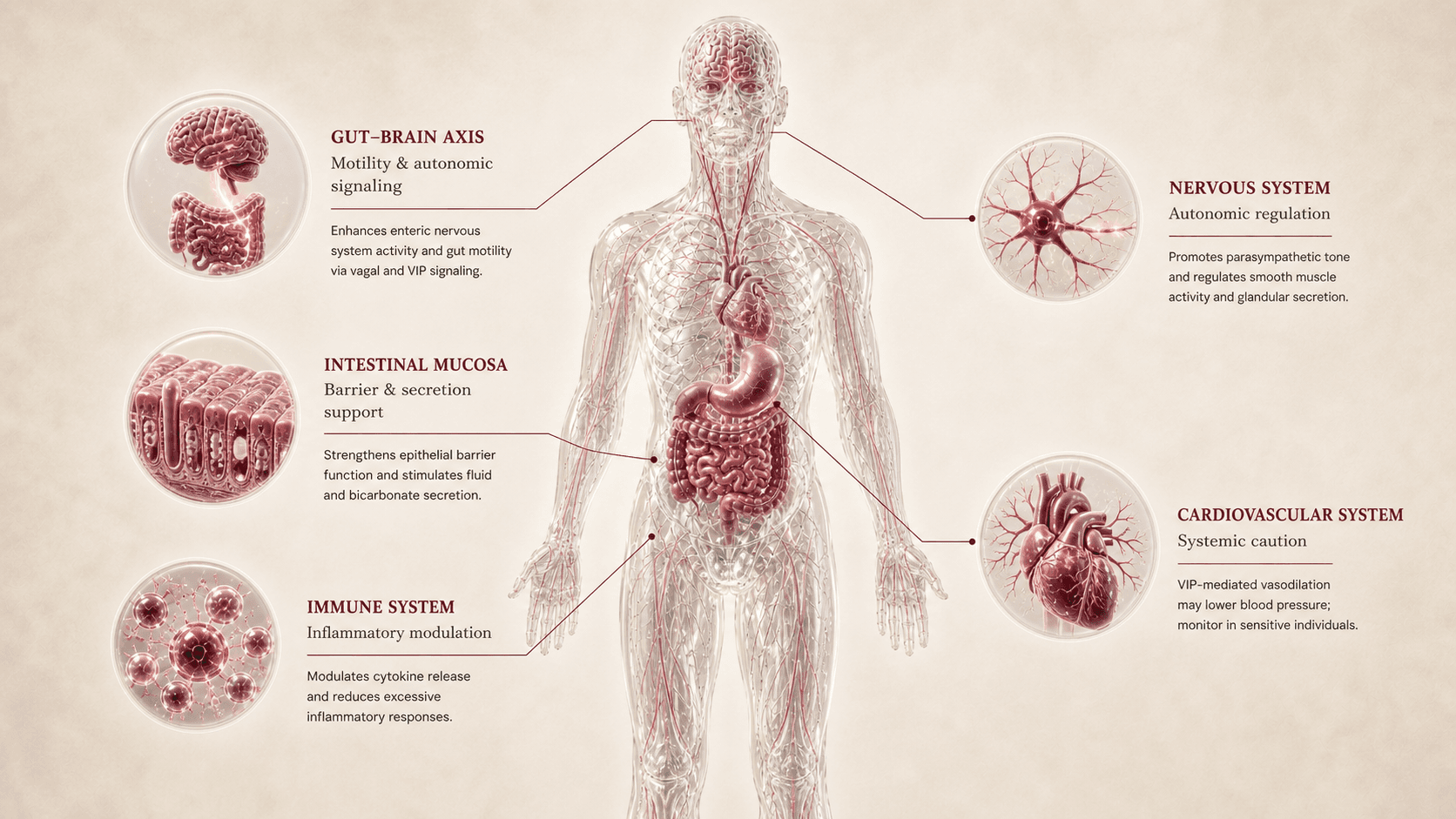 VIP vasoactive intestinal peptide | 78 | xCresearch only | intranasal - no protocol timeline | View |
| 04 | 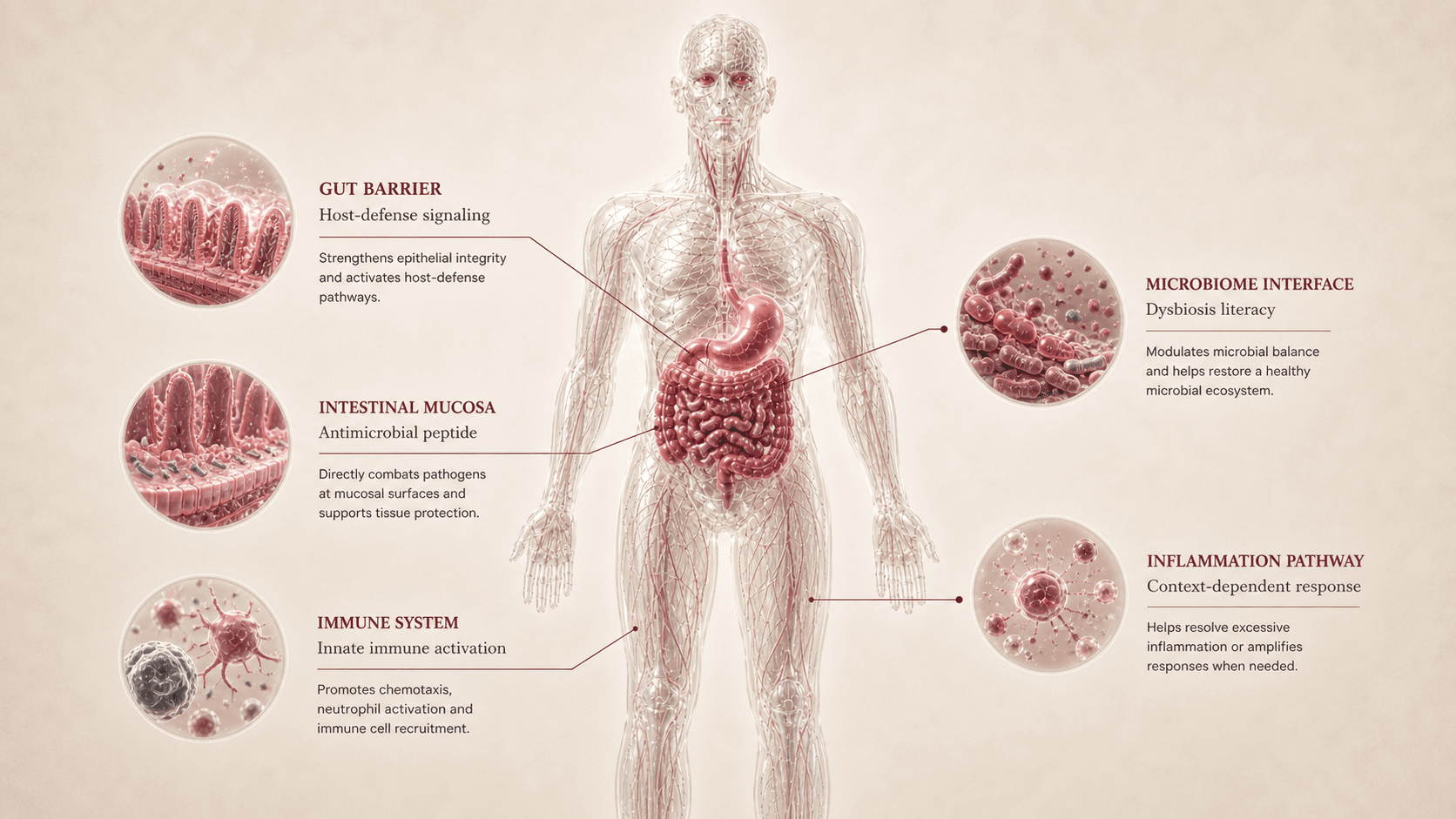 LL-37 cathelicidin ll-37 - hcap-18 fragment | 72 | xCresearch only | subcutaneous - no protocol timeline | View |
| 05 | 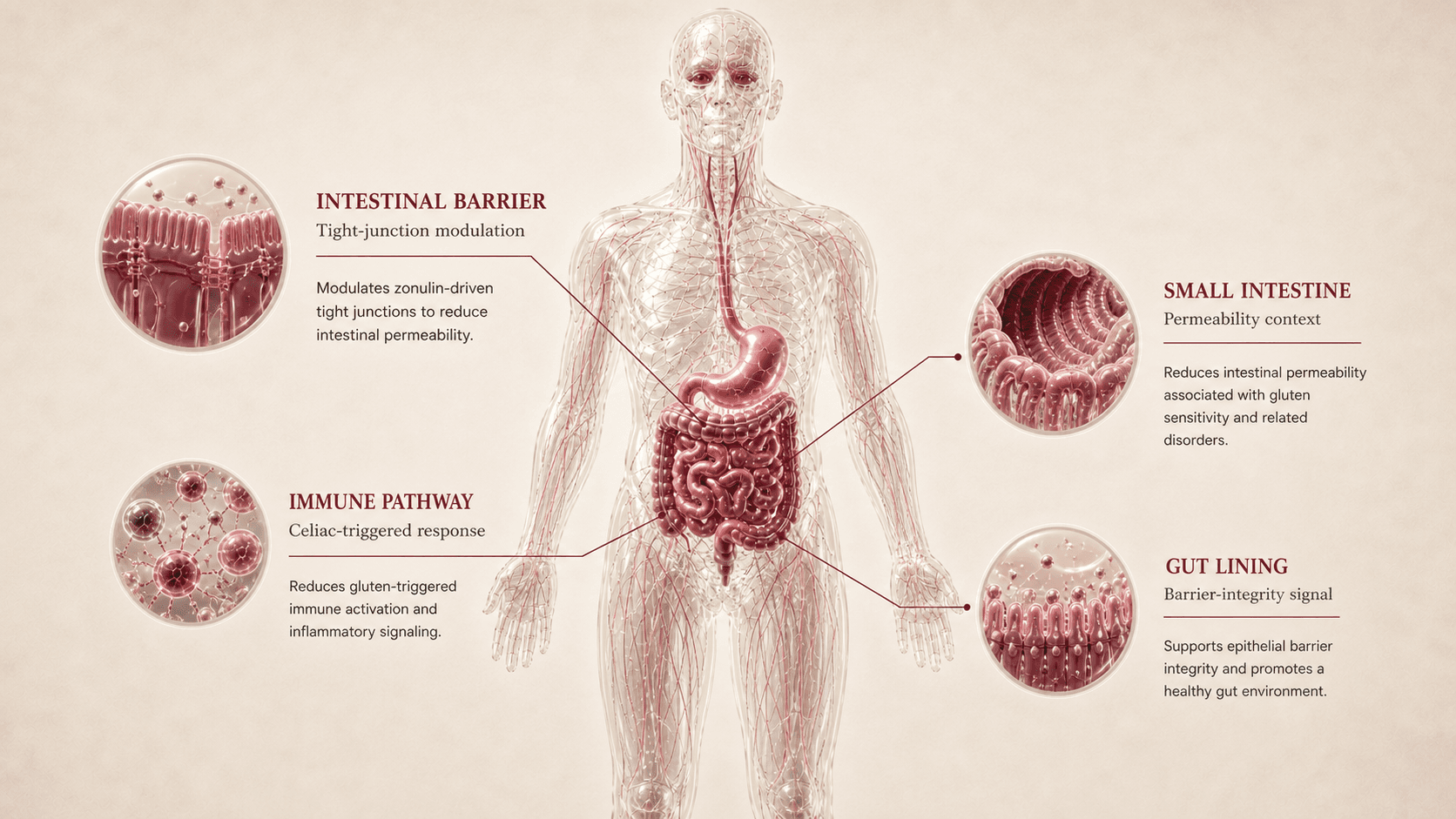 Larazotide larazotide acetate - at-1001 | 68 | ~B-phase 3 | oral - no protocol timeline | View |
| 06 | 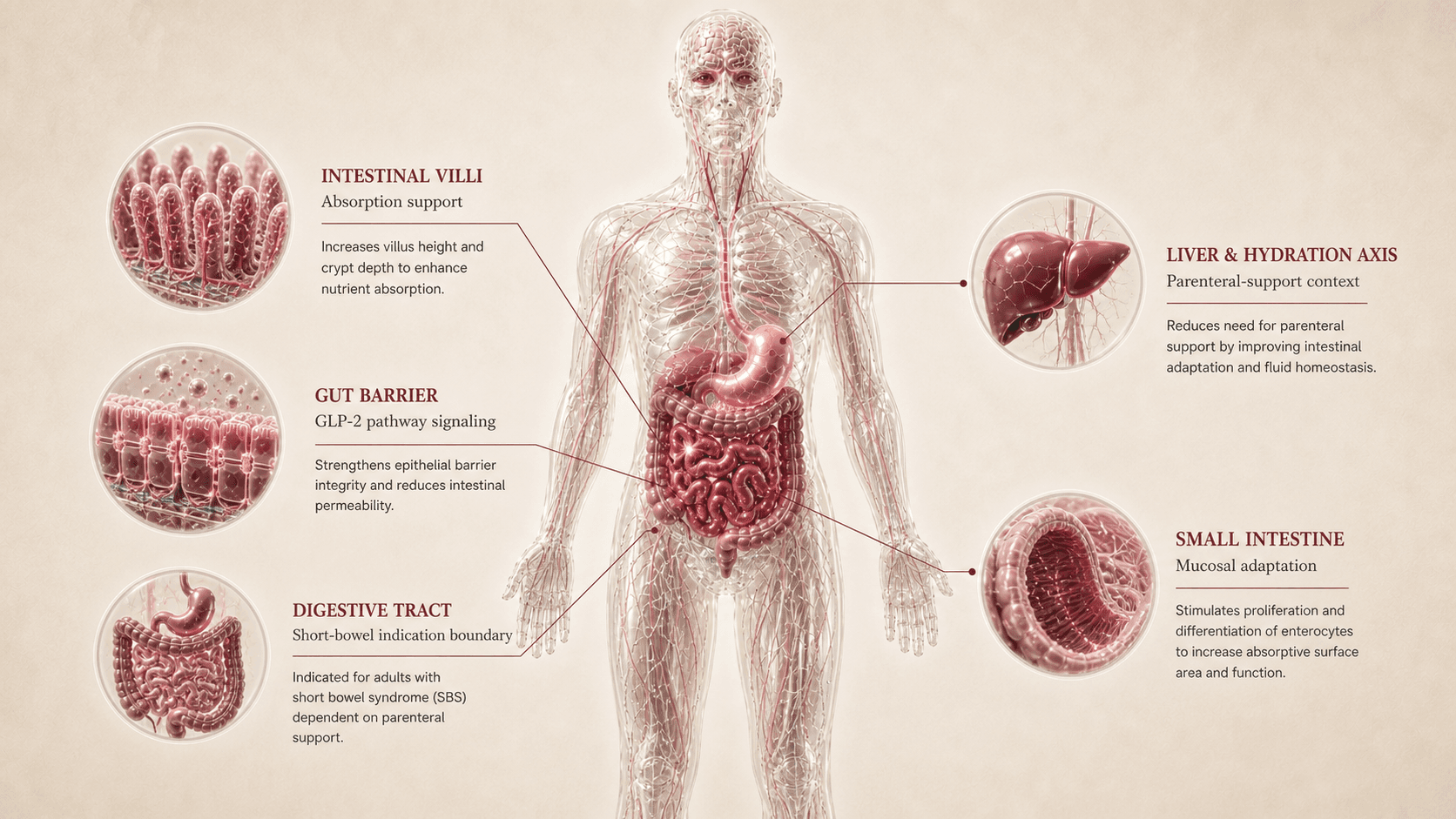 Teduglutide gattex - revestive - glp-2 analog | 55 | +Afda approved | subcutaneous - no protocol timeline | View |
Gut Health comparison matrix
| Peptide | Regulatory anchor | Mechanism | Primary gut role | Evidence maturity | Readiness | Watchout | Takeaway |
|---|---|---|---|---|---|---|---|
BPC-157 bpc-157 | FDA safety-risk compounding context for BPC-157 plus preclinical gastric and mucosal-repair literature. | Mucosal repair / barrier and gastric-protection research context. | Mucosa, barrier, reflux, and suspected permeability literacy. | Strong mechanistic and preclinical gut-repair interest; limited human gut-health outcome evidence. | Low/moderate; research-sensitive with no approved gut-health label and meaningful source-quality uncertainty. | No approved gut indication, limited human evidence, product-quality risk, and risk of bypassing diagnosis. | The lead Gut Health education match for Ana's barrier/mucosa story, but not an approved gut therapy. |
KPV kpv | PepT1-mediated KPV intestinal inflammation literature and melanocortin/IBD review context. | Melanocortin-derived anti-inflammatory / PepT1 gut-immune signaling. | Inflammatory gut-immune context and intestinal inflammation literacy. | Mechanistic and preclinical gut-immune evidence; limited direct human consumer gut-health outcomes. | Low/moderate; research-sensitive and not an IBD treatment plan. | Active IBD-like symptoms, infection, immunosuppression, and autoimmune context need gastroenterology review. | Relevant when Ana's gut story looks inflammatory or autoimmune-adjacent, but not a Crohn's or colitis treatment. |
VIP vip | Vasoactive intestinal peptide enteric nervous system, microbiota, motility, and neuroimmune literature. | Enteric nervous system / smooth muscle / secretion / vasodilation. | Gut-brain, motility, IBS-like instability, and neuroenteric context. | Biologically important in the gut-brain and enteric nervous system; limited as consumer Gut Health intervention. | Low; systemic and vasoactive effects make it a high-caution education topic. | Vasoactive/cardiovascular effects, blood pressure context, short half-life, and systemic action. | Explains the anxiety-motility-gut-brain lane, but should not read as a casual IBS peptide. |
LL-37 ll-37 | FDA safety-risk context for cathelicidin LL-37 plus LL-37 inflammatory bowel disease and antimicrobial peptide literature. | Antimicrobial host-defense peptide / innate immune and barrier context. | SIBO, dysbiosis, antimicrobial peptide, and host-defense literacy. | Mechanistic and early gut/IBD-host-defense interest; limited direct human gut-health outcome evidence. | Low; research-only antimicrobial peptide context, not a consumer microbiome protocol. | SIBO/dysbiosis claims are easy to overread; antimicrobial and inflammatory effects are context-dependent. | Useful for understanding antimicrobial peptide narratives, not a SIBO treatment or antibiotic replacement. |
Larazotide larazotide | Larazotide celiac disease tight-junction trial and discontinued phase 3 context. | Tight-junction / intestinal permeability modulation. | Permeability and celiac tight-junction comparator. | Studied in celiac disease and permeability contexts, but phase 3 development did not create an approved practical option. | Low; educational comparator rather than current consumer Gut Health path. | Not approved, not a leaky-gut cure, and development limitations matter. | Useful to explain intestinal permeability, but not a practical treatment recommendation. |
Teduglutide teduglutide | DailyMed/FDA Gattex teduglutide label for short bowel syndrome dependent on parenteral support. | GLP-2 analog / mucosal growth and intestinal adaptation. | Approved short-bowel syndrome anchor and mucosal-adaptation comparator. | Strong in the narrow short-bowel syndrome/parenteral-support context; not broad gut wellness evidence. | High only in specialist, label-aligned SBS care; low for Ana's IBS-like/permeability symptoms. | Not for IBS, SIBO, reflux, leaky gut, or wellness gut optimization; specialist monitoring and indication boundaries matter. | The regulated GLP-2 anchor, included to show what mature gut peptide evidence looks like in a narrow indication. |
Relamorelin relamorelin | Investigational motility/gastroparesis comparator; not a broad approved gut-health therapy. | Ghrelin receptor agonist / gastrointestinal motility. | Motility, gastroparesis, constipation, and gastric-emptying comparator. | Phase 2 human motility signal in diabetic gastroparesis and constipation contexts; not general gut healing evidence. | Low outside research or specialist trial context. | Motility-specific; appetite/hormonal context and diagnosis matter. | Useful if the question is motility, not if the question is barrier or inflammation. |
Glepaglutide / Apraglutide glepaglutide-apraglutide | Pipeline GLP-2 analog context for short bowel syndrome / intestinal failure research. | GLP-2 analog / mucosal adaptation. | Advanced GLP-2 class comparator beside teduglutide. | Promising class evidence in SBS/parenteral-support settings, not broad wellness gut evidence. | Low for consumer Gut Health; specialist/pipeline context. | Narrow disease context and specialist monitoring; not IBS/SIBO/leaky-gut optimization. | Shows where the regulated gut-peptide category is moving, not what Ana should use. |
Combination & Overlap Map
| Combination | Components | Type | Why it appears | Peptivius read | Main caution | Status |
|---|---|---|---|---|---|---|
BPC-157 + KPV | BPC-157 + KPV | Barrier/mucosa + inflammation concept | Users connect leaky-gut narratives with inflammatory gut symptoms. | Conceptual overlap, not a stack recommendation. | Weak direct combination evidence and high attribution risk. | Conceptual / not recommended as stack |
BPC-157 + LL-37 | BPC-157 + LL-37 | Barrier + antimicrobial/dysbiosis concept | Appealing in leaky gut plus SIBO or dysbiosis narratives. | Useful to explain why users combine repair and antimicrobial logic, not a microbiome protocol. | SIBO/dysbiosis requires diagnostic strategy; antimicrobial peptide logic is not an antibiotic replacement. | High caution / diagnostic workup first |
KPV + VIP | KPV + VIP | Inflammation + neuroenteric/gut-brain context | IBD/IBS overlap narratives mix immune and motility/gut-brain symptoms. | Educational overlap only; immune and vasoactive biology both need careful review. | Inflammatory symptoms and vasoactive/systemic effects require professional review. | Professional review / not casual |
GLP-2 class | Teduglutide / Glepaglutide / Apraglutide | Mucosal adaptation class | Users see GLP-2 as a gut-growth or healing pathway. | Regulated/pipeline class for intestinal adaptation, not wellness gut optimization. | Narrow indications, specialist context, and monitoring boundaries. | Regulated or pipeline comparator |
Larazotide + leaky-gut narrative | Larazotide + permeability claims | Tight-junction/permeability education | Users want a direct peptide explanation for intestinal permeability. | Useful for barrier literacy, but development limitations matter. | Not a generic leaky-gut cure and not an approved practical treatment. | Educational comparator |
Peptides + diet/probiotics/testing | Not a peptide blend | Non-peptide foundation | Gut symptoms often change with food triggers, microbiome interventions, medication changes, and testing. | Testing, diet strategy, food-trigger mapping, microbiome workup, and medical care remain the foundation. | Peptides should not bypass diagnosis or red-flag evaluation. | Support foundation |
Frequent questions about Gut Health peptides
Is Gut Health the same as leaky gut?
No. Leaky gut or permeability is one concept. Gut Health also includes IBS, IBD, SIBO, reflux, food intolerance, celiac disease, malabsorption, motility, inflammation, microbiome context, and red flags.
Can peptides replace a gastroenterologist?
No. Peptides do not replace diagnosis, red-flag evaluation, stool/lab testing, endoscopy when indicated, or professional care.
Why is BPC-157 ranked highly if human evidence is limited?
Because Ana's profile strongly matches the barrier/mucosa question. The high rank reflects relevance to the conversation, not proof that it is an approved gut therapy.
Where does KPV fit?
KPV fits the inflammatory gut-immune lane. It is relevant when the question is inflammation or autoimmune-adjacent context, but it is not presented as Crohn's or colitis treatment.
Is VIP for IBS?
VIP helps explain gut-brain, motility, secretion, and enteric nervous system biology. The report does not present it as a casual IBS option or protocol.
Is LL-37 a SIBO treatment?
No. LL-37 is included for antimicrobial peptide and dysbiosis literacy. SIBO requires diagnostic and dietary/medical strategy, not an inferred antimicrobial peptide protocol.
Why include Teduglutide if it is not a general gut-health peptide?
Teduglutide is the regulated GLP-2 anchor for short bowel syndrome. It shows what mature gut-peptide evidence looks like in a narrow indication, not what general gut wellness should copy.
What happened with Larazotide?
Larazotide is useful for tight-junction and permeability education, but it is not an approved general gut-health therapy and its phase 3 path did not become a practical approved option.
Are gut-health stacks recommended?
No. The Combination & Overlap Map explains narratives users encounter. It does not recommend stacks, blends, or simultaneous peptide use.
What symptoms should be investigated before thinking about peptides?
Blood in stool, anemia, fever, unintentional weight loss, nocturnal diarrhea, severe or progressive pain, persistent vomiting, dysphagia, dehydration, suspected obstruction, new symptoms after 50, or strong family history should be investigated.
How does the gut-brain axis affect the ranking?
Ana's anxiety around gut unpredictability makes gut-brain context relevant, which is why VIP appears. It does not override barrier, inflammation, diagnosis, or safety boundaries.
Can GLP-1 medications affect gut symptoms?
Yes. GLP-1 and related medicines can affect gastric emptying and GI tolerance. In Gut Health, they are medication-context flags, not Gut Health candidate peptides.