What you are holding is not a list of peptides. It is an opinionated reading of the landscape against the profile you declared.
Every compound here was evaluated against your age, sex, goals, and stated experience — and ranked accordingly. That is why your top match is not necessarily anyone else's.
You are not meant to read this cover to cover. Start with your top-ranked compounds. Use the Introduction when you want context. Nothing in this document replaces a physician.
Blueprint calibrated./Next: your BioProfile.
scroll
Section 01 · BioProfile
The profile you declared.
Ana Beatriz Costa's Blueprint is being read through a 38-year-old female baseline with moderate activity, intermediate peptide experience, advanced supplementation experience, 74 kg at 168 cm, and 32% declared body fat. The 11 goals declared are Fat loss, Body recomposition, Muscle gain, Recovery, Longevity, Cognition, Sleep, Skin/Aesthetics, Immunity, Hormonal balance, and Sexual health. The health context includes Hashimoto thyroiditis, PCOS, Generalized anxiety disorder, and Chronic left patellar tendinopathy; the medication context includes Levothyroxine 75 mcg/day, Escitalopram 10 mg/day, and Metformin 500 mg twice daily. That is why every niche is ranked against overlapping goals, constraints, safety signals, and the 12 focus areas selected for this Elite Blueprint.
Three blocks, roughly 25 minutes of reading. You are not meant to read it linearly. Each block answers a different question — the map below is your index, consult it whenever you need to reorient.
You are here/Block I active
Block Iactive
_opening
About you.
Mirrors what you declared, before any peptide is named.
01 /Cover
02 /BioProfile
03 /Niches
04 /Maphere
Block IIupcoming
_introduction
About peptides.
The 7-chapter primer that builds the base vocabulary.
01 /What is a peptide
02 /How they work
03 /Where they came from
04 /The GLP-1 case
05 /Landscape 2026
06 /Why fit varies
07 /How to read this report
Block IIIupcoming
_your blueprint
Your peptides.
Your purchased niches scored against your profile. Where you go for answers.
Weight Loss7 peptides
Recovery & Healing5 peptides
Performance & Muscle13 peptides
Gut Health6 peptides
Longevity6 peptides
Immune Support6 peptides
Sleep & Rest8 peptides
Focus & Cognition5 peptides
Skin & Anti-Aging9 peptides
Hair Loss6 peptides
Hormonal Health7 peptides
Sexual Wellness5 peptides
scroll
Section 01 · Introduction · 1 of 7 · ~3 min
What is a peptide?
A small molecule. Already inside you.
Peptides are a technical word for something your body has been making since before you were born. The word is new to you. The thing is not.
01_definition
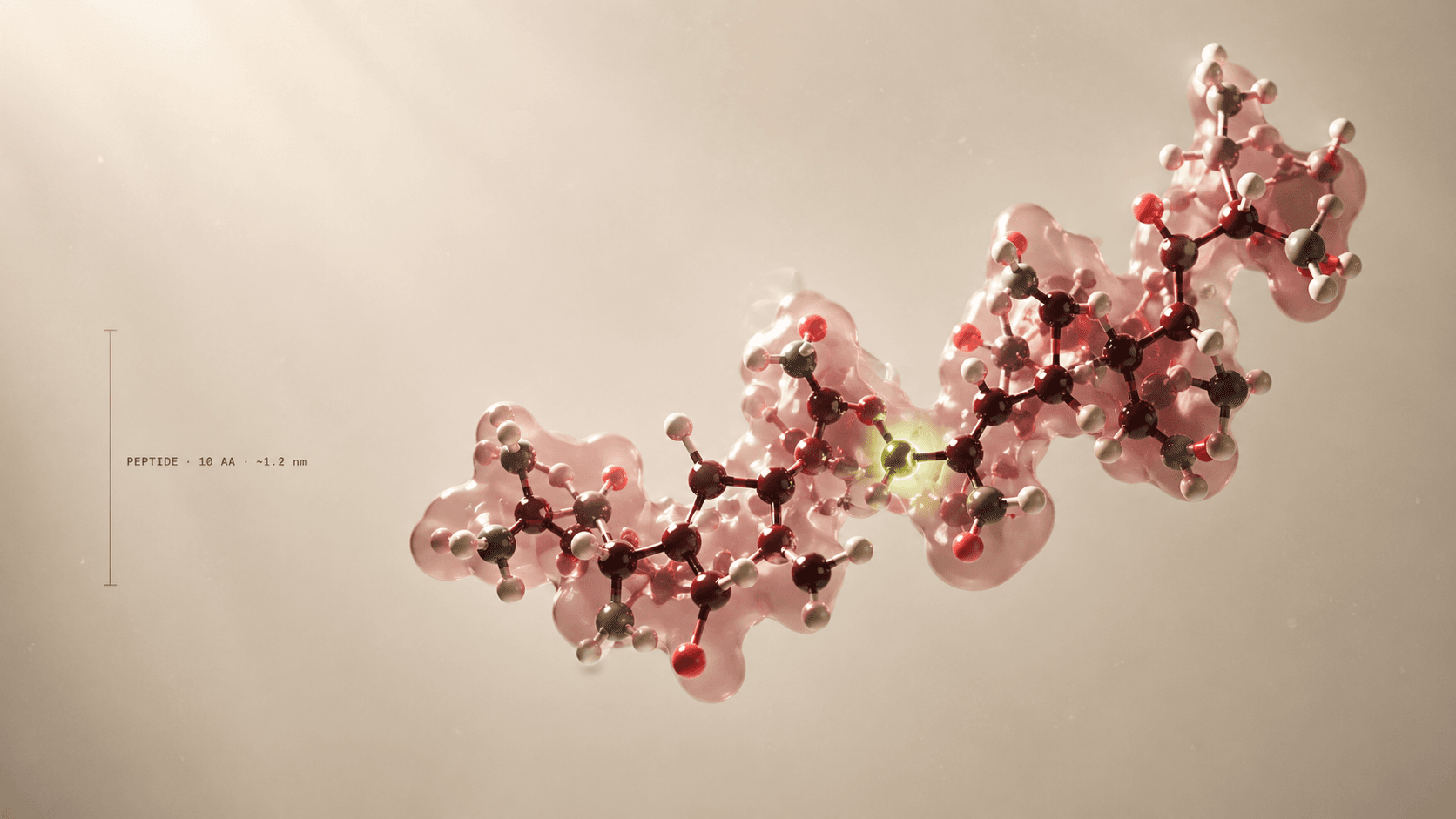
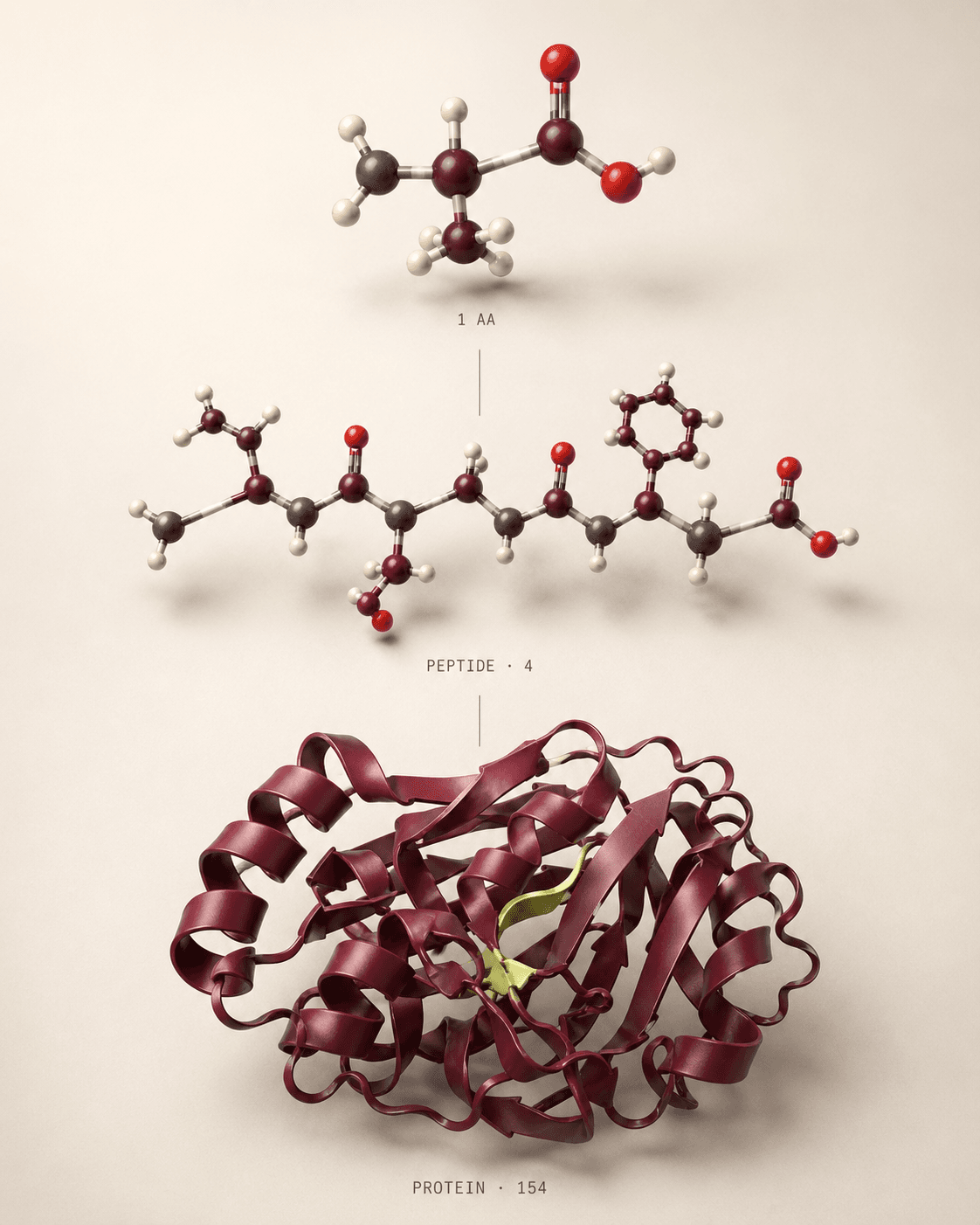
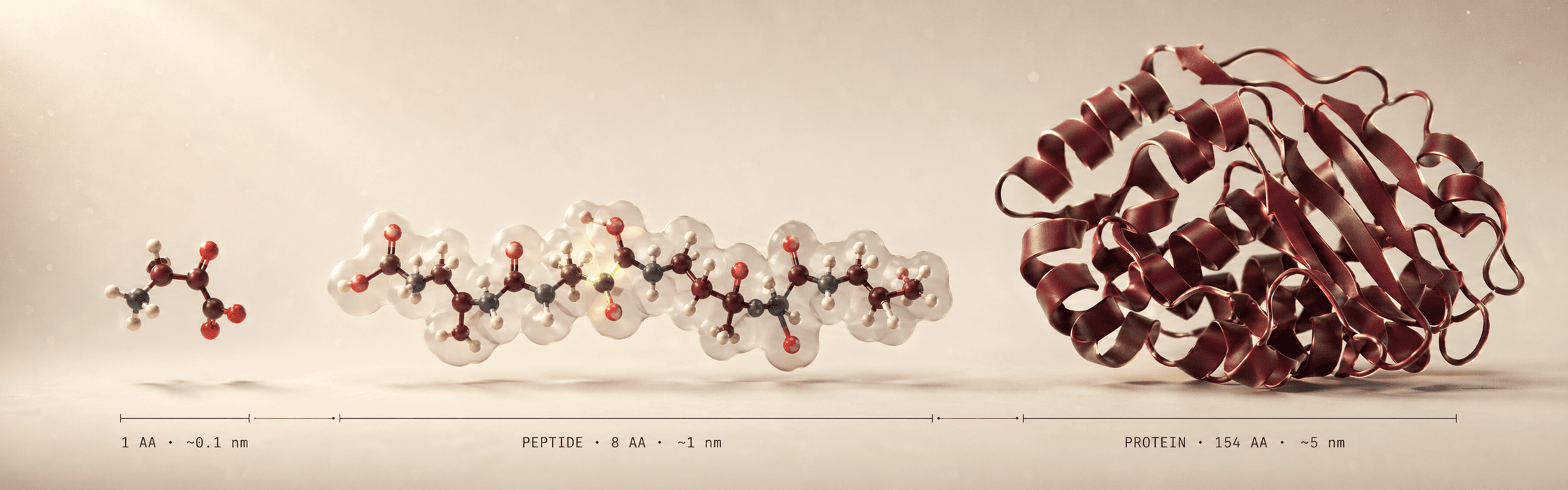
Peptides are short chains of amino acids — smaller than proteins, larger than amino acids alone. Two to fifty links. Your body produces hundreds of them every day, and has done so since before you were born.
02_the analogy
Think of amino acids as letters. Peptides are short words. Proteins are full sentences.
Each word gives a specific instruction:
→repair this tissue
→release this hormone
→calm this inflammation
03_the spectrum
Size matters. It changes everything about how the body reads the message.
fig. 01_ / the amino-acid → peptide → protein continuum04_you already know these
You have met peptides before. They were not labelled.
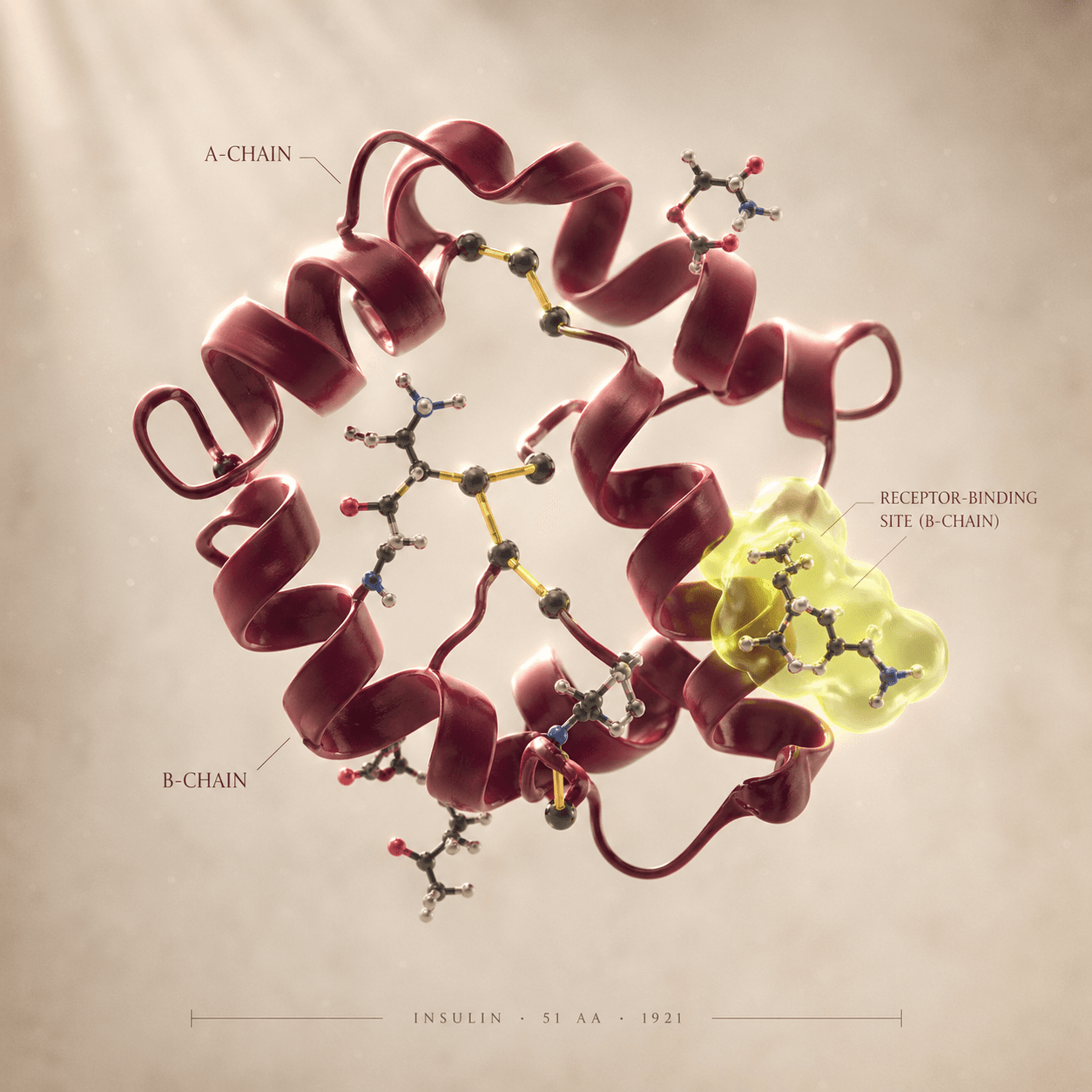
01_INSULIN
The peptide that became the first peptide medicine, in 1921.
02_COLLAGEN
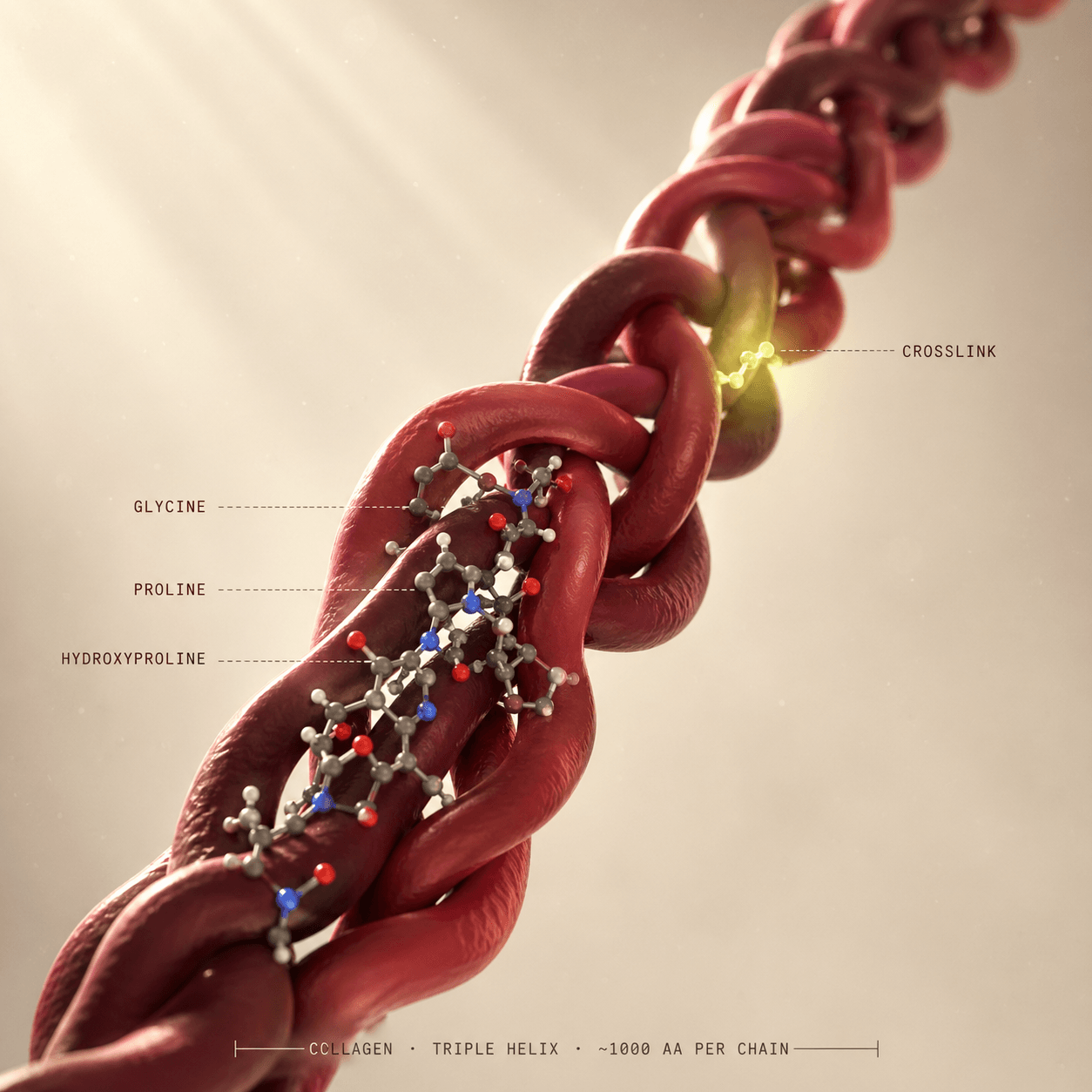
Breaks down into peptides your body uses to rebuild skin, joints, gut lining.
03_GLP-1
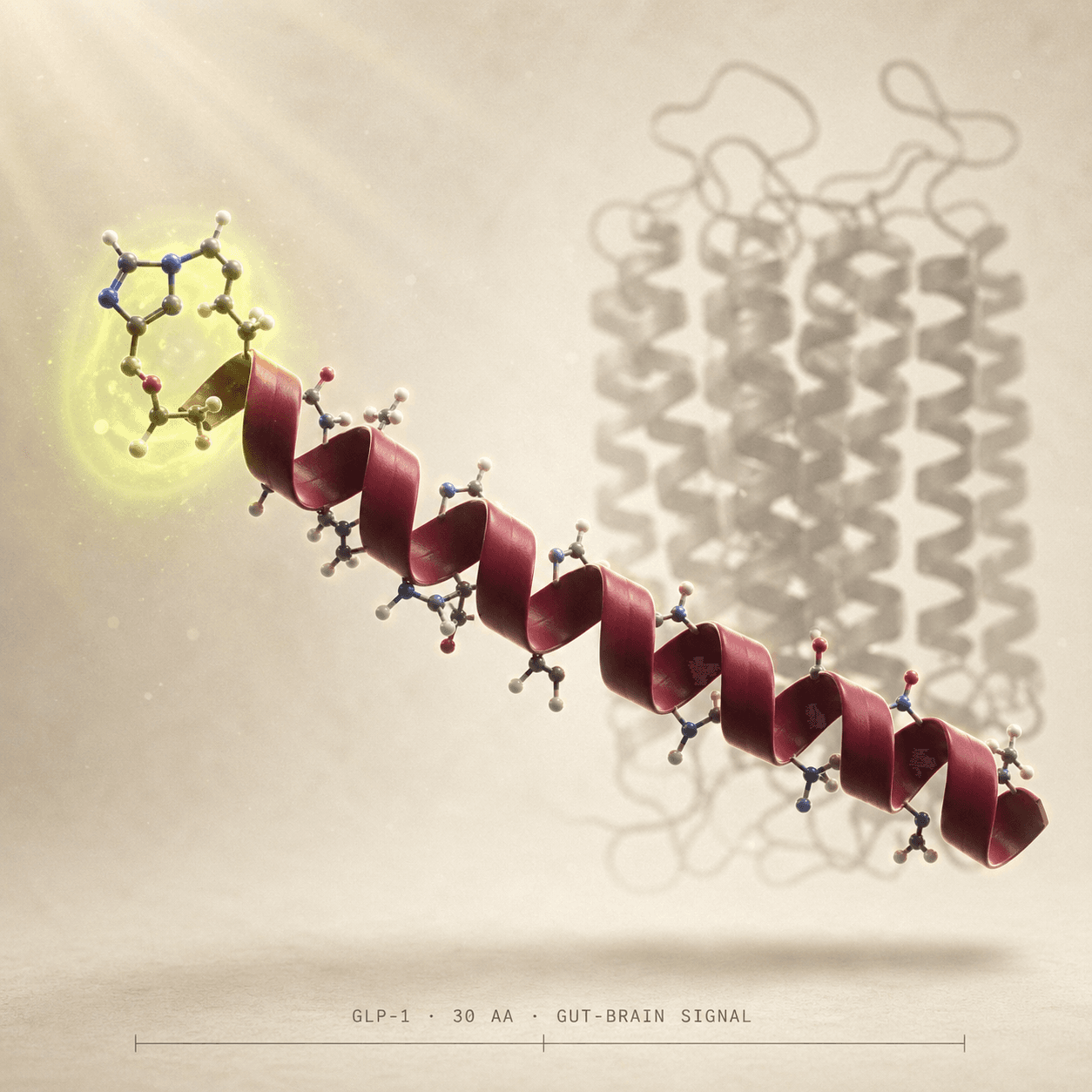
Your gut releases this every time you eat. The same molecule Ozempic mimics.
05_the fundamental difference
Conventional drugs
Peptides
01Mechanism
Conventional drugs
Force a reaction.
A drug compels the cell to act, often against its baseline state.
Peptides
Send a signal.
A peptide carries information the cell is already listening for.
02Relationship to the body
Conventional drugs
Foreign to the body.
Broad-spectrum — hits whatever fits the receptor shape.
Peptides
Native to the body.
Part of the body’s vocabulary — fits a specific receptor like a key.
03Where side effects come from
Conventional drugs
Hitting things you did not mean to hit.
Off-target binding — the drug touches receptors beyond its intended target.
Peptides
Amplifying a signal that already exists.
Side effects scale with intensity, not with foreignness — the body still recognises the signal.