Hair Loss.
6 peptides, ranked.
Hair Loss is the Blueprint layer for follicle biology, shedding, androgen-sensitive thinning, PCOS and thyroid context, ferritin and nutrient status, scalp inflammation, stress, restrictive dieting, and topical peptide claims. Each candidate was evaluated against your BioProfile, training load, and declared contraindications. The strongest matches sit at the top; secondary options remain visible for comparison.
Hair foundation - before peptides
Hair loss interpretation starts with diagnosis and drivers: pattern, shedding timeline, PCOS/androgens, thyroid, ferritin/iron, vitamin D, protein intake, stress, sleep, medications, and scalp disease.
- Dermatology diagnosis: androgenetic pattern, telogen effluvium, alopecia areata, traction, scarring, or inflammatory scalp disease.
- Ferritin/iron, thyroid, vitamin D, zinc, B12, protein intake, restrictive dieting, and recent weight change.
- PCOS, androgen symptoms, cycle pattern, acne/hirsutism, and medication context.
- Scalp inflammation, dandruff/seborrheic dermatitis, psoriasis, itching, pain, or scarring signs.
- Evidence-based hair standards such as minoxidil/finasteride context when clinically appropriate.
Hair red flags - when this is not a peptide question
Some hair findings require dermatology or medical evaluation before any peptide comparison.
- Patchy sudden loss, scarring, pain, burning, pustules, scaling, bleeding, or rapid diffuse shedding.
- Postpartum, major illness, surgery, crash dieting, anemia, thyroid imbalance, or medication-triggered shedding.
- Signs of hyperandrogenism, severe PCOS symptoms, cycle disruption, or virilization.
- Autoimmune disease activity, alopecia areata suspicion, or family history with rapid progression.
Ranked list
| Rank | Peptide | Match | Evidence | Regimen | |
|---|---|---|---|---|---|
| 01 | 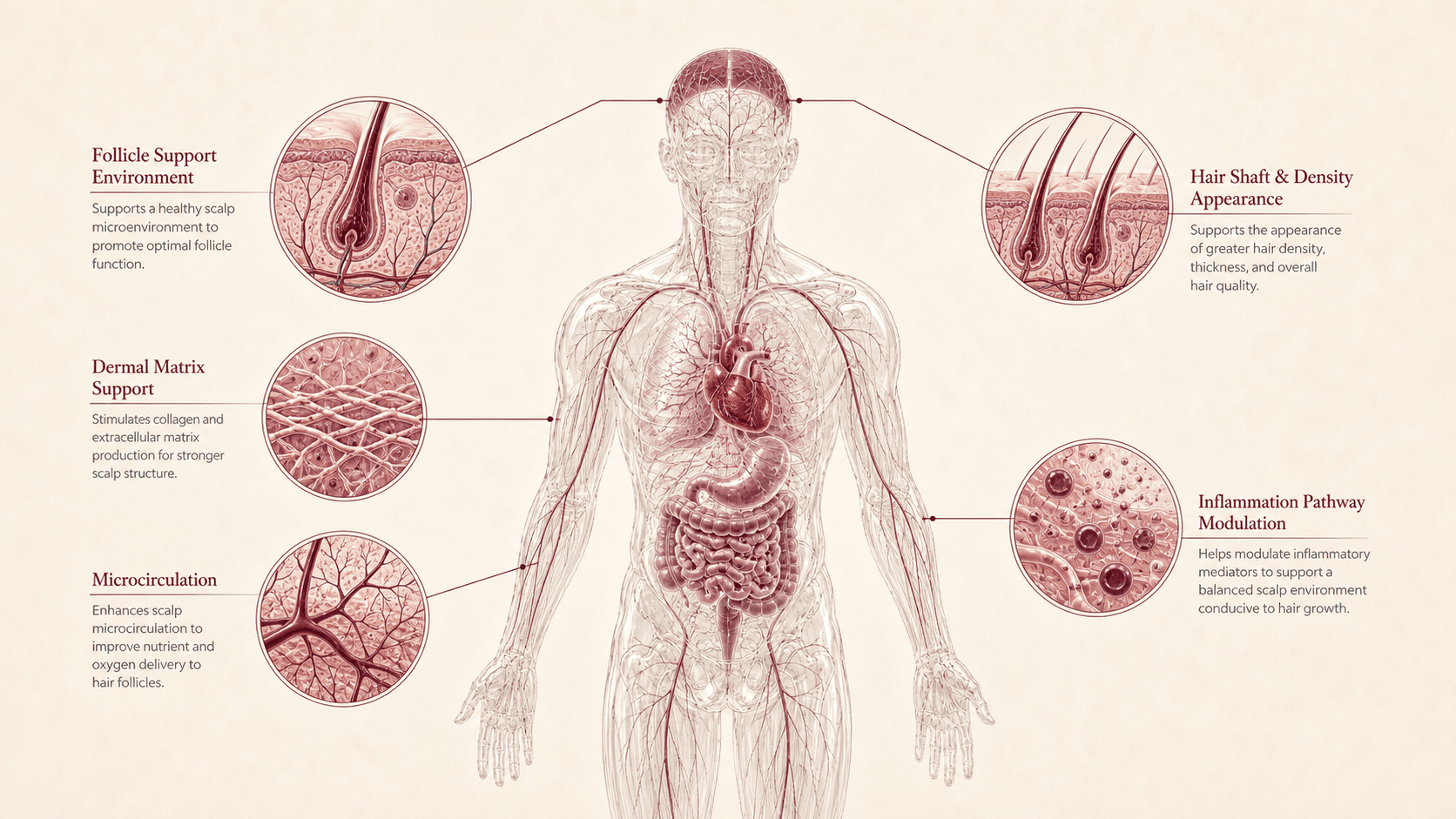 GHK-Cu copper tripeptide-1 - ghk copper | 83 | xCresearch only | topical - no protocol timeline | View |
| 02 | 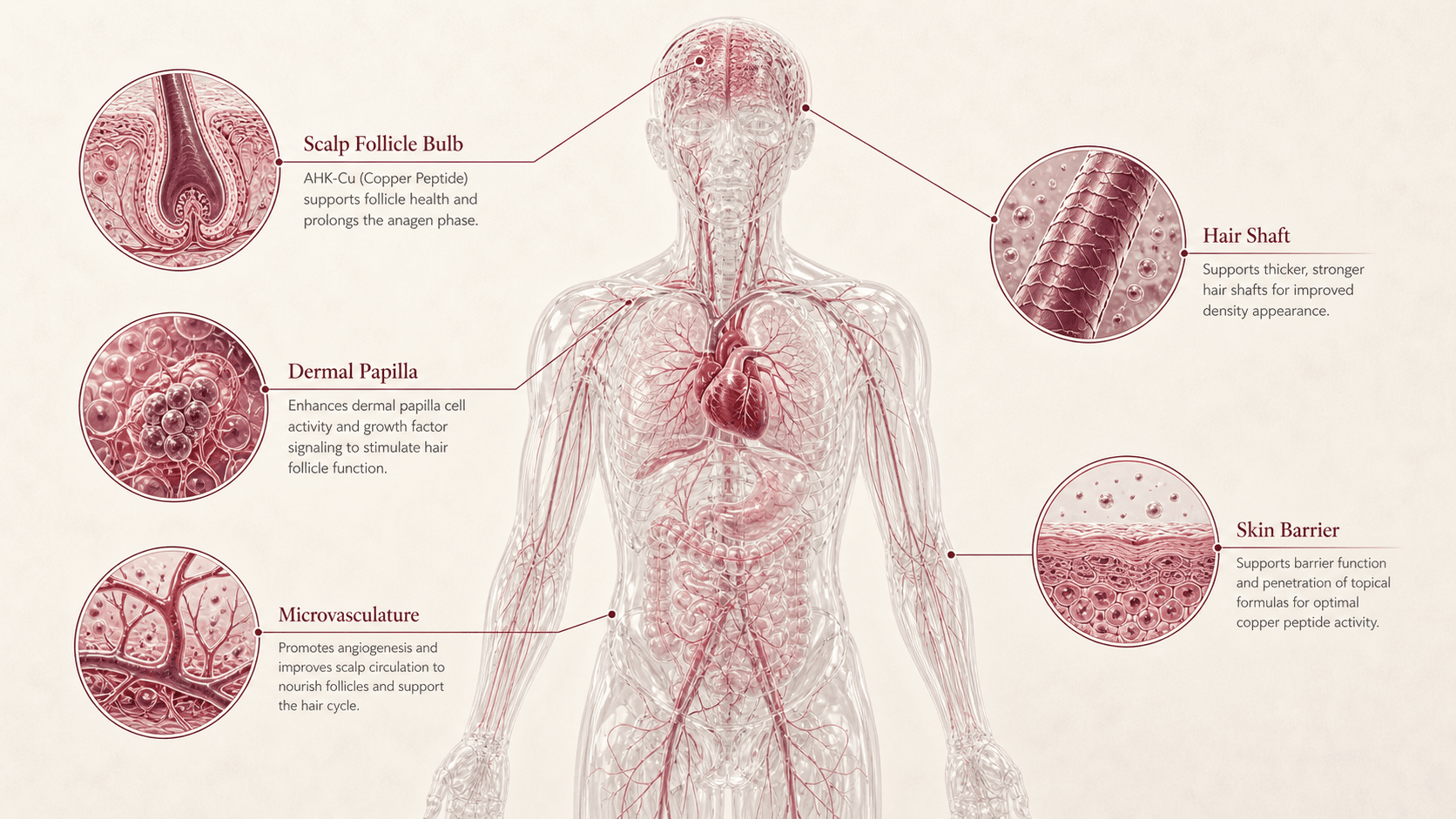 AHK-Cu alanine-histidine-lysine copper - copper tripeptide ahk-cu | 78 | xCresearch only | topical - no protocol timeline | View |
| 03 | 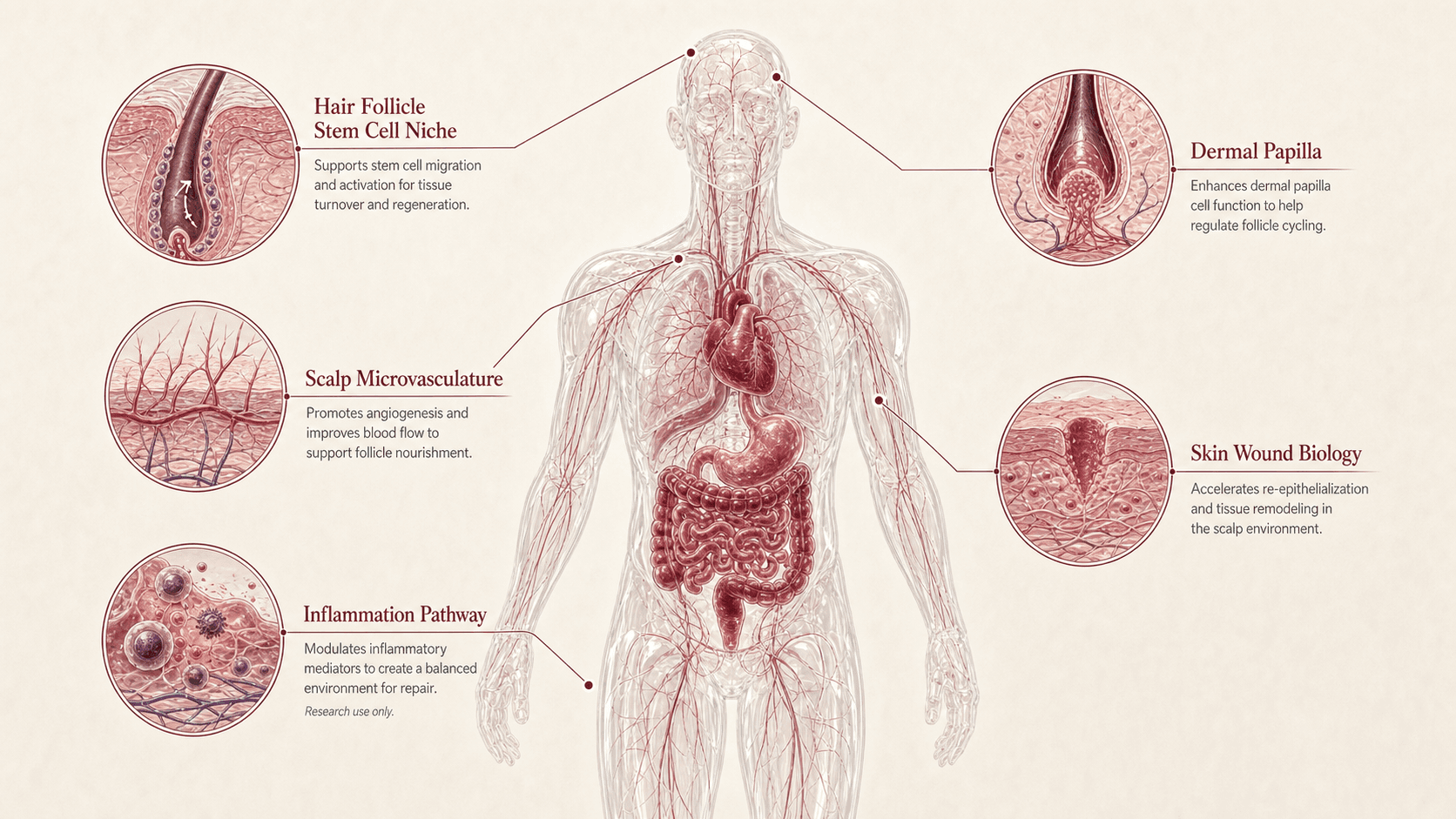 Thymosin beta-4 / TB-500 thymosin beta-4 - tb-500 | 69 | xCresearch only | subcutaneous - no protocol timeline | View |
| 04 | 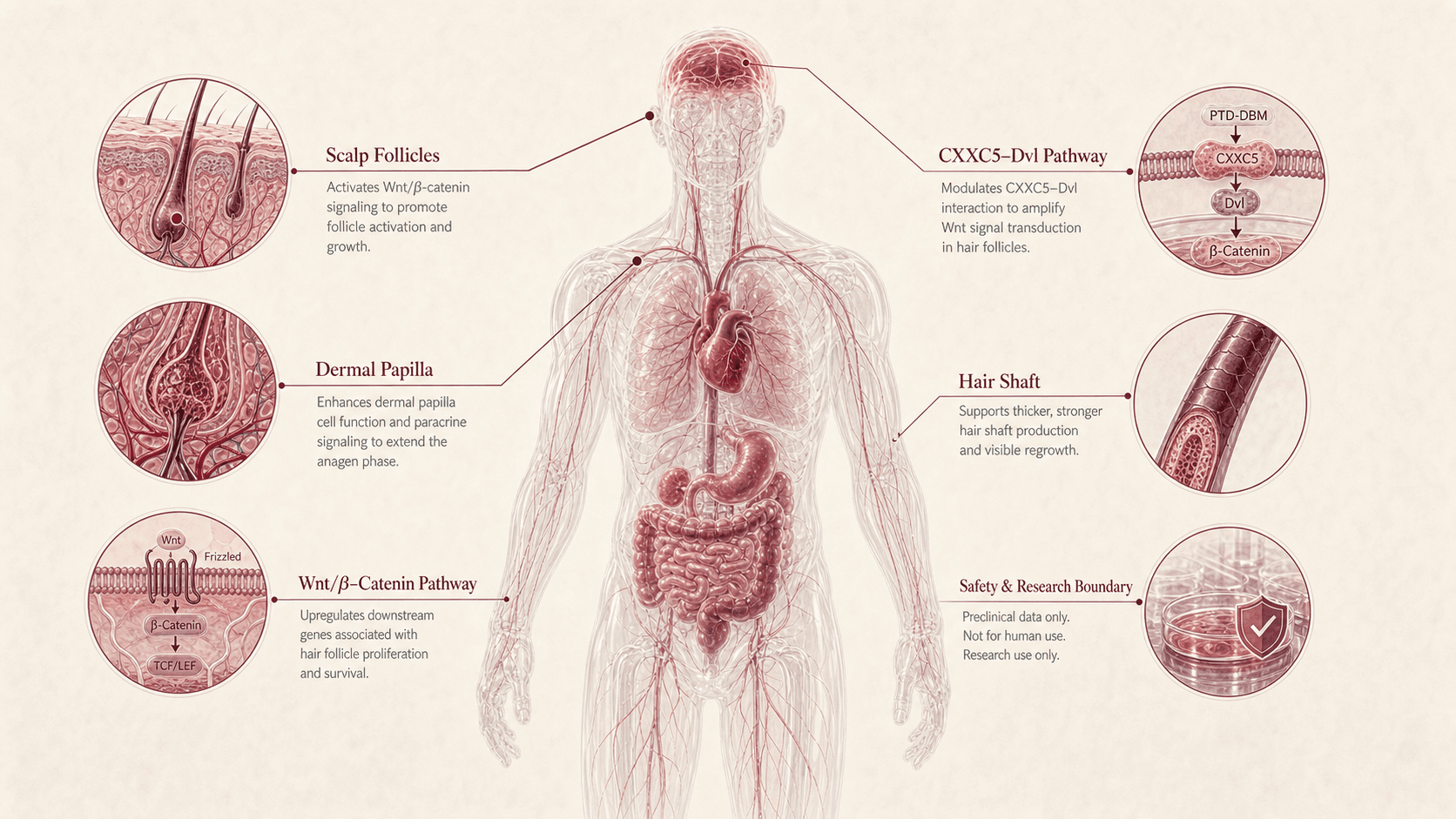 PTD-DBM protein transduction domain-dvl binding motif | 62 | xDpreclinical | topical - no protocol timeline | View |
| 05 | 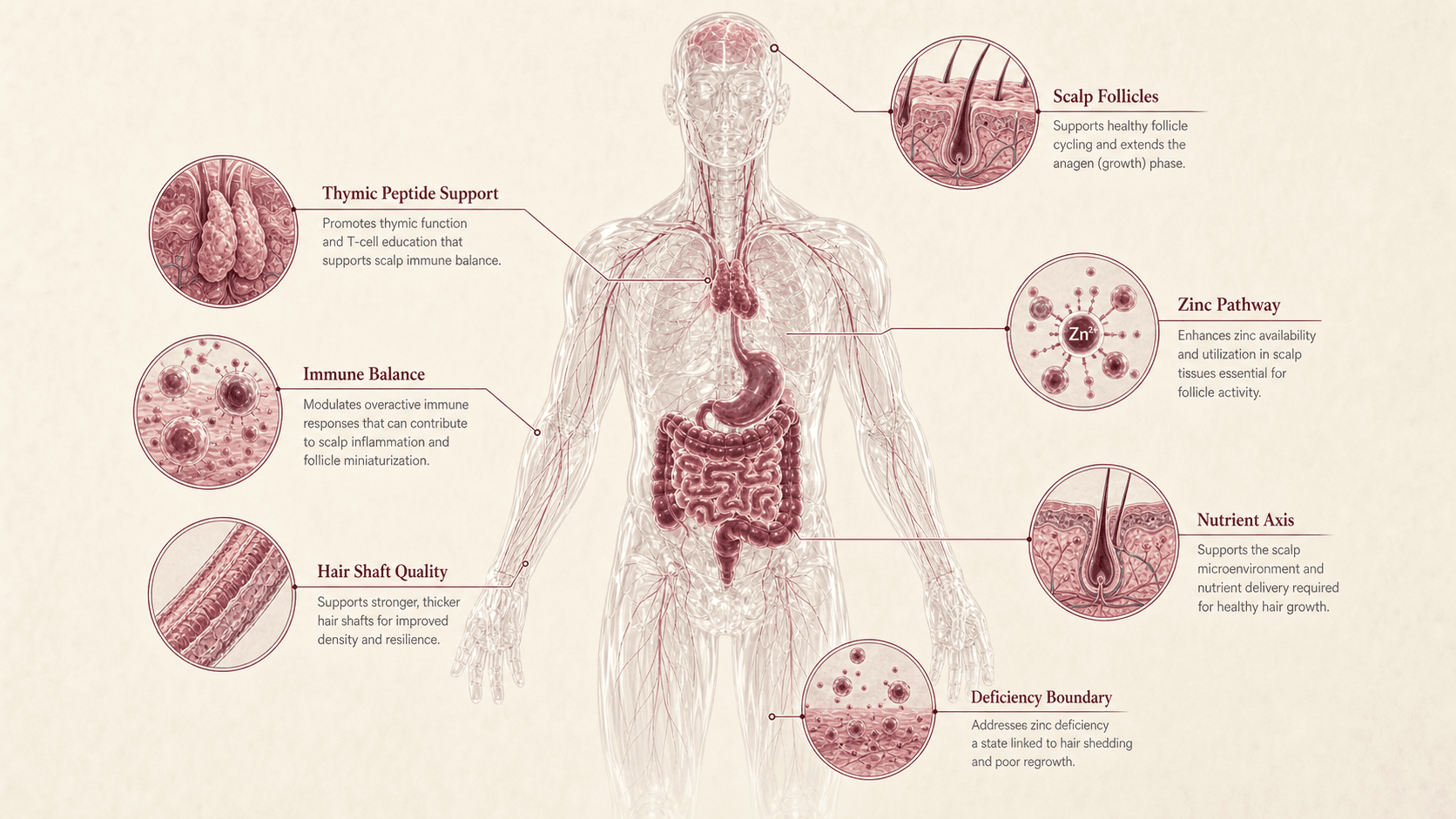 Zinc Thymulin thymulin zinc complex | 60 | xCresearch only | topical - no protocol timeline | View |
| 06 | 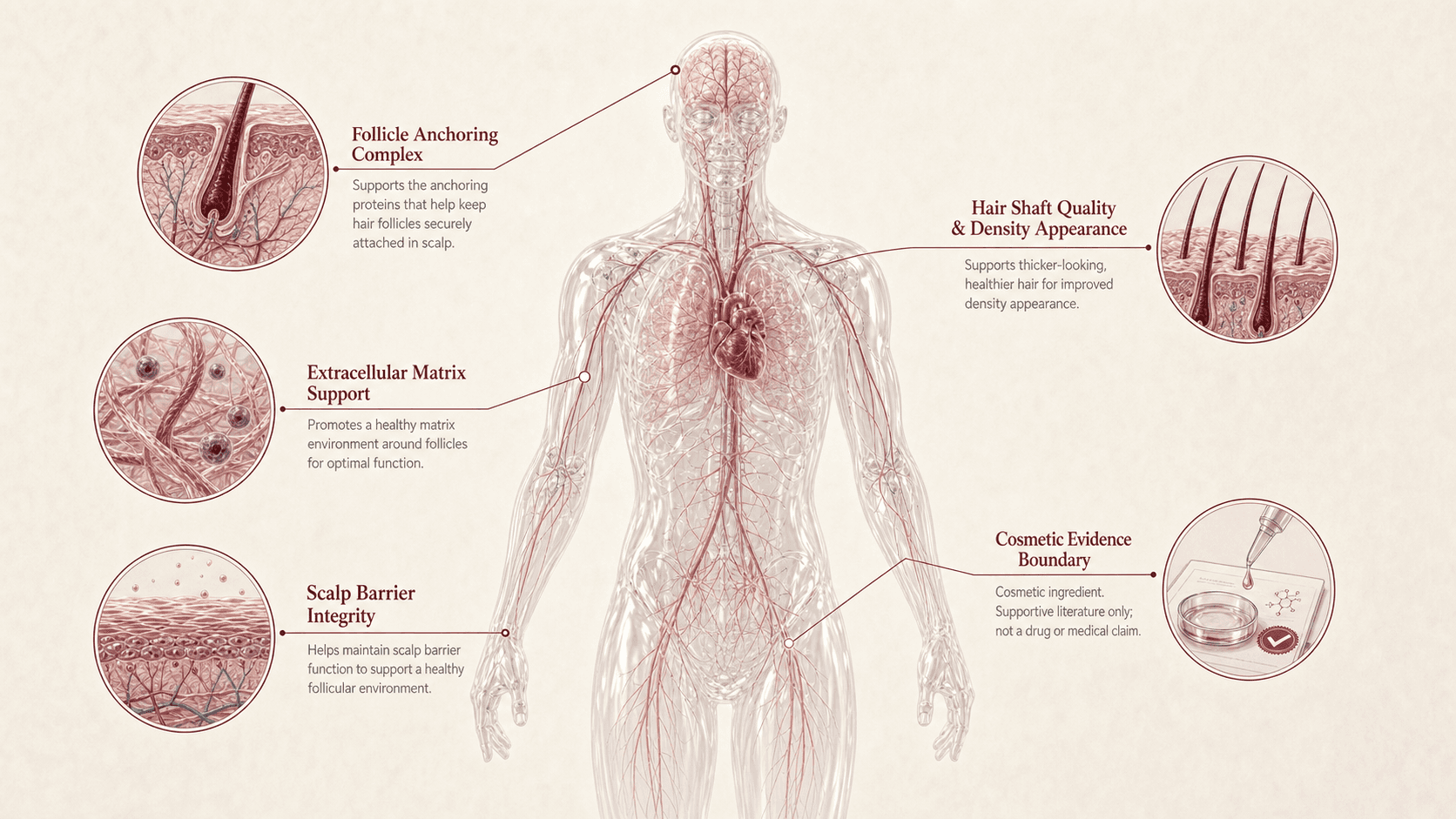 Acetyl Tetrapeptide-3 capixyl peptide component | 57 | xDresearch only | topical - no protocol timeline | View |
Hair Loss comparison matrix
| Peptide | Regulatory anchor | Mechanism | Hair role | Evidence maturity | Readiness | Watchout | Takeaway |
|---|---|---|---|---|---|---|---|
GHK-Cu ghk-cu-hair | GHK-Cu skin/hair review literature and cosmetic ingredient context. | Copper peptide / follicle microenvironment / dermal repair. | Scalp tissue-quality and follicle-support literacy. | Mechanistic and cosmetic hair-interest literature; weaker than established hair-loss therapies. | Medium as topical ingredient literacy; low as hair-regrowth treatment. | Hair-growth claims can outrun evidence and ignore PCOS, ferritin, thyroid, and diagnosis. | Best peptide literacy anchor for hair, but not a standalone regrowth treatment. |
AHK-Cu ahk-cu | Copper peptide hair-support literature and cosmetic ingredient context. | Copper tripeptide / follicle-support cosmetic context. | Hair-specific copper peptide comparator. | Mechanistic and market-visible; less robust clinical evidence than claims imply. | Medium as cosmetic literacy; low as treatment. | Hair-specific marketing is stronger than clinical maturity. | Relevant copper-peptide comparator, but secondary to diagnosis and standard care. |
Thymosin beta-4 / TB-500 thymosin-beta-4-hair | PubMed/PMC thymosin beta-4 hair-growth and follicle biology literature plus FDA TB-500 safety-risk context. | Actin-binding peptide / follicle migration and remodeling context. | Follicle-regeneration research comparator. | Animal and mechanistic follicle literature; limited direct human alopecia outcomes. | Low; source identity and route risk dominate. | Mouse hair-growth signals should not become human regrowth claims. | Useful for research literacy, not practical hair treatment. |
PTD-DBM ptd-dbm | PTD-DBM Wnt/beta-catenin hair-regeneration research literature. | Wnt / beta-catenin / CXXC5 pathway research. | High-interest Wnt hair-regrowth research boundary. | Preclinical and early translational; not ready as consumer hair therapy. | Very low; included to explain advanced research claims. | Wnt/beta-catenin growth signaling is not casual cosmetic territory. | Important research narrative, but not ready for practical use. |
Zinc Thymulin zinc-thymulin | Zinc thymulin androgenetic alopecia literature and thymic peptide context. | Metallopeptide / thymic peptide / follicle support context. | Topical follicle-support comparator with small-study interest. | Limited human and mechanistic interest; not broad standard care. | Low/moderate; topical context only. | Small-study signal should not override diagnosis and deficiency correction. | Interesting but secondary, especially with Ana's ferritin and thyroid context. |
Acetyl Tetrapeptide-3 acetyl-tetrapeptide-3 | Cosmetic hair peptide ingredient literature and product-context claims. | Cosmetic peptide / extracellular-matrix and follicle anchoring context. | Cosmetic hair-density ingredient literacy. | Mostly cosmetic/product context; limited independent clinical maturity. | Medium as ingredient literacy; low as treatment evidence. | Blend marketing and ingredient attribution are weak. | Useful as a cosmetic comparator, not a lead hair-loss therapy. |
Hair Loss Combination & Overlap Map
| Combination | Components | Type | Why it appears | Peptivius read | Main caution | Status |
|---|---|---|---|---|---|---|
GHK-Cu + AHK-Cu | Copper peptides for scalp and follicle-support narratives | Topical cosmetic overlap | Both are marketed around copper peptide hair support. | Ingredient literacy, not a replacement for diagnosis or standard care. | Evidence is formulation-specific and weaker than established hair-loss treatments. | Cosmetic education |
Thymosin beta-4 + PTD-DBM | Follicle migration/remodeling + Wnt/beta-catenin research | Advanced research narrative | Both appear in follicle-regeneration discussions. | Mechanism education only. | Mouse/preclinical data should not become a consumer protocol. | Research boundary |
Peptides + minoxidil/finasteride context | Peptide ingredients + standard hair-loss therapies | Dermatology boundary | Users often layer novel topicals on top of known treatments. | Standard care should be discussed with dermatology; peptides do not replace it. | Pregnancy, PCOS, and side-effect context matter. | Professional review |
Ferritin/protein/thyroid correction | Non-peptide foundation | Root-cause support | Deficiency and endocrine context can drive shedding. | Most important first layer for Ana. | Do not mask deficiency-driven shedding with cosmetic peptides. | Support foundation |
Frequent questions about Hair Loss peptides
Can peptides replace minoxidil or dermatology care?
No. Peptides are educational comparators and cosmetic/research contexts, not replacements for diagnosis or standard care.
Why does GHK-Cu rank first?
It is highly searched, biologically plausible for tissue/scalp support, and safer to frame as topical literacy than injectable hair therapy.
Is PTD-DBM ready?
No. It is included for Wnt/beta-catenin literacy and remains research-sensitive.
Why are ferritin and thyroid so prominent?
Ana's declared context makes deficiency and endocrine drivers central to hair interpretation.
Is hair regrowth fast?
No. Hair cycles are slow, and any interpretation requires months and driver clarity.
Final personalized interpretation for Ana Beatriz
Ana's Hair Loss module is driven by Ludwig II thinning, PCOS context, Hashimoto, ferritin deficiency, stress, sleep restriction, and recent restrictive dieting.
GHK-Cu and AHK-Cu lead because copper peptide hair narratives are highly searched and biologically plausible, but the first-order work is still diagnosis, ferritin/protein, thyroid, PCOS/androgen context, and dermatology care.
Thymosin beta-4, PTD-DBM, zinc thymulin, and acetyl tetrapeptide-3 are included to map the market and research landscape without treating exploratory follicle biology as a ready protocol.
For Ana, the most important hair plan is driver clarity: ferritin/iron repletion context, thyroid stability, PCOS androgen review, protein/energy adequacy, scalp diagnosis, and dermatology options before peptide novelty.