Sexual Wellness.
5 peptides, ranked.
Sexual Wellness is the Blueprint layer for libido, arousal, desire distress, SSRI effects, stress, sleep, relationship context, reproductive-axis signaling, melanocortin sexual-function drugs, and safety boundaries. Each candidate was evaluated against your BioProfile, training load, and declared contraindications. The strongest matches sit at the top; secondary options remain visible for comparison.
Sexual Wellness foundation - before peptides
Sexual wellness is biopsychosocial. Libido and arousal can be shaped by SSRIs, stress, sleep, relationship context, pain, hormones, body image, pelvic health, PCOS, thyroid, contraception, and safety.
- Medication review, especially SSRI/SNRI sexual side effects and timing of symptom onset.
- Relationship context, distress level, desire mismatch, communication, trauma history, and mental-health context.
- Pain, dryness, pelvic floor symptoms, infection, urinary symptoms, bleeding, or gynecologic red flags.
- PCOS, thyroid, cycle, androgen/estrogen context, sleep, fatigue, body image, and stress.
- Cardiovascular, blood pressure, pregnancy, fertility, and medication-interaction review where relevant.
Sexual Wellness red flags - when this is not a peptide question
Some sexual-health symptoms need gynecologic, mental-health, medication, relationship, or urgent medical evaluation before peptide interpretation.
- Pelvic pain, bleeding, infection symptoms, painful sex, trauma symptoms, or sudden major change.
- Severe depression, relationship safety concerns, coercion, mania, suicidal ideation, or medication adverse effects.
- Pregnancy, fertility treatment, uncontrolled blood pressure, cardiovascular risk, or interacting medications.
- Hormonal symptoms with rapid virilization, amenorrhea, galactorrhea, or endocrine red flags.
Ranked list
| Rank | Peptide | Match | Evidence | Regimen | |
|---|---|---|---|---|---|
| 01 | 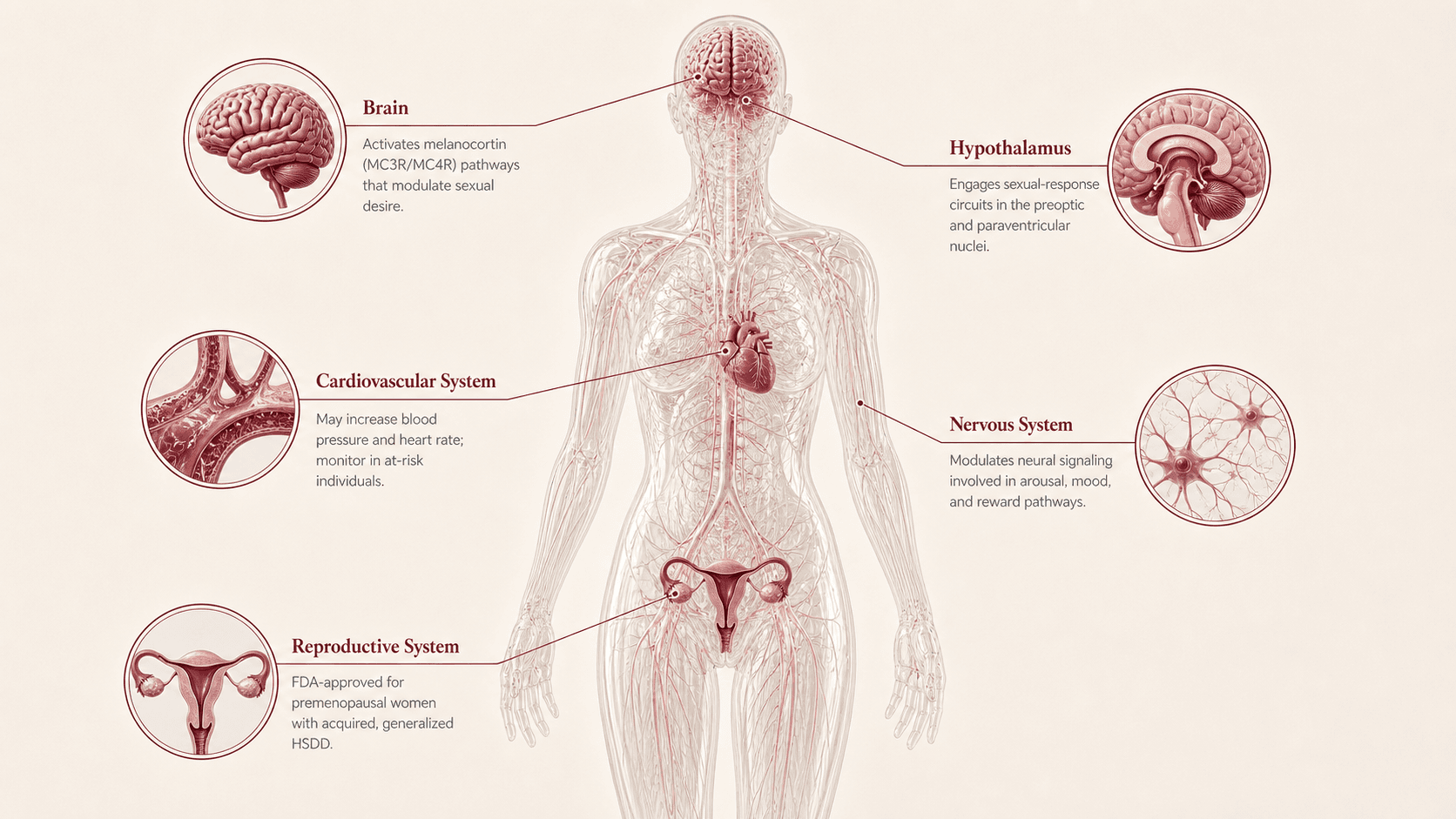 Bremelanotide / PT-141 vyleesi - pt-141 | 83 | ~Bfda approved | subcutaneous - no protocol timeline | View |
| 02 | 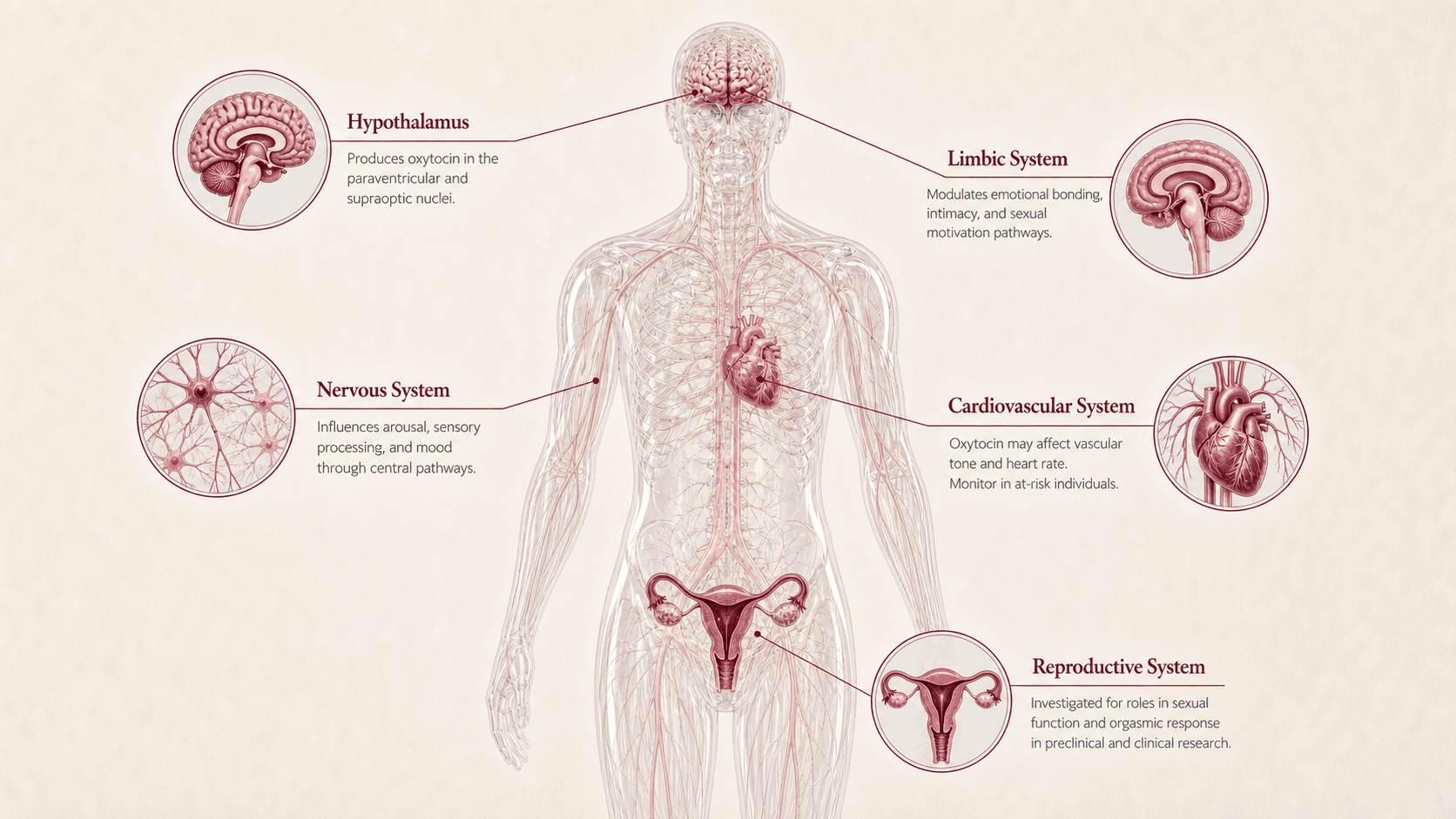 Oxytocin oxt | 70 | xCfda approved | intranasal - no protocol timeline | View |
| 03 | 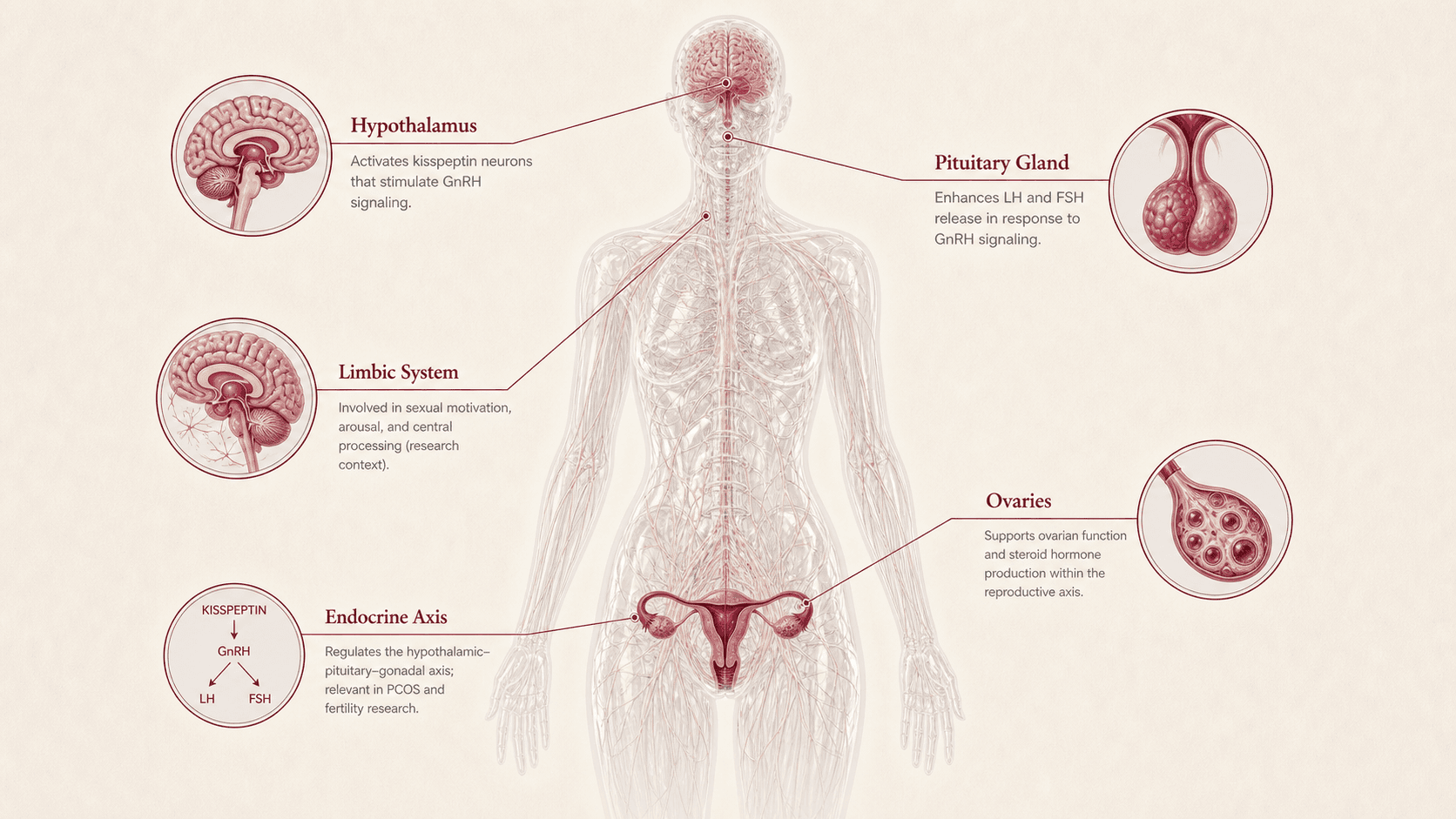 Kisspeptin kisspeptin-54 - kisspeptin-10 | 68 | ~B-phase 2 | subcutaneous - no protocol timeline | View |
| 04 | 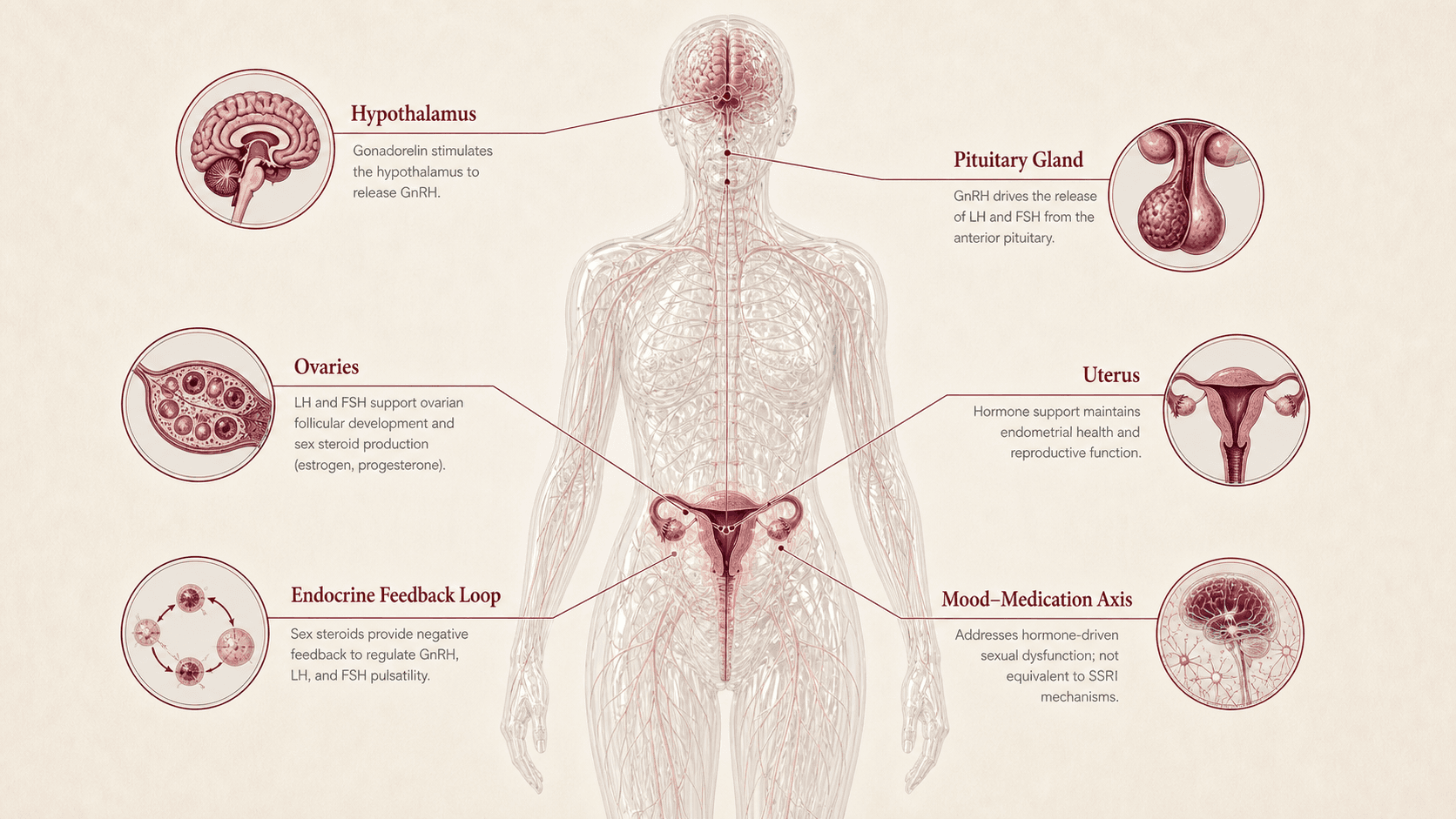 Gonadorelin gnrh - lhrh | 61 | ~Bfda approved | subcutaneous - no protocol timeline | View |
| 05 | 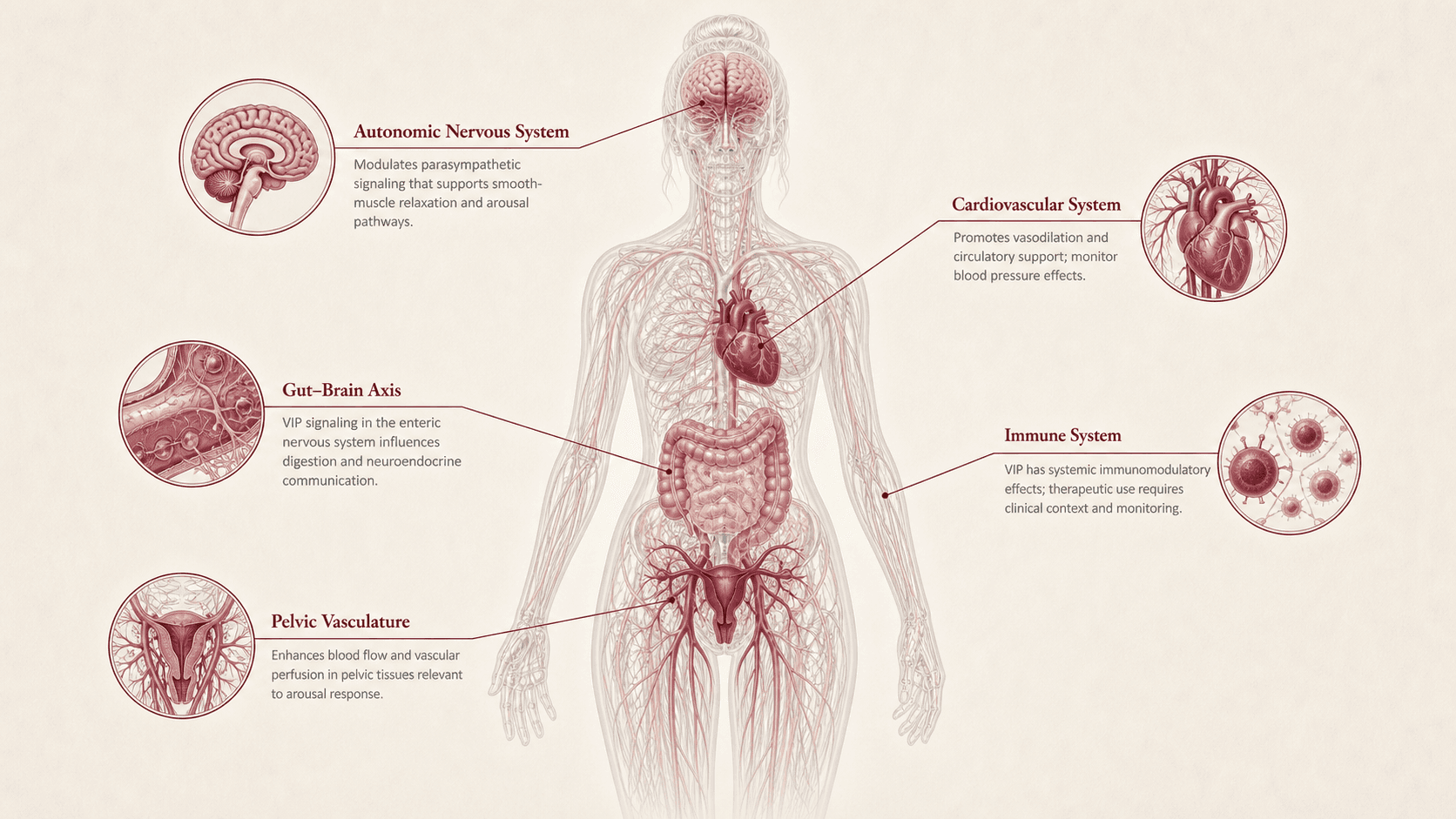 VIP vasoactive intestinal peptide | 55 | xCresearch only | intranasal - no protocol timeline | View |
Sexual Wellness comparison matrix
| Peptide | Regulatory anchor | Mechanism | Sexual-wellness role | Evidence maturity | Readiness | Watchout | Takeaway |
|---|---|---|---|---|---|---|---|
Bremelanotide / PT-141 bremelanotide | FDA Vyleesi/bremelanotide label for acquired generalized HSDD in premenopausal women. | Melanocortin receptor agonist / desire pathway context. | Approved HSDD anchor for desire-distress literacy. | FDA-approved in a specific premenopausal HSDD context; not broad libido optimization. | Medium only when label context and contraindications fit. | Blood pressure, nausea, indication limits, pregnancy, and medication/mood context. | Strongest sexual-wellness anchor, but label context is narrow. |
Oxytocin oxytocin-sexual | Oxytocin sexual function and neuroendocrine literature plus approved-drug context. | Neuropeptide hormone / social and sexual behavior context. | Bonding, arousal, intimacy, and sexual-function research literacy. | Human sexual-function evidence is mixed and population-specific. | Low outside approved/clinical contexts. | Not a relationship, libido, or psychiatric treatment. | Relevant as intimacy biology, not a sexual-performance solution. |
Kisspeptin kisspeptin-sexual | Kisspeptin reproductive endocrine and sexual-processing PubMed literature. | Kisspeptin-GnRH / reproductive and sexual-processing context. | Reproductive-axis and desire-processing research comparator. | Human reproductive endocrine and sexual-processing research exists; practical use remains investigational. | Low outside specialist research/clinical contexts. | Fertility, pregnancy, PCOS, pituitary, and cycle context require review. | Relevant research bridge, not a sexual-wellness tool. |
Gonadorelin gonadorelin-sexual | Gonadorelin diagnostic/reproductive endocrine clinical context. | GnRH / LH-FSH axis. | Reproductive-axis literacy when sexual symptoms overlap with hormones. | Known endocrine pharmacology; not a sexual-desire therapy. | Low for Sexual Wellness; clinical endocrine context only. | Axis manipulation, fertility, cycle, and indication boundaries. | Important endocrine context, not a sexual-wellness lead. |
VIP vip-sexual | VIP autonomic, smooth-muscle, and vasoactive peptide literature. | Vasoactive neuropeptide / smooth-muscle and autonomic context. | Vasoactive and autonomic sexual-function comparator. | Mechanistic vasoactive biology; limited practical sexual-wellness evidence. | Low; systemic effects and blood pressure context matter. | Vasoactive effects, blood pressure, and systemic caution. | A useful mechanistic comparator, not a practical sexual-wellness option. |
Sexual Wellness Combination & Overlap Map
| Combination | Components | Type | Why it appears | Peptivius read | Main caution | Status |
|---|---|---|---|---|---|---|
Bremelanotide + SSRI context | Melanocortin pathway + medication-related libido changes | Approved-label adjacent discussion | Ana's libido change is temporally linked to escitalopram. | Medication review comes first; approved HSDD context is specific. | Blood pressure, nausea, indication, distress criteria, and medication context. | Professional review |
Oxytocin + relationship/intimacy narratives | Oxytocin + social bonding and sexual-function claims | Neuroendocrine narrative | Oxytocin is widely discussed around bonding and intimacy. | Contextual literacy, not a libido protocol. | Evidence is route and population specific. | Adjacent education |
Kisspeptin + desire/arousal research | Reproductive-axis neuropeptide + sexual-processing studies | Research signal | Kisspeptin bridges reproductive hormones and sexual processing. | Research context only. | Fertility, pregnancy, PCOS, and hormone-axis review. | Research-sensitive |
Relationship, sleep, stress, and SSRI review | Non-peptide foundation | Clinical/behavioral foundation | These factors often explain more than peptide mechanisms. | Most important first layer for Ana. | Do not bypass mental-health and relationship context. | Support foundation |
Frequent questions about Sexual Wellness peptides
Is this a libido protocol?
No. It is educational ranking and context, not a sexual-health protocol.
Why does Bremelanotide rank first?
It has an approved HSDD anchor, but the label and patient context are specific.
Could escitalopram explain Ana's libido change?
Yes. SSRI-associated sexual side effects are a central review point.
Is Oxytocin a relationship fix?
No. Oxytocin biology is not a substitute for relationship, mental-health, or pelvic-health care.
Can peptides replace gynecology or therapy?
No. Pain, distress, trauma, medication effects, and relationship safety require appropriate care.
Final personalized interpretation for Ana Beatriz
Ana's Sexual Wellness module is driven by low frequency, libido change after escitalopram, stress, poor sleep, PCOS/hormonal context, body-composition concerns, and relationship impact.
Bremelanotide leads because it has a real approved HSDD anchor, but Ana's SSRI context means medication review and distress criteria matter before any peptide interpretation.
Oxytocin, Kisspeptin, Gonadorelin, and VIP explain adjacent neuroendocrine, reproductive-axis, and vasoactive narratives. They do not replace mental-health, gynecologic, relationship, or endocrine care.
For Ana, the first sexual-wellness layer is medication review, sleep/stress reduction, relationship context, PCOS/thyroid hormone clarity, pelvic-health screening, and safety boundaries.