Skin & Anti-Aging.
9 peptides, ranked.
Skin & Anti-Aging is the Blueprint layer for dermal collagen, texture, firmness, fine lines, barrier quality, procedure recovery, inflammation, photoaging, and the difference between topical cosmetic peptides and systemic research peptides. Each candidate was evaluated against your BioProfile, training load, and declared contraindications. The strongest matches sit at the top; secondary options remain visible for comparison.
Skin foundation - before peptides
Skin quality is strongly shaped by sun exposure, sleep, protein intake, micronutrients, thyroid status, stress, inflammation, procedures, and topical routine before any peptide claim can be interpreted.
- Daily photoprotection and pigment/inflammation control.
- Protein intake, energy availability, iron/ferritin, vitamin D, zinc, thyroid status, and weight-loss pace.
- Barrier routine, retinoid tolerance, exfoliation restraint, and procedure history.
- Sleep, stress, glycemic control, PCOS context, and inflammatory skin triggers.
- Dermatology review for lesions, rapid changes, severe acne, scarring, or inflammatory disease.
Skin red flags - when this is not a cosmetic peptide question
Some skin findings need dermatology or medical evaluation before aesthetic peptide interpretation.
- Changing moles, bleeding lesions, non-healing wounds, infection, severe rash, or rapidly worsening pigmentation.
- Severe acne, scarring inflammatory disease, autoimmune rash, photosensitivity, or medication reaction.
- Poor wound healing, diabetes concerns, malnutrition, restrictive dieting, thyroid imbalance, or unexplained bruising.
- Pregnancy, isotretinoin context, procedures, injectables, lasers, or immunosuppression requiring clinician guidance.
Ranked list
| Rank | Peptide | Match | Evidence | Regimen | |
|---|---|---|---|---|---|
| 01 | 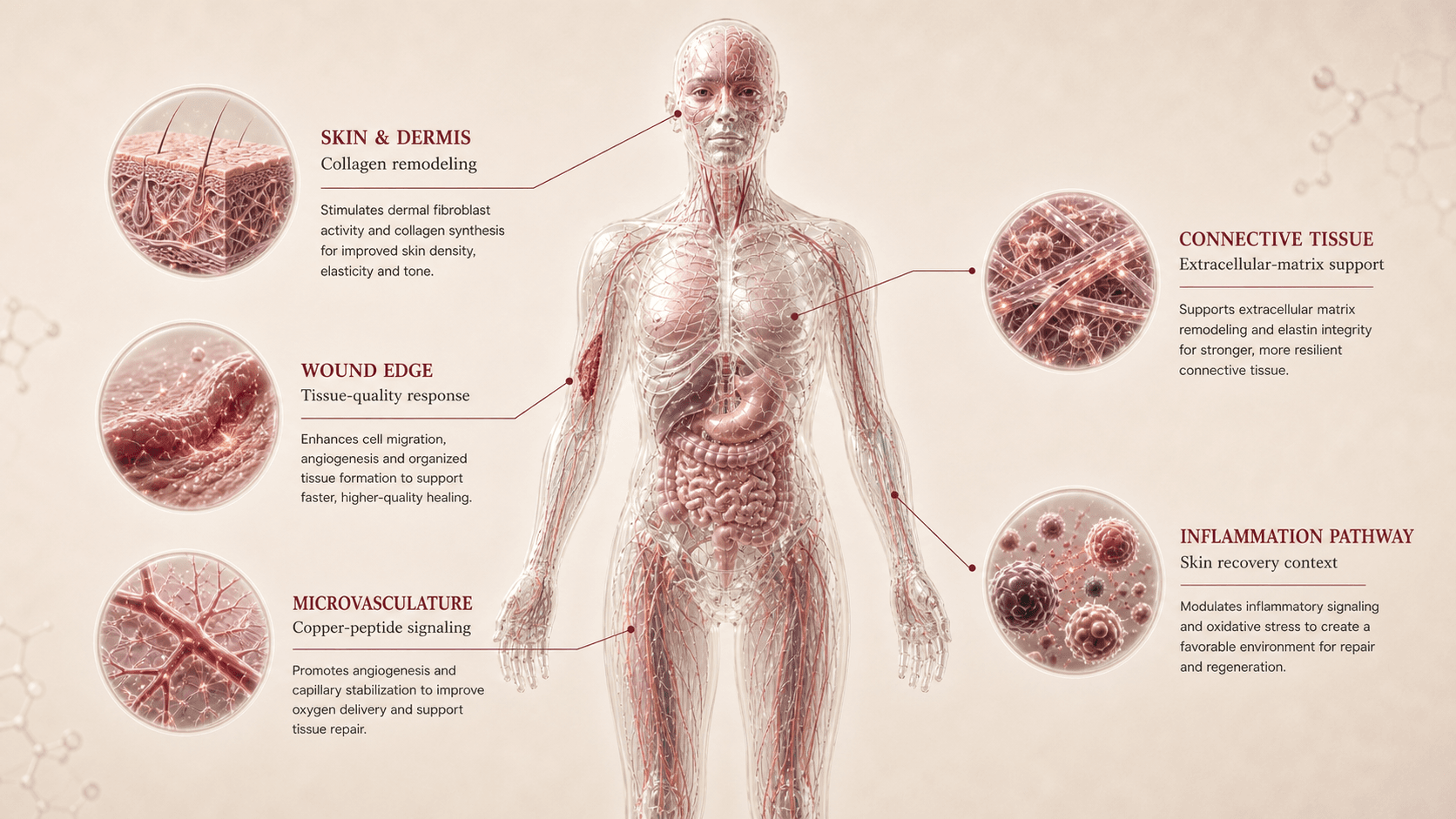 GHK-Cu copper tripeptide-1 - ghk copper | 88 | ~Bresearch only | topical - no protocol timeline | View |
| 02 | 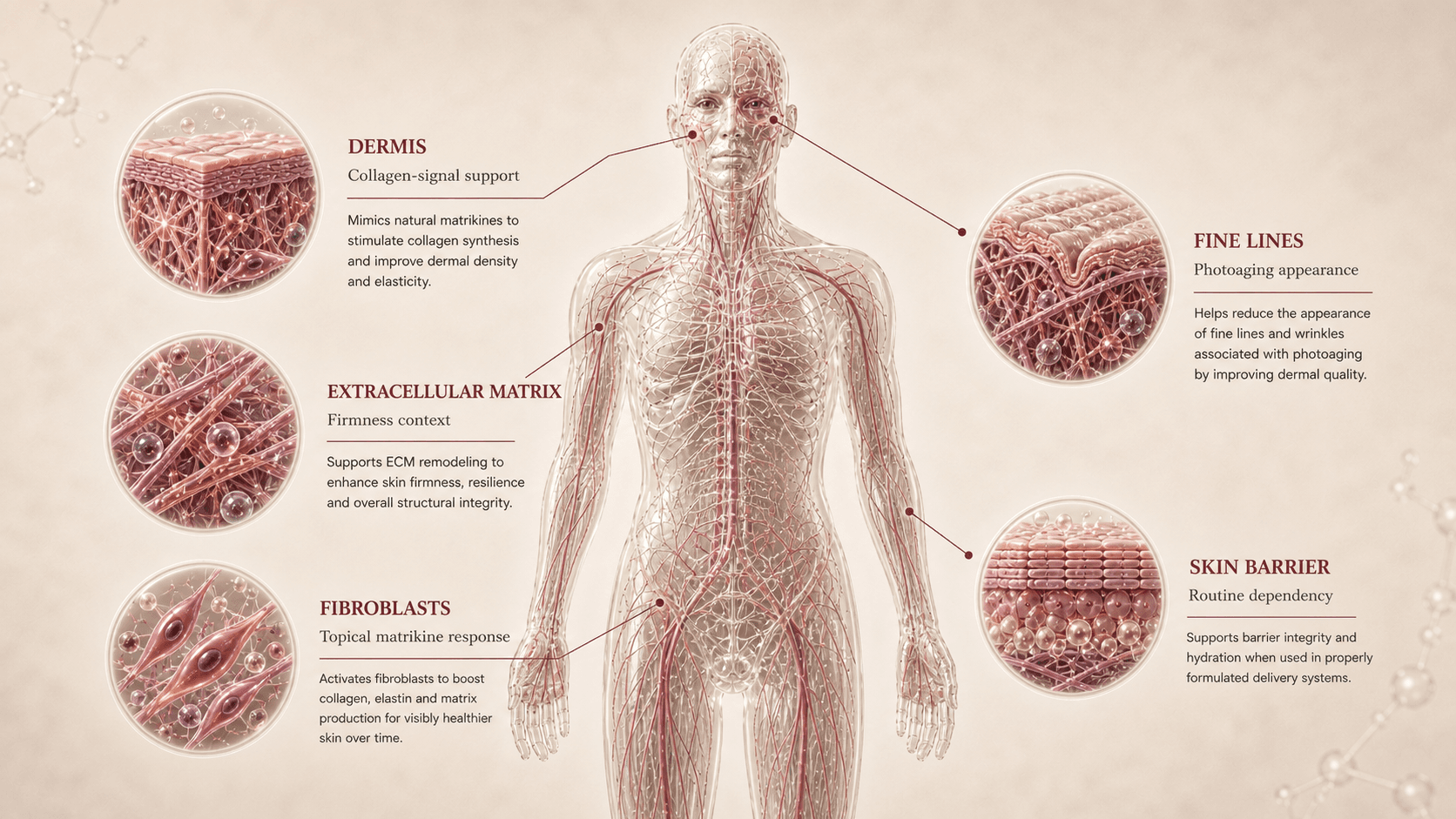 Matrixyl / Pal-KTTKS palmitoyl pentapeptide-4 - pal-kttks | 82 | ~B-research only | topical - no protocol timeline | View |
| 03 | 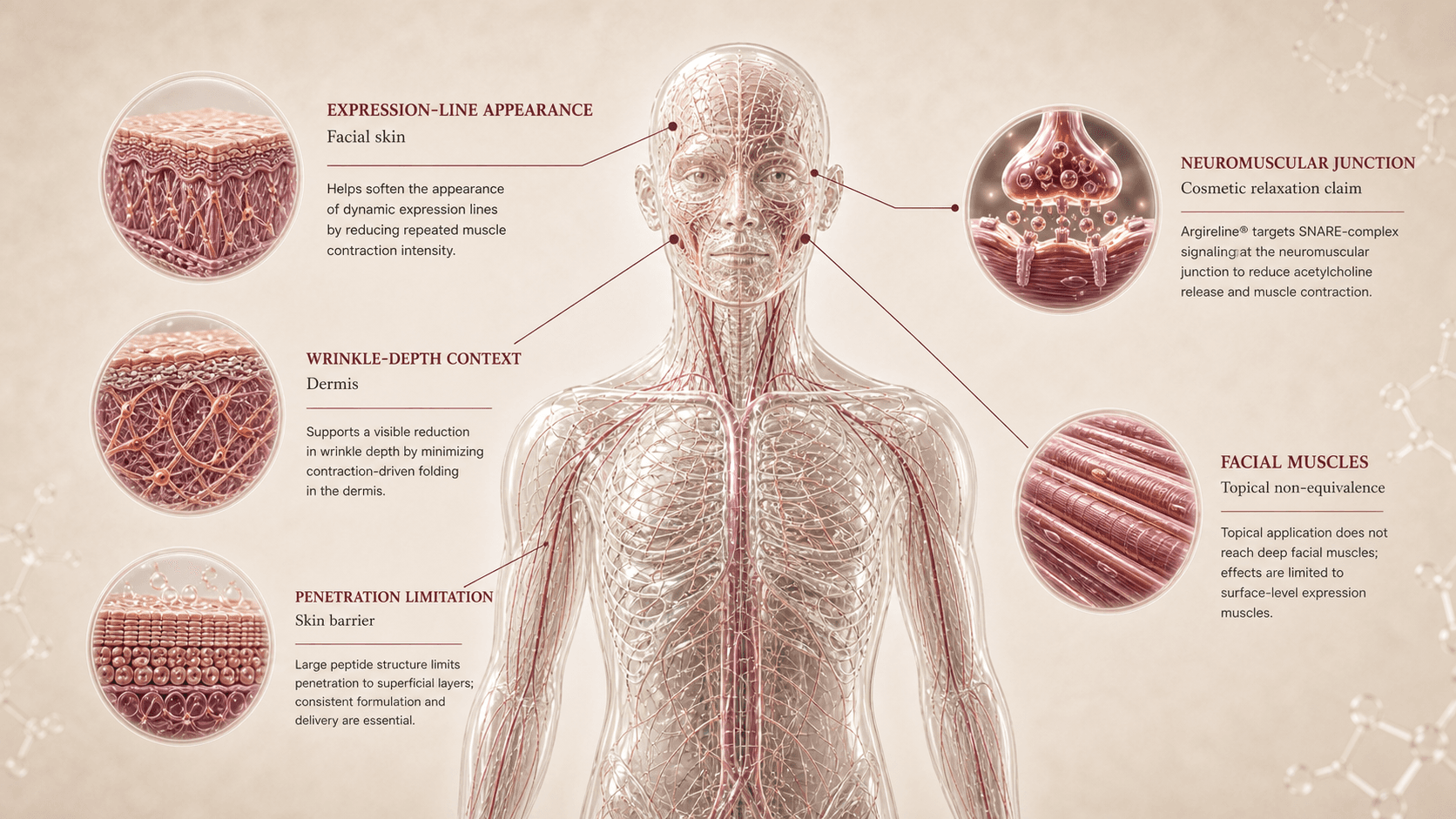 Argireline acetyl hexapeptide-8 - acetyl hexapeptide-3 | 78 | xCresearch only | topical - no protocol timeline | View |
| 04 | 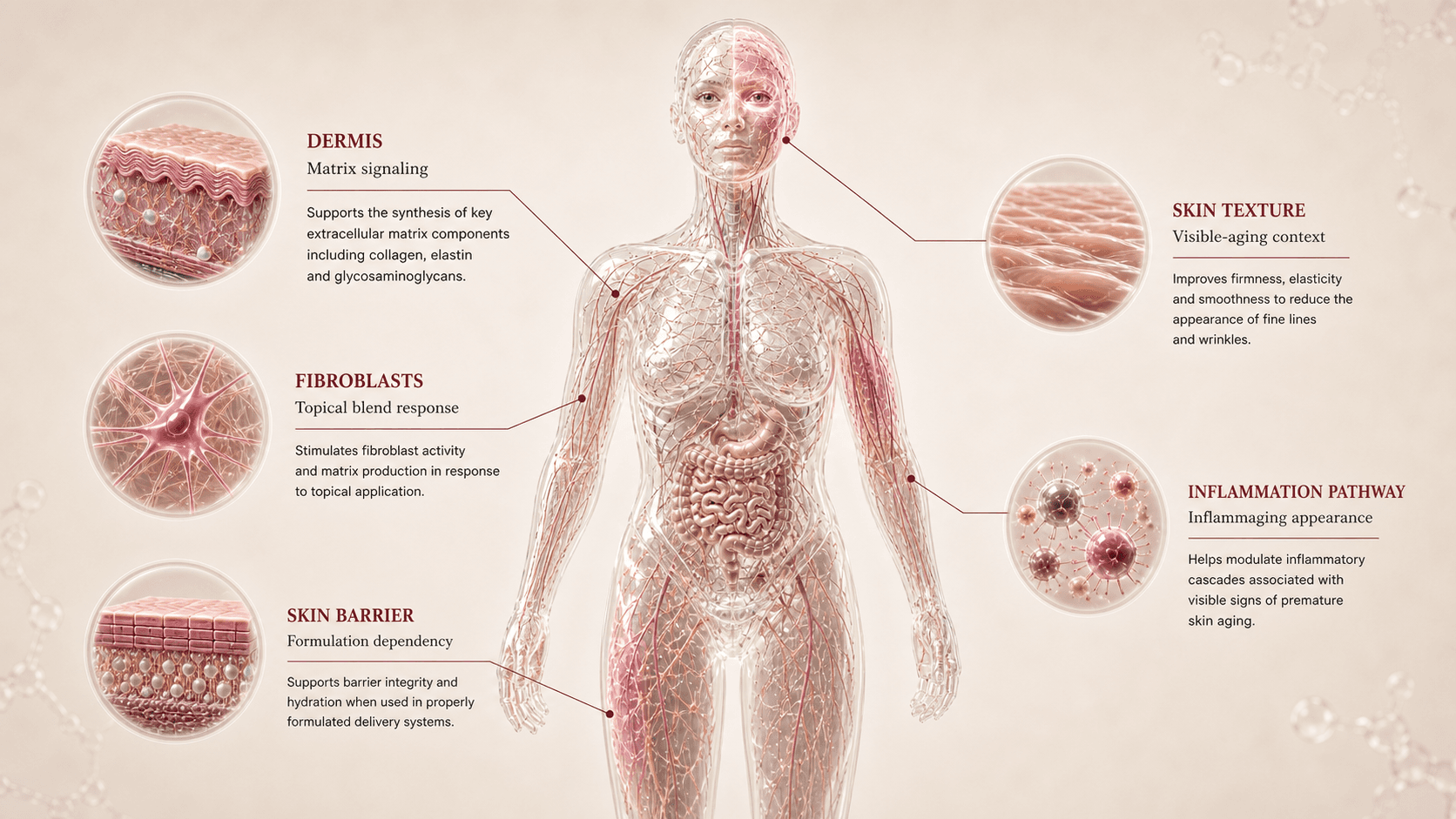 Matrixyl 3000 palmitoyl tripeptide-1 - palmitoyl tetrapeptide-7 | 76 | xCresearch only | topical - no protocol timeline | View |
| 05 | 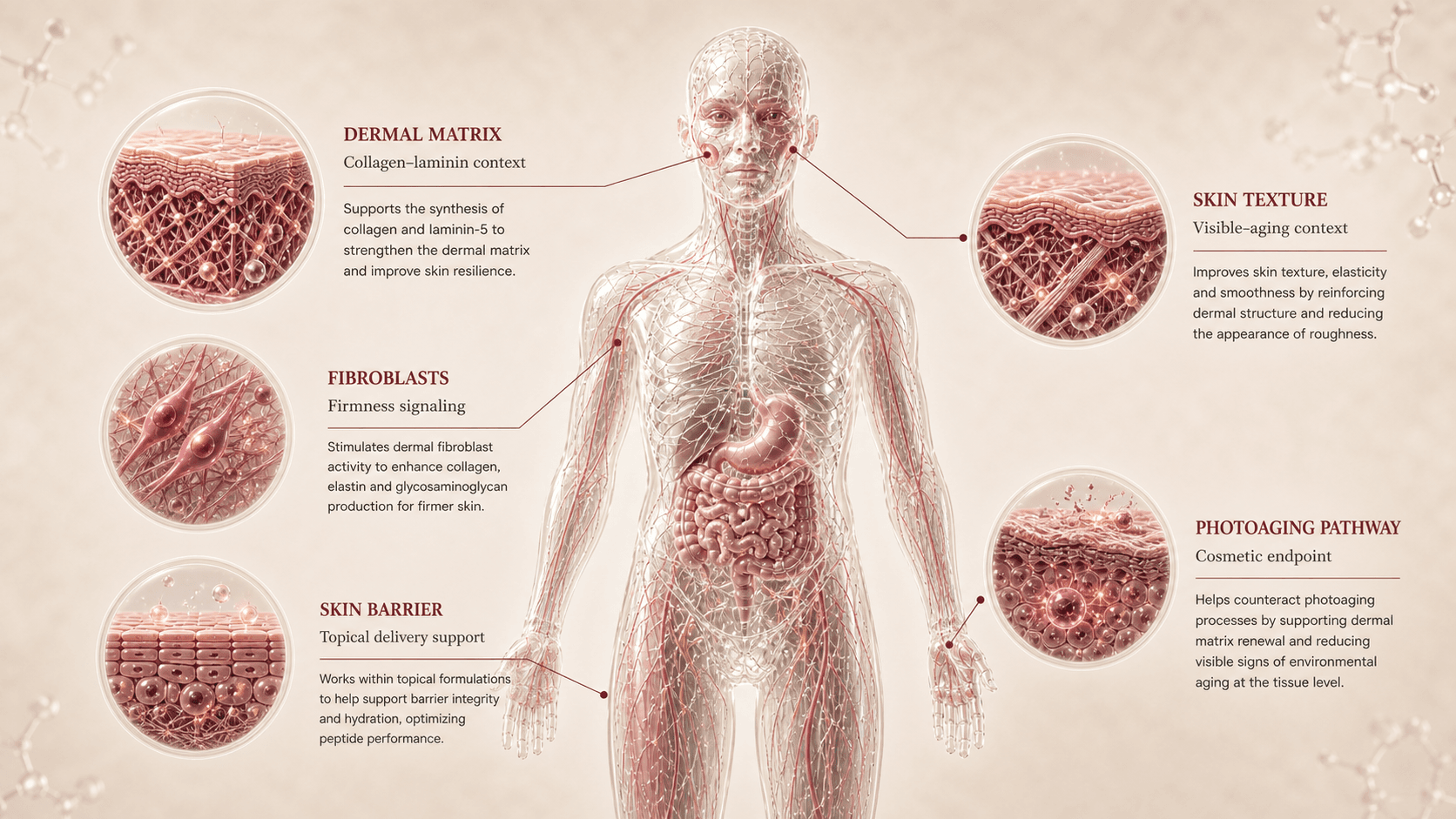 Palmitoyl Tripeptide-38 matrixyl synthe'6 | 73 | xCresearch only | topical - no protocol timeline | View |
| 06 | 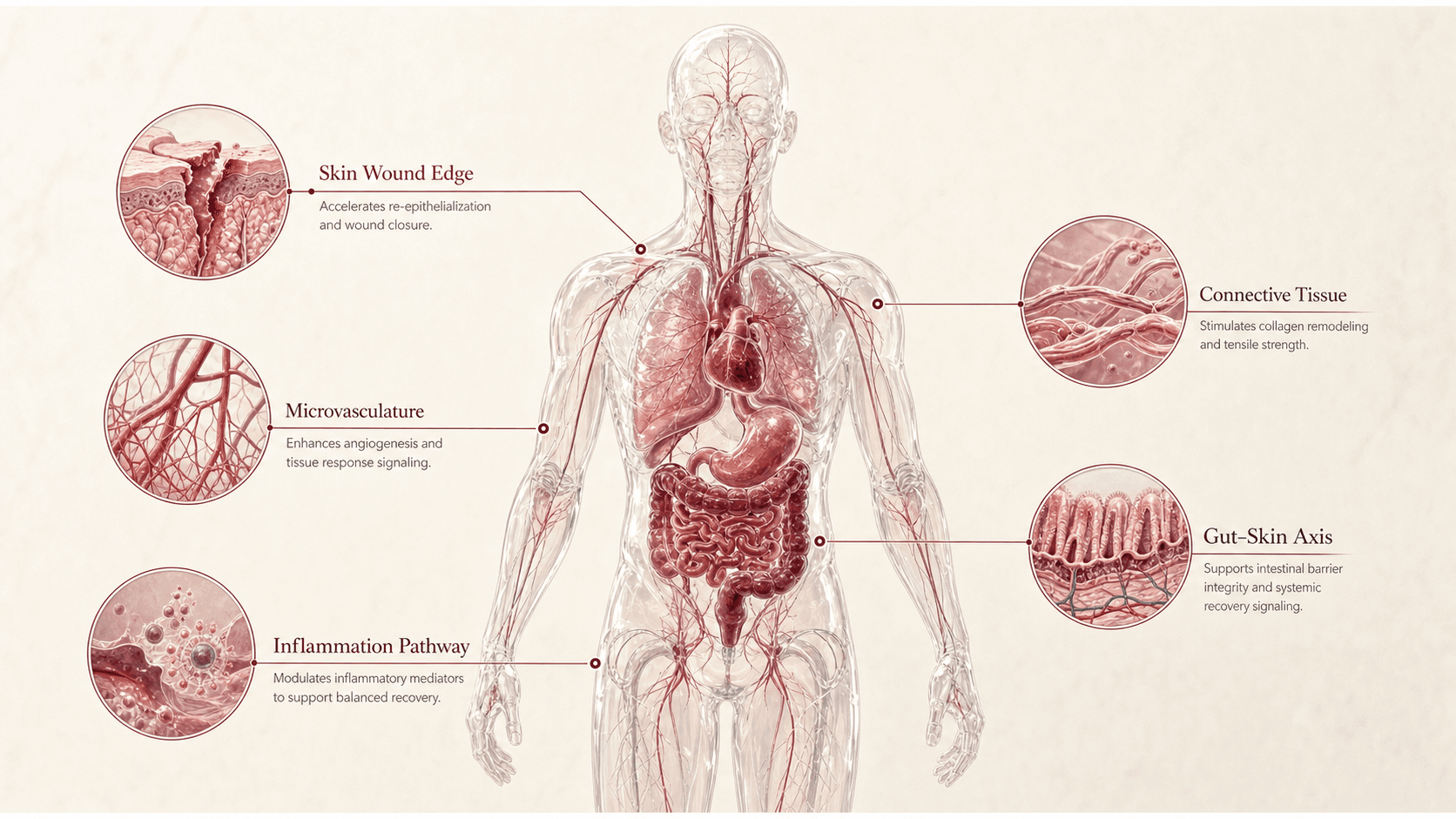 BPC-157 body protection compound 157 - bepecin | 68 | ~B-research only | subcutaneous - no protocol timeline | View |
| 07 | 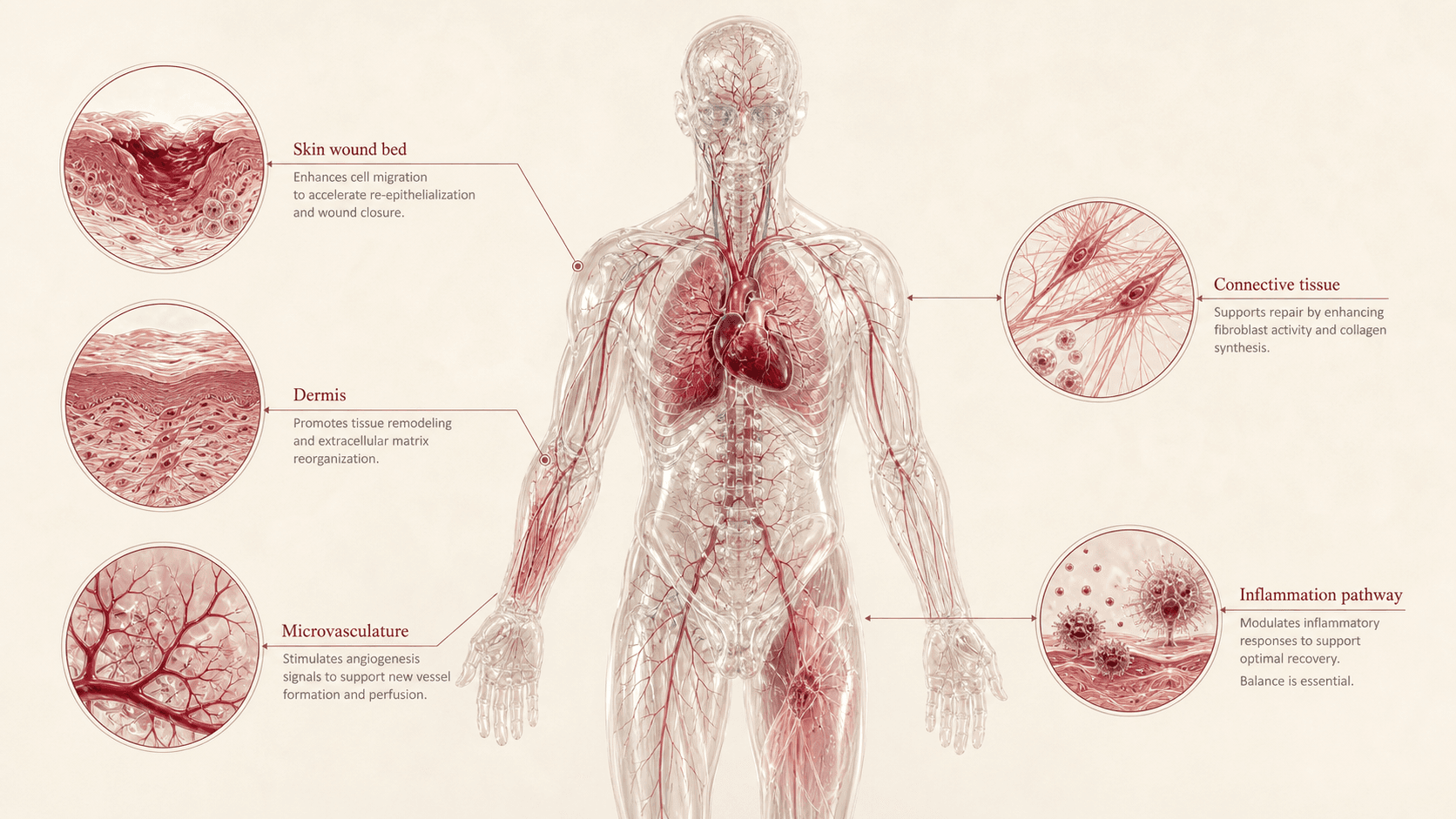 TB-500 / Thymosin beta-4 thymosin beta-4 fragment - lkktetq | 64 | xCresearch only | subcutaneous - no protocol timeline | View |
| 08 | 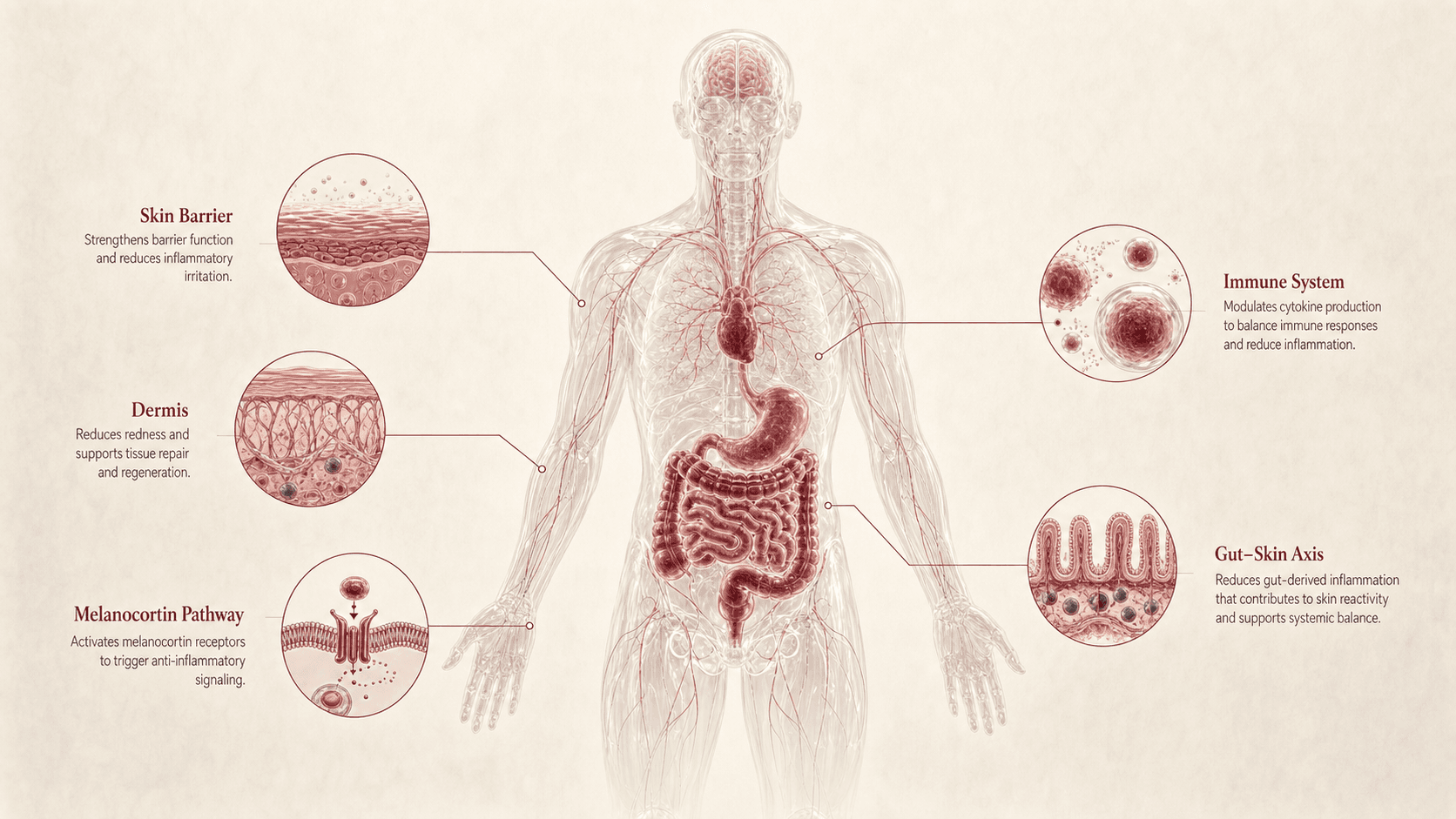 KPV lysine-proline-valine - alpha-msh fragment | 62 | xCresearch only | topical - no protocol timeline | View |
| 09 | 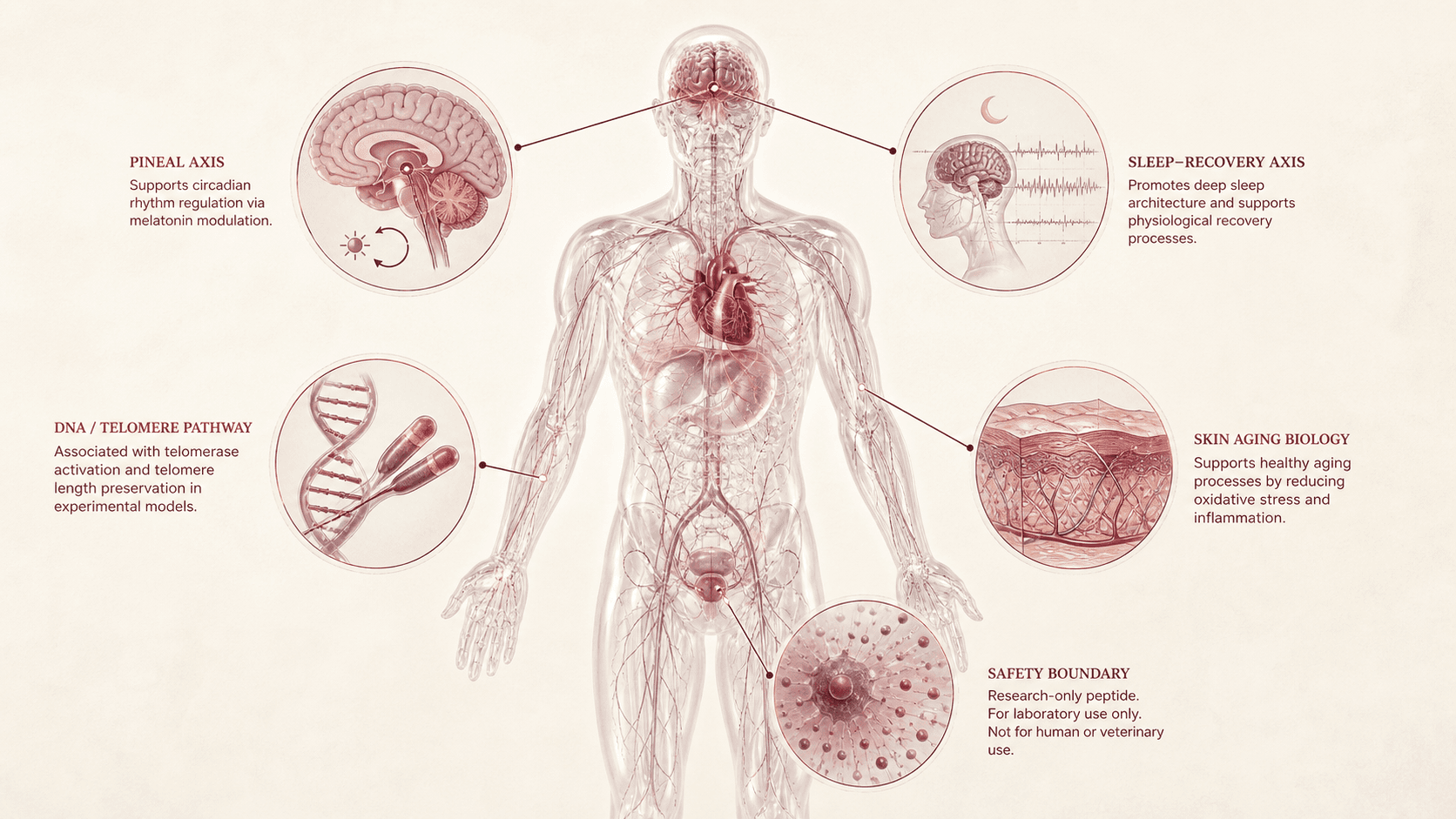 Epitalon / Epithalon epithalon - epitalon tetrapeptide | 56 | xCresearch only | subcutaneous - no protocol timeline | View |
Skin & Anti-Aging comparison matrix
| Peptide | Regulatory anchor | Mechanism | Skin role | Evidence maturity | Readiness | Watchout | Takeaway |
|---|---|---|---|---|---|---|---|
GHK-Cu ghk-cu-skin | PubMed/PMC GHK-Cu skin regeneration, wound, gene-expression, and cosmetic literature. | Copper peptide / collagen / extracellular-matrix signaling. | Lead skin-quality, collagen, wound-biology, and dermal-repair literacy. | Meaningful topical and mechanistic skin literature; injectable extrapolation remains weaker. | Medium for topical cosmetic literacy; low for systemic claims. | Route confusion between topical skincare and injectable research claims. | Best skin anchor, especially when kept in topical and dermal biology context. |
Matrixyl / Pal-KTTKS matrixyl | PubMed palmitoyl pentapeptide photoaged-skin clinical study. | Matrikine / collagen-fragment signaling. | Wrinkle, firmness, and collagen-stimulation cosmetic literacy. | Human split-face cosmetic studies exist; effect size and product context remain modest. | Medium as cosmetic ingredient literacy; not a medical anti-aging therapy. | Ingredient evidence depends on formulation, concentration, routine, and endpoints. | A credible topical comparator, not a systemic anti-aging peptide. |
Argireline argireline | PubMed Argireline/acetyhexapeptide cosmetic wrinkle studies and reviews. | SNARE-adjacent cosmetic peptide / expression-line context. | Expression-line and wrinkle-appearance literacy. | Cosmetic trials and reviews exist; penetration and clinical magnitude remain debated. | Medium as cosmetic education; not equivalent to neuromodulator treatment. | Botox-like marketing overstates route, potency, and clinical equivalence. | Useful for expression-line education, but not a neuromodulator substitute. |
Matrixyl 3000 matrixyl-3000 | Cosmetic peptide literature around palmitoyl tripeptide-1 and tetrapeptide-7. | Matrikine blend / ECM and inflammatory-aging context. | Topical peptide-blend literacy for firmness, texture, and visible aging. | Cosmetic and formulation-led evidence; less clean than single-ingredient anchors. | Medium as skincare literacy; low as medical anti-aging evidence. | Blend evidence can be hard to attribute to each peptide. | A useful skincare comparator, but not a single-peptide proof point. |
Palmitoyl Tripeptide-38 palmitoyl-tripeptide-38 | Cosmetic peptide literature and ingredient-level dermal-matrix claims. | Lipopeptide / collagen-laminin matrix context. | Firmness and dermal-matrix cosmetic comparator. | Mostly cosmetic and supplier/formulation literature; independent clinical maturity is limited. | Medium as cosmetic literacy; low as medical anti-aging evidence. | Marketing may overstate dermal rebuilding from topical ingredient claims. | Useful for skincare literacy, secondary to better-established topical anchors. |
BPC-157 bpc-157-skin | Existing BPC-157 recovery/gut source pack plus FDA safety-risk compounding context. | Tissue-repair / angiogenesis / wound-biology hypothesis. | Procedure recovery and wound-repair literacy, not cosmetic anti-aging proof. | Preclinical repair interest; limited direct human cosmetic skin outcomes. | Low/moderate; procedure and wound contexts require clinician guidance. | Overextending repair biology into cosmetic anti-aging claims. | Relevant to repair narratives, not a lead cosmetic peptide. |
TB-500 / Thymosin beta-4 tb-500-skin | Thymosin beta-4 repair literature plus FDA TB-500 safety-risk compounding context. | Cell migration / tissue remodeling / wound-biology context. | Soft-tissue repair and skin-recovery literacy. | Mechanistic thymosin biology; weak direct human cosmetic outcome evidence. | Low; identity and route concerns dominate. | Fragment identity, source quality, and overclaiming repair speed. | Useful as a repair comparator, not a skin-aging lead. |
KPV kpv-skin | Melanocortin/KPV anti-inflammatory literature plus FDA safety-risk context. | Melanocortin-derived anti-inflammatory peptide. | Inflammatory skin, gut-skin axis, and barrier-irritation literacy. | Mechanistic anti-inflammatory and gut/skin plausibility; limited direct human cosmetic outcomes. | Low/moderate; depends on route, immune context, and diagnosis. | Inflammatory skin disease should not be self-diagnosed or peptide-treated. | Useful when inflammation is the skin story, not a general anti-aging peptide. |
Epitalon / Epithalon epitalon-skin | Epitalon circadian/telomere literature plus FDA safety-risk compounding context. | Pineal / circadian / telomere-literacy aging narrative. | Aging-biology comparator, not a primary skin-quality peptide. | Mechanistic and regional anti-aging interest; weak direct skin outcome evidence. | Low; high overclaiming risk. | Telomere and anti-aging claims can be overstated. | Included for anti-aging literacy, but not a skin lead. |
Skin & Anti-Aging Combination & Overlap Map
| Combination | Components | Type | Why it appears | Peptivius read | Main caution | Status |
|---|---|---|---|---|---|---|
GHK-Cu + Matrixyl family | Copper peptide + matrikine peptides | Topical cosmetic overlap | Both appear in collagen, firmness, and texture routines. | Reasonable as ingredient literacy, not systemic protocol guidance. | Topical evidence does not justify injectable extrapolation. | Cosmetic education |
Argireline + expression-line claims | Acetyl hexapeptide-8 + facial-muscle wrinkle narrative | Botox-like marketing comparison | Users compare topical expression-line peptides to neuromodulators. | Mechanistically interesting but not equivalent to injectable neuromodulators. | Penetration and clinical effect size remain limited. | Modest cosmetic context |
BPC-157 / TB-500 / GHK-Cu after procedures | Repair peptides + procedure recovery narrative | Repair stack narrative | Users seek faster recovery after microneedling, laser, or surgery. | Procedure recovery belongs with clinician instructions, not DIY stacks. | Wound, infection, scarring, and product identity risks. | Professional review |
Retinoid + peptides | Non-peptide topical foundation + cosmetic peptides | Skincare foundation | Retinoids and peptides often coexist in aesthetic routines. | Barrier tolerance and photoprotection matter more than ingredient novelty. | Irritation can erase cosmetic benefit. | Support foundation |
Frequent questions about Skin & Anti-Aging peptides
Are topical peptides the same as injectable peptides?
No. Route changes the evidence and safety context.
Why does GHK-Cu rank first?
It has strong skin-market relevance and mechanistic dermal repair literature, especially in topical and wound-context discussions.
Are Matrixyl and Argireline medical treatments?
No. They are cosmetic peptide ingredients with modest, context-specific evidence.
Can peptides replace sunscreen or retinoids?
No. Photoprotection, barrier care, and proven topical foundations remain central.
Why include BPC-157 and TB-500?
They appear in repair/procedure narratives, but that is not the same as cosmetic skin proof.
Final personalized interpretation for Ana Beatriz
Ana's Skin & Anti-Aging module is driven by dullness, firmness concerns, weight-loss/recomposition context, sleep restriction, stress, inflammation, thyroid/PCOS context, and a desire for global facial improvement.
GHK-Cu and matrikine peptides lead because they map most directly to skin quality and collagen literacy. Argireline is useful for expression-line education but should be read as modest cosmetic evidence.
BPC-157, TB-500, KPV, and Epitalon are included to clarify repair, inflammation, and aging narratives without turning aesthetic interest into injectable protocol thinking.
For Ana, the most durable skin layer is photoprotection, protein and micronutrient adequacy, thyroid/metabolic stability, sleep, stress reduction, barrier routine, and dermatology/procedure guidance.