peptivius

Your peptide journey, with science, clinicians, and your health story working together.

Illustrative local data for the institutional concept. Select a card or use the up and down arrow keys to browse.

Decades of research have made peptide-based treatments part of modern care—from insulin to GLP-1 therapies. Already used by millions of people, this field continues to evolve with new therapeutic possibilities.

U.S. users · insulin + GLP-1

Estimated U.S. adults using insulin or GLP-1 medicines, 2000–2025Dated model anchors rise from 6 million in 2000 to 38 million in 2025. Lines connect estimates, not annual measured observations. Values and methodology are available below.2000201020202025
Sources & methodology

A directional model combines insulin and current GLP-1 use and subtracts estimated overlap. It is not a census of all peptide medicines. Lines connect dated model anchors; intermediate years are not measured observations.

2025 model: 8.5M insulin + 32.2M GLP-1 − 2.7M estimated overlap = 38.0M adults. These inputs include estimates; the total is not a directly surveyed count.

The dots show 12% of U.S. adults reporting current GLP-1 use in the March 2026 KFF poll, approximately 1 in 8. This survey measure is separate from the combined 2025 model above.

Dated model estimates
YearAdults (millions)
20006.0
20056.5
20107.8
20159.4
202012.2
202215.0
202421.6
202538.0

Already part of millions of lives.

About 1 in 8

U.S. adults report
current GLP-1 use.

Research has led to approved peptide-based medicines across different areas of care. Each milestone marks another step from discovery to clinical practice.

Approved medicines

U.S. FDA · Selected catalogue

Cumulative branded medicines

10203040712223436

*Partial period · through September 2026

Source & scope

A selected educational catalogue of 36 branded medicines and 32 distinct active ingredients, first approved from 2000 to September 2026. Bars accumulate this catalogue; they do not measure the approval rate or all FDA-approved peptide products.

One count per brand and original application. Ingredients are deduplicated by active moiety; brands sharing liraglutide, semaglutide or tirzepatide remain separate medicines. Supplemental indications, generics and later strengths are not additional approvals.

The scope includes peptide analogues, peptide-derived medicines and selected polypeptides. Trulicity is a GLP-1–Fc fusion protein; Kalbitor is a 60-amino-acid polypeptide. This is not a catalogue restricted to small peptides. RNA medicines such as Izervay, standalone antibodies and investigational compounds are excluded. Historical approval does not imply current availability.

Each medicine links to its FDA record. Indications are brief summaries of the initial approval, not the complete prescribing information. Forzinity received accelerated approval with a confirmatory trial requirement.

FDA approval records and methodology ↗
Joel Habener, Svetlana Mojsov and Daniel DruckerTIMEThe minds behind a shift in modern medicine.Meet the scientists who helped unlock the GLP-1 era.Read the story
Sources & editorial credits

Paper previews are editorial adaptations from the existing Peptivius offer, based on the linked publications. Results describe the studied populations and do not predict individual outcomes. The Nature Chemistry item reports preclinical discovery, not clinical efficacy.

Courtesy portraits · TIME · 2024. Publication names and logos identify sources; they do not imply partnership or endorsement.

What studies found, and who they studied.

The potential is real. The journey matters.

Between promising science and everyday care, there are personal decisions, health information, and follow-up to connect.

Connect the pieces.

Conflicting information becomes Evidence in context in the Peptivius vision.

peptivius

Science, personal context, clinical care, and treatment access—connected around you.

Science
Personal
context
Clinical
care
Treatment
access
One continuous journey.

Follow Erika.
See how it all connects.

01 — Your story · A simulated case

MeetErika.

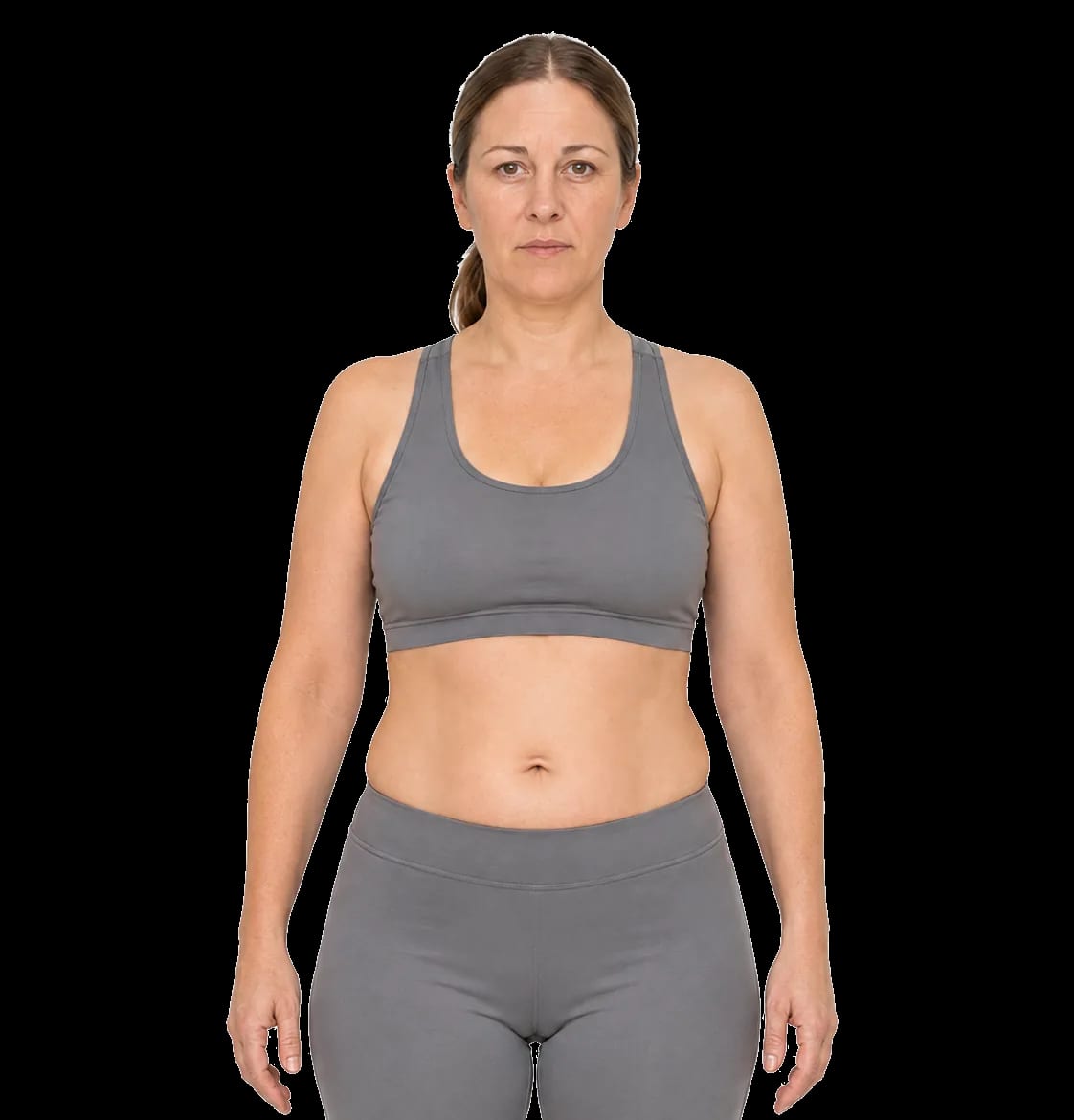
Erika starts by sharing her story.

Through Peptivius onboarding, she brings together her goals, health history, medications, and daily routine—creating the starting point for a more personal journey.

35%
BODY FAT
42
AGE
168 CM
HEIGHT
78 KG
WEIGHT
27.6
BMI
Medications
  • Metformin
  • Oral contraceptive
  • Topical minoxidil
Simulated full-body profile of Erika in gray fitness wear
Clinical context
  • Insulin resistance
  • PCOS
  • Pattern hair thinning

02 — At-home testing

More context,
from home.

After an initial review, Erika receives an at-home collection kit. Her sample is analyzed by a partner laboratory, and the results become part of her Peptivius health profile.

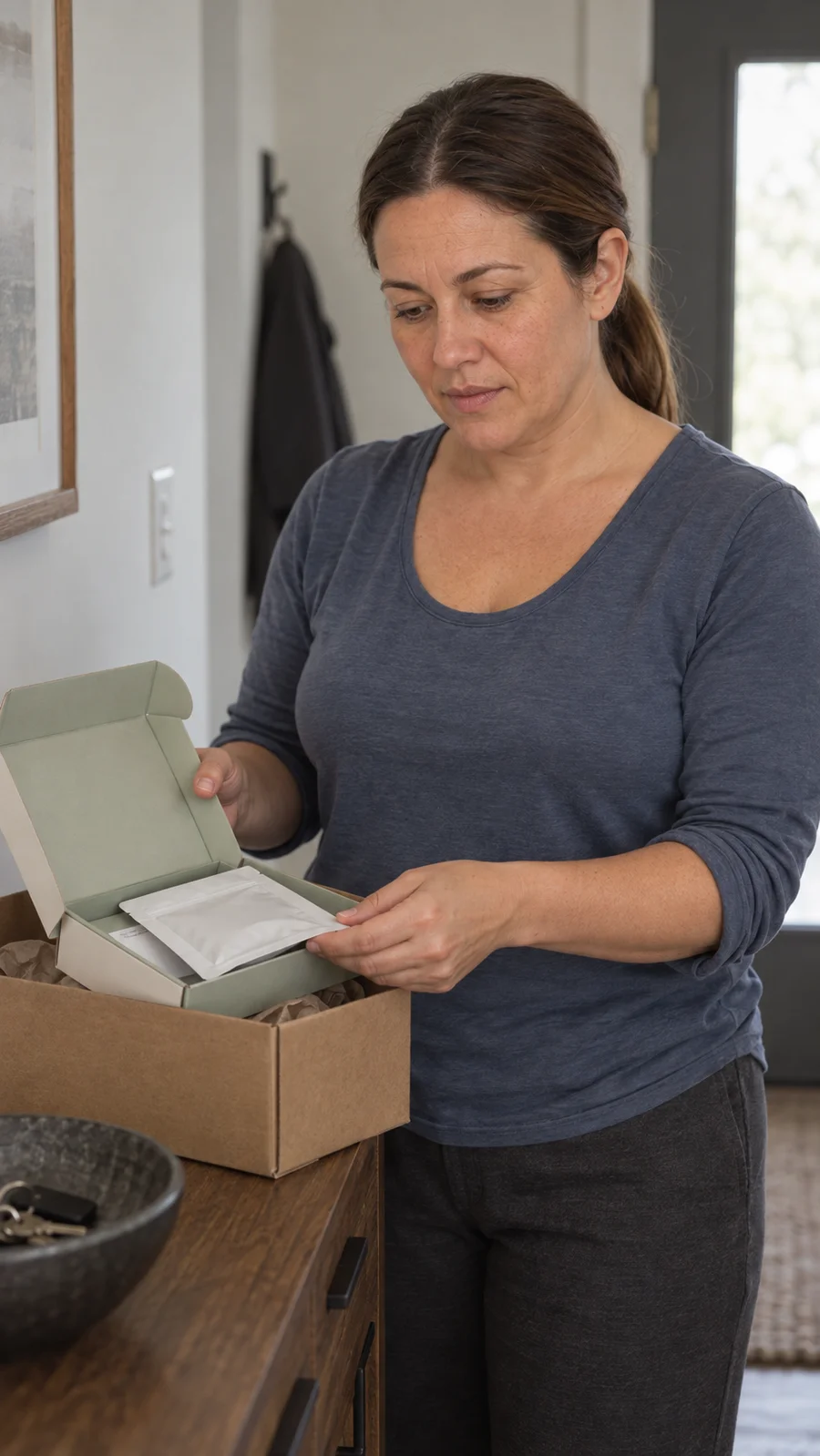
Erika opening her collection kit at home
Kit received

A clear place to start.

Erika receives her collection materials at home, with preparation and return instructions. Before she begins, she knows what to collect, how to handle it, and where it needs to go.

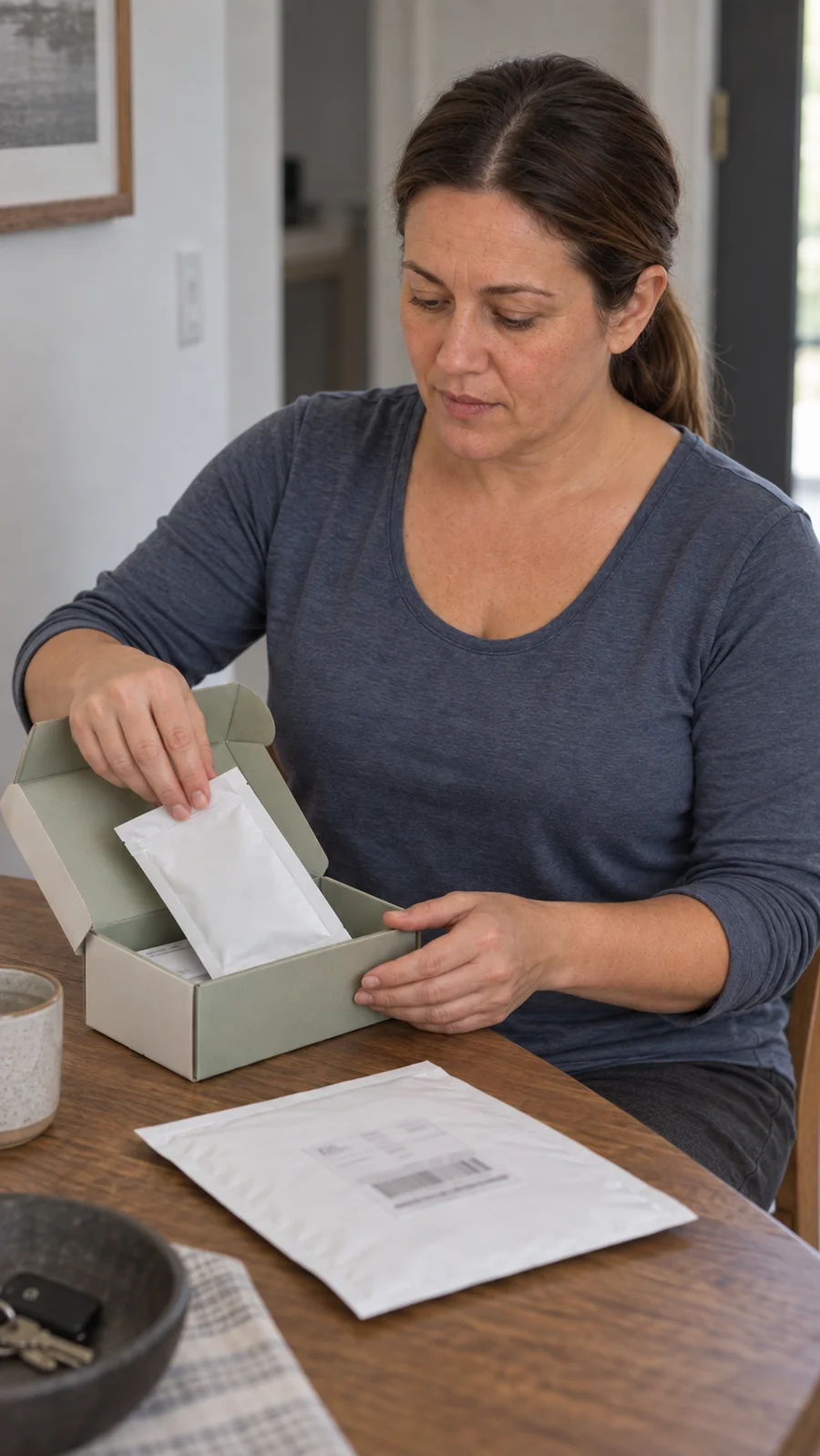
Erika preparing the sealed sample for return to the laboratory
Sample returned

From home to the lab.

She prepares the sample following the kit’s instructions and seals the return packaging. A partner laboratory analyzes it, adding measured information to the health story she shared during onboarding.

Erika in a terracotta cardigan reviewing her laboratory results on a laptop
Results available

Results in context.

Her results join her goals, medications, and health history. Together, they inform her Peptide Blueprint—a more complete starting point for understanding the evidence and discussing next steps with a clinician.

03 — Your Peptide Blueprint

Her context.
A clearer picture.

Erika’s health story comes together in her Peptide Blueprint—a personalized view of the research, considerations, and questions to explore with her clinician.

Here, we follow her Weight Loss chapter.

Erika’s Blueprint · Simulated preview

04 — Clinical care

Your next step.
Taken care of.

Peptivius arranges Erika’s consultation and brings her health context together. Her clinician reviews the full picture and decides whether medication is appropriate.

We coordinate the journey, from clinical review to medication access and delivery.

Clinical consultation

A clinical conversation.

Simulated scene of Erika talking with her physician in a video consultationConnected by Peptivius

Her clinician reviews her Blueprint, medications, and goals before deciding what comes next.

A prescription only when appropriate.

05 — Medication delivery

Care, delivered.

When medication is prescribed, Peptivius coordinates pharmacy review, preparation, and delivery—keeping Erika informed along the way.

One connected journey, with her clinician’s guidance and follow-up in view.

Illustrative scene of Erika receiving her discreet medication delivery at her apartment doorway
Delivered to Erika

06 — Connected care

Care continues.

Erika keeps her plan, health records, and daily check-ins together in Peptivius—so each next step builds on the full picture.

Erika’s platformA simulated journey
Opening demo…

07 — Peptivius AI

Intelligence that
stays with you.

Your health story keeps evolving. Peptivius brings new information and scientific evidence into the conversation.

Peptivius AIWith Erika’s context
Morning run syncedActivity added to Erika’s journey
4.8 km32 min

Grounded in scientific research.

Our scientific content draws on peer-reviewed publications and established biomedical references.

Clinical Nutrition · 2026

Creatine for glucagon-like peptide-1-associated muscle loss

Scope of the publication
Discusses muscle preservation during GLP-1-related weight loss; no trial participants.
Evidence type
Hypothesis-generating article, not a randomized trial
What this source supports
The authors propose creatine as a possible adjunct to a broader muscle-preservation strategy during GLP-1 treatment. They report no randomized trial directly evaluating it in this setting.
How to interpret it
Biological plausibility is not demonstrated clinical benefit. This article does not establish effectiveness, safety, or a dose for Erika’s tirzepatide, metformin, and PCOS context. An author discloses creatine-related commercial interests.

Good science needsa connected journey.

Research is the foundation. For Erika, its relevance depends on her health history, a clinician’s assessment, and the support that follows. Peptivius connects these pieces into a journey built around her.

With that full picture in mind, let’s return to Erika—and look at two ways her plan could take shape.

08 — The outcome

SAME PERSON. SAME GOALS. DIFFERENT PLANS.

Two different planning approaches.

FAMILIAR CHOICE

A familiar choice, made with limited context.

Erika followed popular peptide options without a structured review of her medications, clinical conditions, or how the compounds might work together.

CONTEXTUAL PLAN

A plan built around Erika’s full context.

Erika used Peptivius to organize her goals, medications, and clinical history—surfacing trade-offs and better questions to discuss with a licensed clinician.

What the projections show at 12 months.

Limited context

A lower number on the scale.

68kg
−10 kg · ≈30% body fat

Persistent bloating, lower energy, reduced training performance, and ongoing hair and skin concerns.

Peptivius-guided

A more balanced endpoint.

63kg
−15 kg · ≈26% body fat

Better lean-mass retention, stable energy, maintained strength, and fewer unresolved skin and hair concerns.

The final result, side by side.

Limited-contextFinal result at 12 monthsPeptivius-guided
78 kgStarting weight78 kg
≈68 kgFinal weight≈63 kg
−10 kg (−12.8%)Total change−15 kg (−19.2%)
35% → ≈30%Estimated body fat35% → ≈26%
Some lossLean-mass trendBetter preserved
ReducedStrengthMaintained
Frequently lowEnergyGenerally stable
PersistentBloatingMild and intermittent
Less supportedSkin appearanceVisually improved
Continued thinningHair densityVisually denser
Weight loss with unresolved trade-offsOverall endpointMore balanced illustrative result

DON’T WASTE THE BREAKTHROUGH

A powerful medicine should never become an expensive experiment.

Peptide-based medicines are reshaping what may be possible. But following trends, isolated success stories, or generic protocols can waste months, money, and the potential that brought you here.